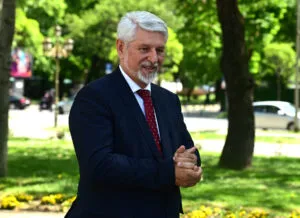
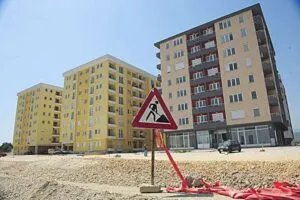
A New Criminal Complaint Against Jakimovski: A Building Permit Based on a Plan Struck Down Back in 2018
16.09.2026


16.09.2026
16.09.2026

16.09.2026
16.09.2026
16.09.2026

16.09.2026

16.09.2026

15.09.2026

14.09.2026

16.09.2026

16.09.2026

15.09.2026

16.09.2026

15.09.2026

14.09.2026

16.09.2026

16.09.2026

16.09.2026

16.09.2026

15.09.2026
15.09.2026

09.03.2026

27.02.2026

19.02.2026

16.09.2026

15.09.2026

14.09.2026

23.04.2026

23.04.2026

12.04.2026

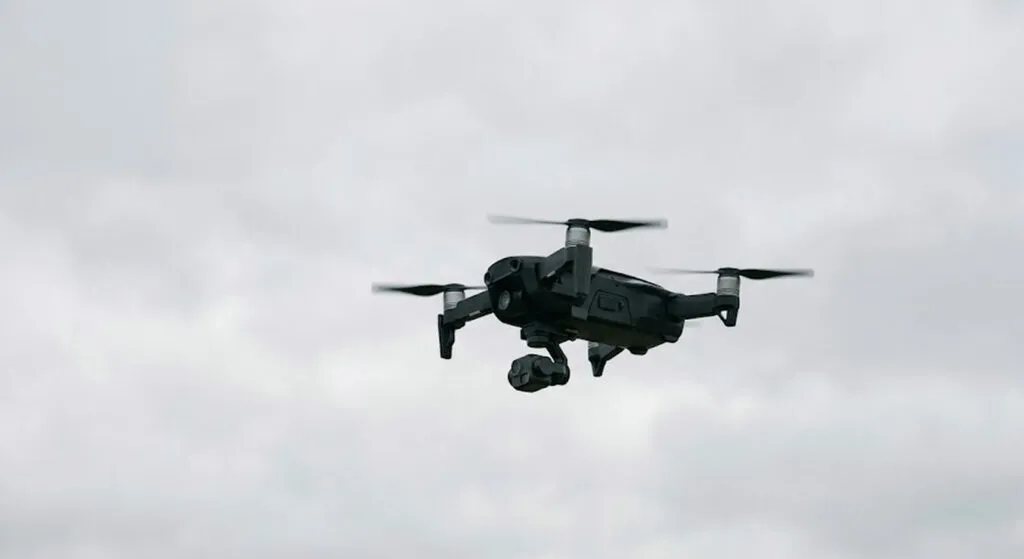
China is watching the American war on Iran and taking notes. Not just as an industrial spy, but as an army that last fought a real battle before 1979 - when it invaded Vietnam. Seven decades go by without real experience. That's generations.
The Iran war, now in its third month, gives Beijing a window. Iranians have found ways to bypass the American Patriot and THAAD anti-missile systems. With cheap Shahed drones and low-cost ballistic missiles. It's a lesson Chinese generals pray for - that modern defence breaks against a low budget, not just against hypersonic weapons.
„The PLA (People's Liberation Army) cannot neglect defensive capabilities," said Fu Qianshao, former colonel of the Chinese air forces. China is exponentially expanding its offensive arsenal over a decade - 1,000 fifth-generation J-20 stealth fighters (roughly comparable to the US F-35s), hypersonic vehicles, new missile platforms. But defence is lagging. That's an admission that in the Chinese context is equivalent to public self-criticism.
Taiwanese analyst Chieh Chung says that in a potential confrontation long-range missiles and drone swarms will be key. And here China already has a solution - a War on the Rocks study from 2025 estimates that „Chinese civilian manufacturers can produce a billion armed drones in a year." A billion. Without military mobilisation. Just by re-tasking existing factories.
But there's another side. Craig Singleton of the Foundation for Defense of Democracies emphasises: „Tactical victories don't always lead to political outcomes." That's the lesson China most needs to learn. You have drones, you have missiles, you have fighters - but you don't have a generation of officers who've been under fire. That was already seen in the Korean War - experienced pilots on inferior aircraft beat average pilots on top-tier hardware.
For the Balkans, this is a lesson we've already paid for and survived. Armies are bought in a shop. Experience is paid for in blood. And the moment the numbers for drones and fifth-gen fighters arrive, the problem becomes: what for, and against whom. Will those billion drones be building hampers in Bulgaria, or will they protect China from someone else's „1979"?
Admiral Samuel Paparo from the US Indo-Pacific Command already draws the line: „Drones make war drastically more expensive for the attacking side." Translation: if Taiwan has effective defence with drone swarms, Chinese transport ships will pay a steep price. And here Taiwan is for now lagging behind - officials describe the current anti-drone system as „ineffective." And the opening for Chinese manoeuvre is happening right now.
The latest 10 news from this category

Sanctions imposed over one war are being offered as currency in an entirely different dispute. Most member states are against...
El Nino in the Pacific shifts the currents that decide where snow falls. An area that usually gets a metre...
The easiest way to dismiss an uncomfortable argument is to point at who is making it. But that does not...

The appeals court ruled the entire trial must start over. The son of Norway's queen is waiting for it on...
Trump scaled back the military exercises to ease the tension, and Wonsan answered in the form of projectiles. What does...

The sanctions list got a seven-day extension instead of one measured in months, a move diplomats themselves call unprecedented. Two...

Switzerland offered a table for talks on Ukraine, Moscow replied that the table stopped being neutral once Bern adopted EU...

The will says one thing, a committee of twenty-one men decided another. The queen mother says the army pulled the...

A country that was Europe's byword for stability for decades now has a parliament split into two blocs by a...

Sixteen years in power, defeat at a regular election, five months of quiet - and now the election result is...
This site uses cookies - is that okay? Learn more
Be the first to know when Metla launches something new
Leave your email and we will write when there is a new guide or something new on Metla.