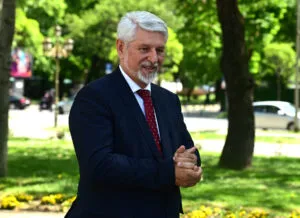
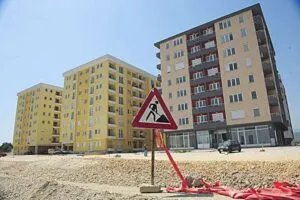
A New Criminal Complaint Against Jakimovski: A Building Permit Based on a Plan Struck Down Back in 2018
16.09.2026


16.09.2026
16.09.2026

16.09.2026
16.09.2026
16.09.2026

16.09.2026

16.09.2026

15.09.2026

14.09.2026

16.09.2026

16.09.2026

15.09.2026

16.09.2026

15.09.2026

14.09.2026

16.09.2026

16.09.2026

16.09.2026

16.09.2026

15.09.2026
15.09.2026

09.03.2026

27.02.2026

19.02.2026

16.09.2026

15.09.2026

14.09.2026

23.04.2026

23.04.2026

12.04.2026

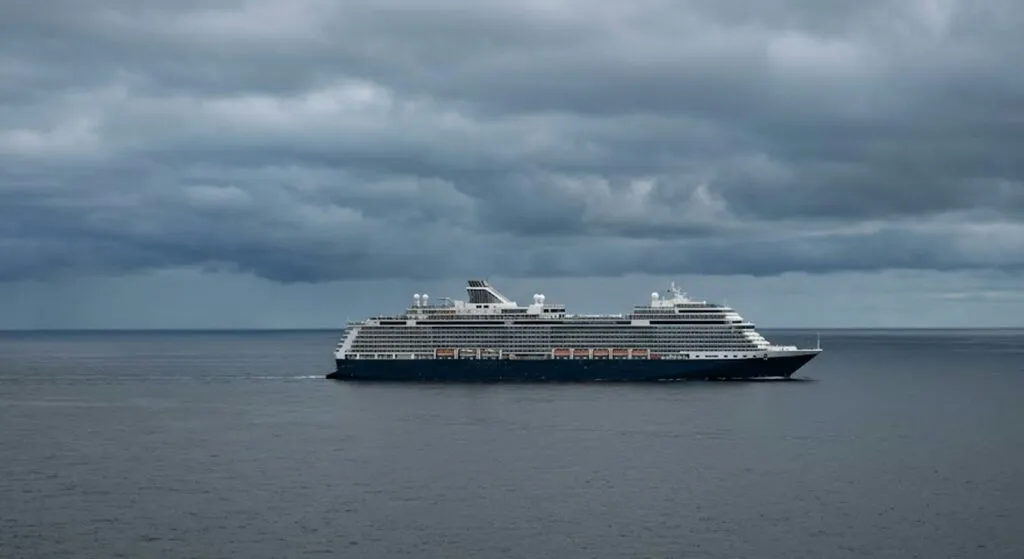
The cruise ship MV Hondius has become a new global public health case. Hantavirus, until recently treated as a local rarity in Argentina and Chile, is now travelling the world - an American passenger positive (asymptomatic), a Frenchman with symptoms in isolation, a Greek placed in quarantine in Athens. Mass evacuation from Tenerife to national capitals.
Six people tested positive, three deaths since the outbreak began, including one on board. Patient zero - Leo Schilperoord, a 70-year-old Dutch ornithologist, likely contracted the virus in the Ushuaia region, Argentina, before boarding. Because that's where - at the southern tip of South America - the long-tailed rice rat lives, the natural host of the Andean strain.
This strain has a mortality rate of around 40 percent. That rate exceeds every pandemic variant of COVID. But this needs to be added straight away: it doesn't spread easily. That's why WHO director-general Tedros Adhanom Ghebreyesus repeated: „This is not a second COVID. The risk to the public is low." Translation: no panic. But control is needed.
How does the virus work? Mainly via contact with feces, urine or saliva of infected rodents - when humans inhale particles in enclosed spaces. Incubation lasts from one to eight weeks. Symptoms include fever, muscle pain, followed by cardiopulmonary syndrome. Over 10,000-100,000 cases a year worldwide, mostly in Asia and Europe. The Andean strain is different - it attacks the lungs, and unlike other hantaviruses - it can also spread human to human.
That's why Greece isn't easing measures. Minister Adonis Georgiadis repeated that there is „absolutely no fear of spread" - a standard line for panic management. But at the same time Athens is counting on serious screening of all passengers from the ship. No panic. No relaxation. In between - that thin path of public health the Balkans never quite learned, not even with COVID.
For Macedonia this isn't a test. Not yet. But the question is whether we have the capacity if a hantavirus patient lands at Skopje Airport after a tourist cruise. Do we have isolation rooms? Do we have tests? Do we have a protocol? These are questions to send to the health ministry before it's too late, not after.
The latest 10 news from this category

Sanctions imposed over one war are being offered as currency in an entirely different dispute. Most member states are against...
El Nino in the Pacific shifts the currents that decide where snow falls. An area that usually gets a metre...

The easiest way to dismiss an uncomfortable argument is to point at who is making it. But that does not...

The appeals court ruled the entire trial must start over. The son of Norway's queen is waiting for it on...
Trump scaled back the military exercises to ease the tension, and Wonsan answered in the form of projectiles. What does...

The sanctions list got a seven-day extension instead of one measured in months, a move diplomats themselves call unprecedented. Two...

Switzerland offered a table for talks on Ukraine, Moscow replied that the table stopped being neutral once Bern adopted EU...

The will says one thing, a committee of twenty-one men decided another. The queen mother says the army pulled the...

A country that was Europe's byword for stability for decades now has a parliament split into two blocs by a...

Sixteen years in power, defeat at a regular election, five months of quiet - and now the election result is...
This site uses cookies - is that okay? Learn more
Be the first to know when Metla launches something new
Leave your email and we will write when there is a new guide or something new on Metla.