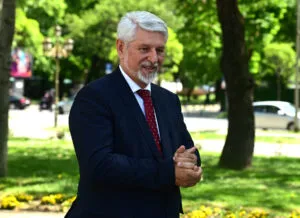
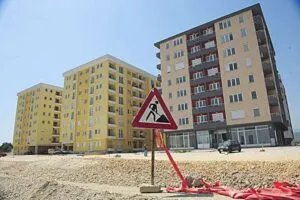
A New Criminal Complaint Against Jakimovski: A Building Permit Based on a Plan Struck Down Back in 2018
16.09.2026


16.09.2026
16.09.2026

16.09.2026
16.09.2026
16.09.2026
16.09.2026
16.09.2026
15.09.2026

14.09.2026
16.09.2026
16.09.2026

15.09.2026
16.09.2026
15.09.2026
14.09.2026

16.09.2026

16.09.2026

16.09.2026

16.09.2026

15.09.2026
15.09.2026

09.03.2026

27.02.2026

19.02.2026
16.09.2026

15.09.2026
14.09.2026

23.04.2026

23.04.2026

12.04.2026

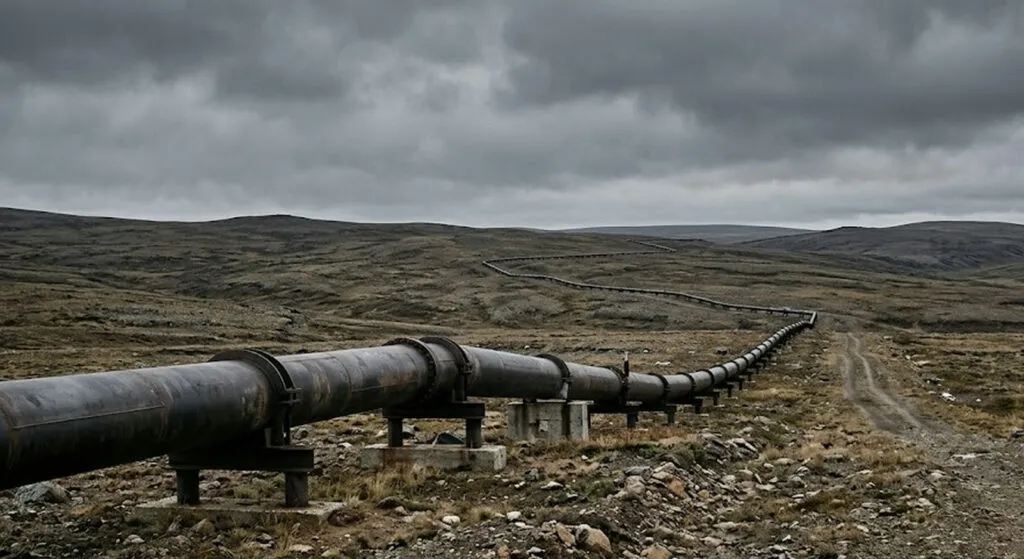
Moscow sent a message that leaves no room for interpretation: Armenia no longer has any right to a single economic bonus if at the same time it's building a political coalition against Russia. The „two chairs" have collapsed.
Prime minister Nikol Pashinyan at a summit in Yerevan on 7 May, with Ursula von der Leyen, Kaja Kallas, Keir Starmer, Emmanuel Macron, Maia Sandu and Volodymyr Zelensky present, said: „Gathered here are states that chose the democratic path and want peace." He then added there is only one former Soviet republic that doesn't agree. Translation: Russia. Short, clean, no ambiguity.
Even more interesting: Pashinyan floated a new alliance of 14 former Soviet republics - without Moscow. In Russian political circles, that's no longer a „diplomatic disagreement." That's open anti-Russian positioning. And it comes from the head of a country that was in the Kremlin in April for a Putin meeting, and a month later was at the same summit with Moscow's loudest opponents.
The Moscow response came quickly. Leonid Kalashnikov, chairman of the Duma's CIS committee, said: „The matter must be raised immediately at the CSTO and EAEU summits." Translation: if Yerevan wants to go West politically, it will lose the Eurasian market. No ceremony.
And that Eurasian linkage isn't trivial. Armenia buys Russian gas at 177 dollars per thousand cubic metres. The EU price - around 600 dollars. Armenia exports duty-free to the Russian market - Russia accounts for 34 percent of the country's total foreign trade. Russian investments there exceed four billion dollars. No strategic partner can replace that complex within two weeks.
From Yerevan, the counter-response came at once. Speaker of parliament Alen Simonyan said Armenia will never be a „Russian governorate" and won't be run on the Belarusian model. Poetically strong. Economically easy to disprove.
For the Balkans, this is almost a mirror. All of us - Macedonia, Serbia, Greece, Bulgaria - live the same kind of „two chairs." The EU wants us as a market, as a radar, as a buffer. Moscow holds us tied through gas, oil, banks. When one side decides „enough" - the bill is delivered without negotiation. And usually the diaspora pays first. Armenia is just showing us what happens when the game is uncovered.
The question nobody from Yerevan wants to answer at this stage is simple: if Russia really closes its market to Armenian goods, how will it feed the 2.5 million people who depend on that export? Will the EU absorb them? In how many years? And with how much tariff? Poetic declarations last an hour. The economy lasts decades.
The latest 10 news from this category
Sanctions imposed over one war are being offered as currency in an entirely different dispute. Most member states are against...
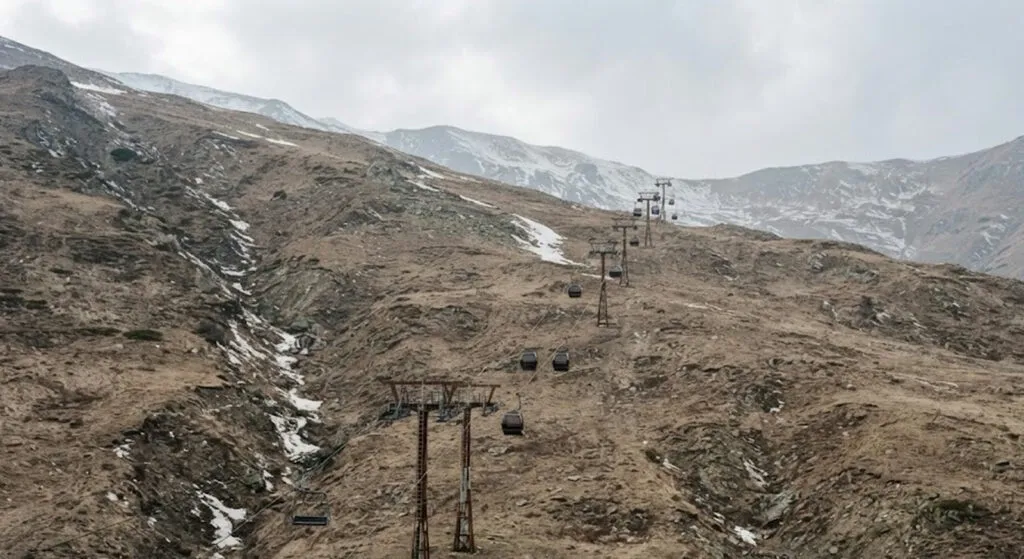
El Nino in the Pacific shifts the currents that decide where snow falls. An area that usually gets a metre...
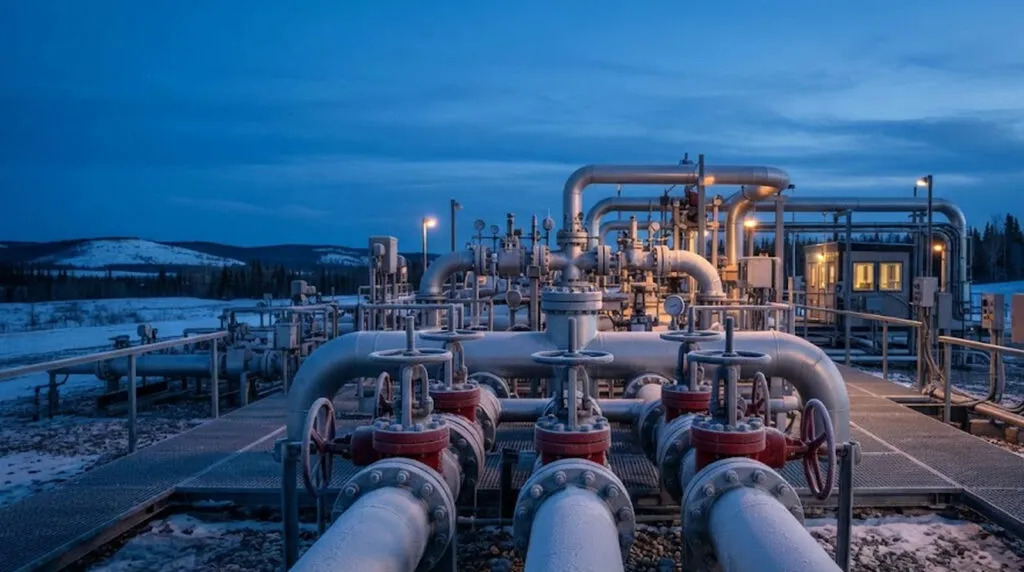
The easiest way to dismiss an uncomfortable argument is to point at who is making it. But that does not...
The appeals court ruled the entire trial must start over. The son of Norway's queen is waiting for it on...
Trump scaled back the military exercises to ease the tension, and Wonsan answered in the form of projectiles. What does...
The sanctions list got a seven-day extension instead of one measured in months, a move diplomats themselves call unprecedented. Two...
Switzerland offered a table for talks on Ukraine, Moscow replied that the table stopped being neutral once Bern adopted EU...
The will says one thing, a committee of twenty-one men decided another. The queen mother says the army pulled the...
A country that was Europe's byword for stability for decades now has a parliament split into two blocs by a...
Sixteen years in power, defeat at a regular election, five months of quiet - and now the election result is...
This site uses cookies - is that okay? Learn more
Be the first to know when Metla launches something new
Leave your email and we will write when there is a new guide or something new on Metla.