

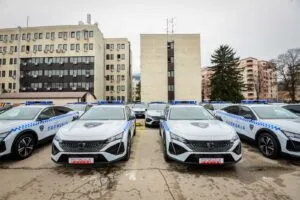
Police officer from Drachevo drove without ever passing a driving test: Who checks the people who check everyone else?
18.10.2026


18.10.2026

18.10.2026
18.10.2026
18.10.2026

18.10.2026
18.10.2026

18.10.2026

18.10.2026

18.10.2026

18.10.2026

18.10.2026

17.10.2026

18.10.2026

18.10.2026

18.10.2026

18.10.2026

17.10.2026

16.10.2026

18.10.2026

18.10.2026

18.10.2026

18.10.2026

18.10.2026

18.10.2026
18.10.2026

18.10.2026

17.10.2026
17.10.2026

15.10.2026

13.10.2026

23.04.2026

23.04.2026

12.04.2026

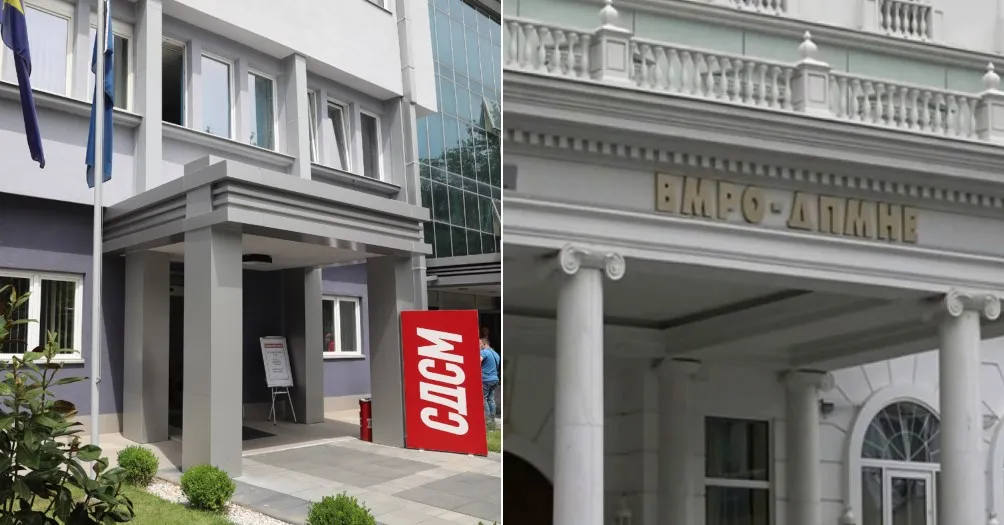
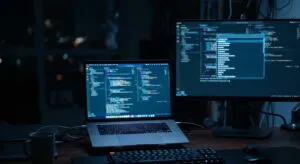
The Government is negotiating with five to six potential investors over data centres in Macedonia. Not a single name has been published. Not a single condition has been published. How much water and how much electricity they would consume - that has not been published either.
That is the factual situation the political argument is being conducted around, and it is reason enough for a question regardless of who is asking it. Maja Borozan of SDSM put it sharply: Prime Minister Hristijan Mickoski speaks publicly about an open and transparent process while simultaneously admitting that the Government is negotiating behind closed doors. "Macedonia has no resources for experiments behind closed doors. Especially not with water," she said at a press conference.
What a data centre demands
Data centres are not factories with thousands of employees. They are facilities that consume enormous amounts of electricity and, depending on the cooling technology, significant amounts of water. That is their nature, not a political claim.
VMRO-DPMNE rejects the criticism. MP Mile Lefkov said the opposition is spreading panic, pointing out that Macedonia functions as a market economy and that the way the electricity price is formed is clear. On water, he stated that different cooling technologies exist, depending on what the centres are for.
That answer is accurate and at the same time does not answer the question. That different technologies exist is a fact. Which technologies will be applied in the specific projects with the specific investors - that is what nobody is saying, since neither the investors nor the conditions have been published.
The Government's plan is bigger than the argument
Meanwhile, in Berovo, Mickoski presented a broader concept: a primary national data centre linking state institutions, with the existing capacity in Prilep as the secondary one, that is, a disaster recovery centre. The plan also includes a national cloud system for data backups.
That direction was not invented at home. The European Commission's assessment of the Macedonian Reform Agenda provides for examining the possibility of developing centralised government digital infrastructure and a secure data and cloud centre with backup recovery systems.
The Prime Minister also stated that the number of employed people grew by around 17,000 between 2024 and 2026, from approximately 691,000 to 708,000, citing State Statistical Office data. That is a change in the number of employed people - the formulation that the Government "created" those jobs is a political assessment, not a statistical conclusion.
The same goes for the figure that interest in engineering disciplines has grown by 30 percent. Mickoski himself says he got the number from his own Faculty of Mechanical Engineering. That is one faculty, not every engineering faculty in the country.
A data centre is neither a miracle nor a catastrophe. It is an infrastructure facility with a known cost in resources and a known benefit. The only thing that decides the balance is whether both sides of that equation are published before signing - and that is exactly what is missing right now.
The latest 10 news from this category
In August Macedonia had 131,076 foreign guests, while the Belgrade region alone had 154,267. Foreigners stay with us for about...

Only 19 percent of households with children receive child benefit, compared with 88 percent in the EU. The Platform Against...
One of Anthropic's five biggest customers turned its back on stage, then started softening the words. When the default choice...

From unicorn to bankruptcy in five years: Google took the founders back, Disney takes part of the assets, and the...
A car that hops over trucks on compressed air and arrives in 2028 - unless it slips again. The deposit...

ESM currently sells electricity at 65 euros per megawatt-hour, while on European exchanges the price tops 200 euros. The PM...

Over 122 tonnes of animal-origin food were sent back from the border, and imports of another 21 tonnes were banned....
The draft law is in Parliament and closes the nationalisation story. Instead, the state offers a choice of risk, with...
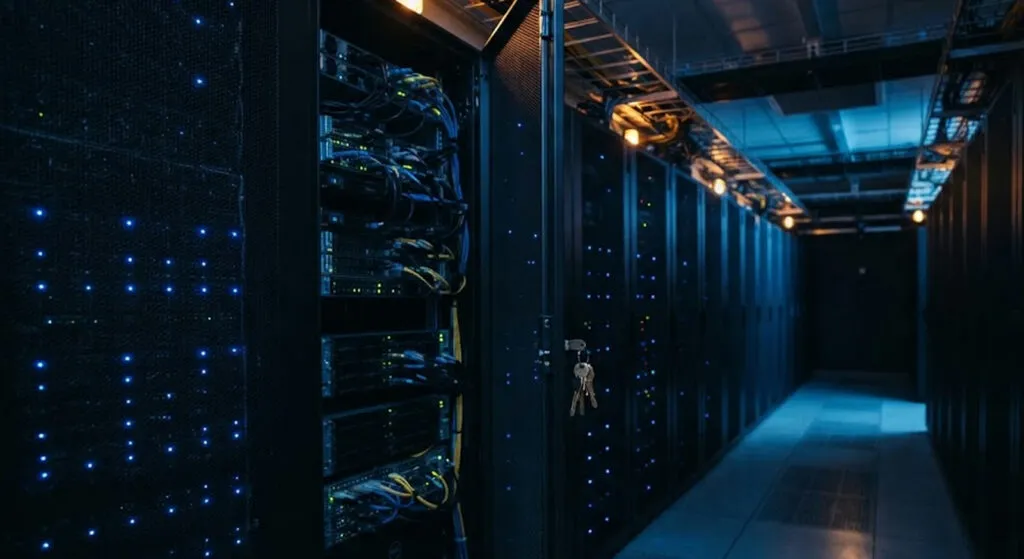
The agents didn't break anything - they used passwords someone had left in a public place. And India learned of...

Fakes have become so good they've earned their own name. Veritas offers a chip built into the product, and it's...
This site uses cookies - is that okay? Learn more
Be the first to know when Metla launches something new
Leave your email and we will write when there is a new guide or something new on Metla.