


Police officer from Drachevo drove without ever passing a driving test: Who checks the people who check everyone else?
18.10.2026


18.10.2026
18.10.2026
18.10.2026
18.10.2026
18.10.2026

18.10.2026

18.10.2026

18.10.2026

18.10.2026
18.10.2026
18.10.2026

17.10.2026

18.10.2026
18.10.2026

18.10.2026

18.10.2026

17.10.2026

16.10.2026

18.10.2026

18.10.2026

18.10.2026
18.10.2026

18.10.2026

18.10.2026
18.10.2026

18.10.2026

17.10.2026
17.10.2026

15.10.2026

13.10.2026

23.04.2026

23.04.2026

12.04.2026

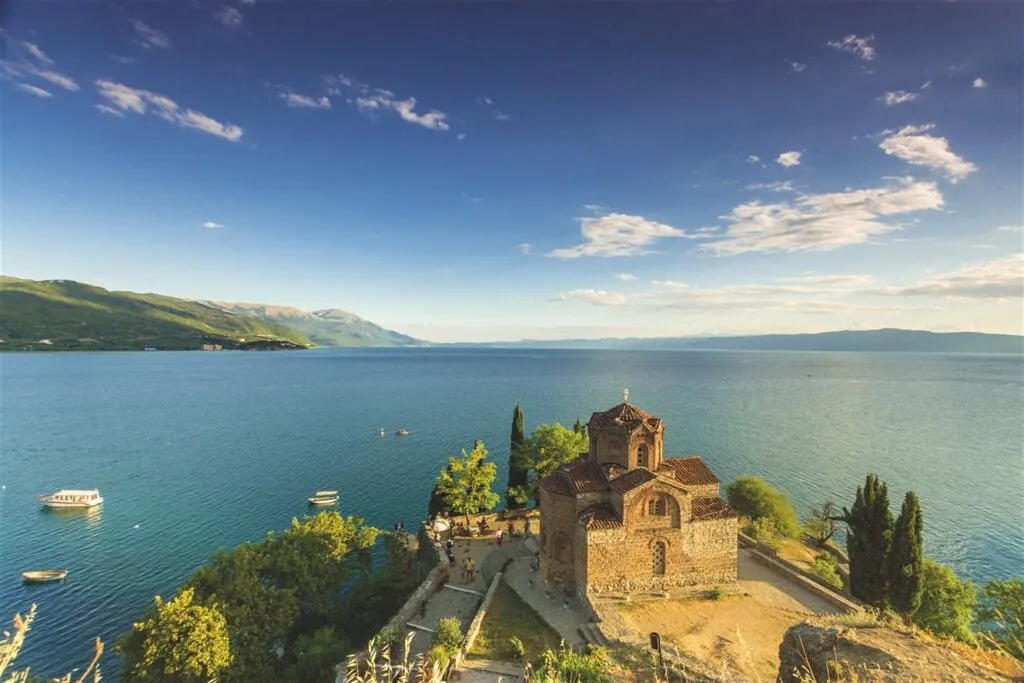
In August Macedonia had 244,513 tourists and 934,042 overnight stays - 8.1 percent more tourists and 10.4 percent more overnight stays than last year. Numbers any government would hold a press conference for. But put them next to the neighbours' figures and the growth takes on a very different colour: the Belgrade region alone drew 154,267 foreign tourists in August - more than all of Macedonia, which had 131,076.
The comparison with Serbia hurts the most precisely because it's the fairest. Serbia has no sea either. There, 536,573 tourist arrivals and 1,582,489 overnight stays were registered in August, with 300,879 foreign tourists. Belgrade alone had over 170,000 arrivals, and the mountain resorts more than 115,000. That's where the "we have no sea" excuse stops working.
Foreigners come, but don't stay
The internal structure of the Macedonian numbers is even more telling. Foreign guests make up 53.6 percent of tourists but accounted for only 29.2 percent of overnight stays - 272,721 nights for 131,076 guests, or about two nights per person on average. Domestic tourists, fewer in number, accounted for 70.8 percent of all overnight stays. Foreigners pass through, locals stay.
The good news is that foreign overnight stays rose by 21.1 percent compared with last August. The most numerous guests came from Turkey, with 45,747 arrivals, followed by Serbia (13,166), Romania (7,457) and Germany (7,324). From January to August Macedonia registered 985,959 tourists, up three percent year on year.
The region is in another league
In August Croatia had 4.82 million tourist arrivals and 26.85 million overnight stays, and more than 78 million overnight stays in the first eight months. Albania, which in recent years has become especially popular with young European tourists, recorded a 10.3 percent rise in visitors at accommodation facilities in August. Montenegro, in collective accommodation alone, had 264,475 arrivals and over 1.1 million overnight stays, 91.4 percent of them by foreigners.
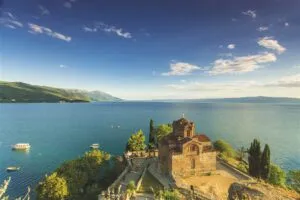
The number of tourists isn't the same as revenue - a country with fewer guests can earn more if it offers better accommodation, food and things to do. That's the only consolation. But to earn from a guest, they first have to stay longer than two nights. Ohrid, Mavrovo, Krushevo, Pelister and the Tikvesh region have been around for decades - the question is why foreigners still see them as a stop along the way rather than a destination.
The latest 10 news from this category
Only 19 percent of households with children receive child benefit, compared with 88 percent in the EU. The Platform Against...
One of Anthropic's five biggest customers turned its back on stage, then started softening the words. When the default choice...
From unicorn to bankruptcy in five years: Google took the founders back, Disney takes part of the assets, and the...
A car that hops over trucks on compressed air and arrives in 2028 - unless it slips again. The deposit...

ESM currently sells electricity at 65 euros per megawatt-hour, while on European exchanges the price tops 200 euros. The PM...

Over 122 tonnes of animal-origin food were sent back from the border, and imports of another 21 tonnes were banned....
The draft law is in Parliament and closes the nationalisation story. Instead, the state offers a choice of risk, with...
The agents didn't break anything - they used passwords someone had left in a public place. And India learned of...
Fakes have become so good they've earned their own name. Veritas offers a chip built into the product, and it's...
The permit is here, driverless rides are not. Maps first, then tests with a human at the wheel, and Toronto's...
This site uses cookies - is that okay? Learn more
Be the first to know when Metla launches something new
Leave your email and we will write when there is a new guide or something new on Metla.


