
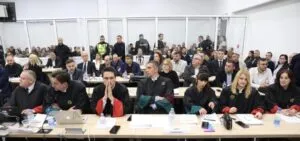
Experts on the Puls fire: the ceiling foam released cyanide as it burned, and the inspector could and should have shut the place down
02.09.2026


02.09.2026

02.09.2026
02.09.2026
02.09.2026
02.09.2026

02.09.2026

02.09.2026

01.09.2026

31.08.2026

02.09.2026

02.09.2026

01.09.2026

02.09.2026

02.09.2026

02.09.2026

02.09.2026

01.09.2026

31.08.2026

02.09.2026

02.09.2026

02.09.2026

02.09.2026
01.09.2026
31.08.2026

09.03.2026

27.02.2026

19.02.2026

02.09.2026

01.09.2026

01.09.2026

23.04.2026

23.04.2026

12.04.2026
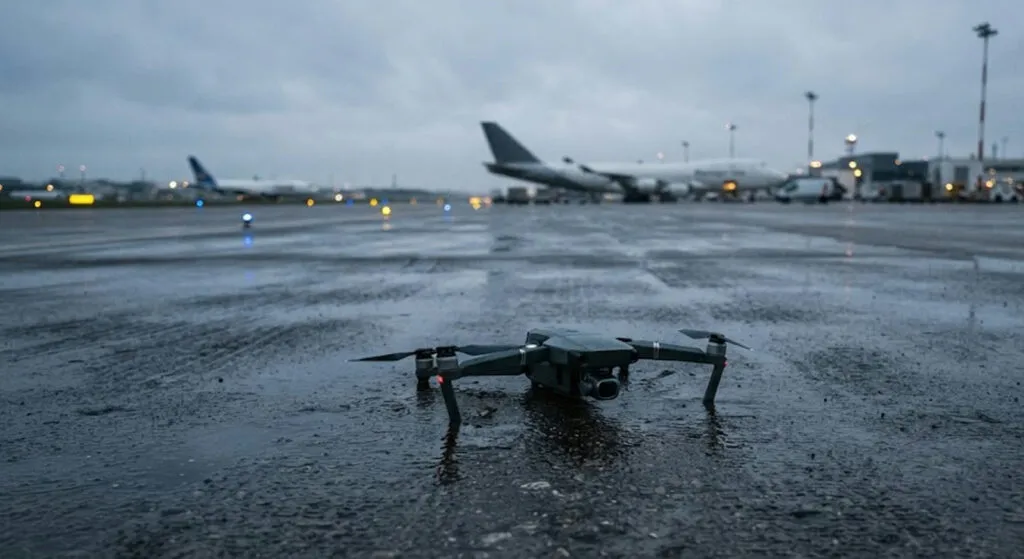
A drone carrying explosives, left in the security zone of one of Europe's largest cargo airports, right beside a Ukrainian transport aircraft. That is not an incident. That is a message, and Berlin has finally decided to answer out loud.
According to several sources familiar with the German government's plans, Russia could be officially declared responsible early this week for the attempted attack on Leipzig/Halle airport. What follows is a package of measures that Berlin describes as "extensive".
Chancellor Friedrich Merz is considering direct German measures against Russian entities, while in parallel the European Union prepares a new sanctions package. In Berlin, according to the same sources, moves are being weighed that go well beyond expelling diplomats - tougher sanctions and increased weapons deliveries to Ukraine.
When expelling diplomats is no longer enough
"It is no longer enough to expel a few diplomats," said one official familiar with the discussions in Berlin. Nor is closing the Russian House. The idea is for the reaction to be strong enough to send Moscow an equation: attempts at sabotage on German territory will carry a price.
One question remains open, and it is precisely the hardest one. Will Berlin attribute responsibility to individual Russian operatives and intelligence structures, or go a step further and directly accuse the Russian state? That is not a legal nuance. That is the difference between a criminal case and a confrontation between states.
Three drones, fifty grams of hexogen
The incident happened on 4 August. A drone carrying explosives was found in the airport's security zone, immediately next to a Ukrainian Antonov cargo aircraft. The device was deactivated before the explosives went off.
The investigation then showed the affair was broader than it first appeared. At least three drones were involved. One with explosives beside the Ukrainian aircraft; a second, investigators suspect, struck a DHL cargo plane and caused minor damage; and a third was found ten days later west of the airport. On the third device, around 50 grams of a material suspected to be hexogen was found - a powerful explosive with military applications. Nearby: electronic equipment and an antenna.
The German federal prosecutor is treating the case as a serious attack on the country's transport and logistics infrastructure. The airport was temporarily closed. The National Security Council met on 7 August precisely because of this.
The Americans already said what Berlin still leaves unsaid
While Berlin officially waits for the investigation to conclude, American intelligence services have already gone further. According to American officials familiar with the intelligence assessments, the explosive drone is linked to Russia, and the possibility that structures tied to the Russian state stand behind the operation is being examined.
So when the ally across the ocean is already saying out loud whose drone it was, while the host on whose ground it was left phrases it as "in the coming days we will finally establish the perpetrators" - what exactly is being waited for? Germany has known for weeks where the trail leads. The question is whether there is the political will to say the name.
The Balkans know this scene by heart
If Berlin publicly concludes that Russia organised an explosive drone attack on a German airport, the incident stops being an isolated act of sabotage and becomes part of the wider hybrid confrontation between Russia and the European states supporting Ukraine.
And a hybrid confrontation is something this region recognises without translation. No bomb has to fall for a war to be waged - a few drones will do, a few "unknown perpetrators", and one investigation that runs long enough for everyone to forget. Would anyone here even finish such an investigation?
The latest 10 news from this category

An American missile hit a house holding a wedding in Sirik, killing four people including a child. Iran struck back...

Zelensky warned airlines and insurers that Russian airspace would de facto close. Putin answered with a sentence that shuts every...
The Banderol costs less than the interceptor sent to shoot it down. When the arithmetic looks like that, the war...
Iran launched missiles at two US bases in Jordan. The Revolutionary Guard says the damage is extensive, Jordan says everything...
Two missile launchers on a small island broke a month of quiet. The Revolutionary Guard promised the "aggressor will be...

When diplomacy moves out of ministries and into intelligence services, it means the official channels stopped delivering long ago. Three...

The state is collecting relatives' addresses, the army is rehearsing reception and arming, and the words wartime appear in the...
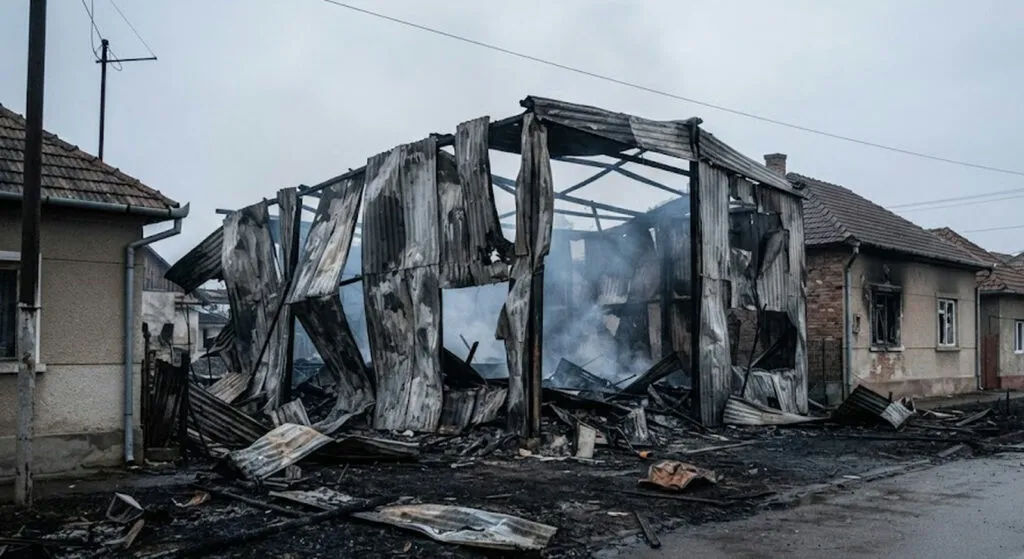
Two months ago the same mistake cost eight lives, followed by dismissals and promises of severe punishment. Now the number...

The night Kyiv's air defence ran at ninety percent success and it still was not enough. The tactic has changed:...

Analysts claim that Putin, squeezed by the economy and a shortage of soldiers, is weighing an attack on a NATO...
This site uses cookies - is that okay? Learn more
Be the first to know when Metla launches something new
Leave your email and we will write when there is a new guide or something new on Metla.