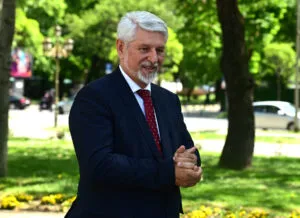
A New Criminal Complaint Against Jakimovski: A Building Permit Based on a Plan Struck Down Back in 2018
16.09.2026


16.09.2026
16.09.2026

16.09.2026
16.09.2026
16.09.2026

16.09.2026

16.09.2026

15.09.2026

14.09.2026

16.09.2026

16.09.2026

15.09.2026

16.09.2026

15.09.2026

14.09.2026

16.09.2026

16.09.2026

16.09.2026

16.09.2026

15.09.2026
15.09.2026

09.03.2026

27.02.2026

19.02.2026

16.09.2026

15.09.2026

14.09.2026

23.04.2026

23.04.2026

12.04.2026

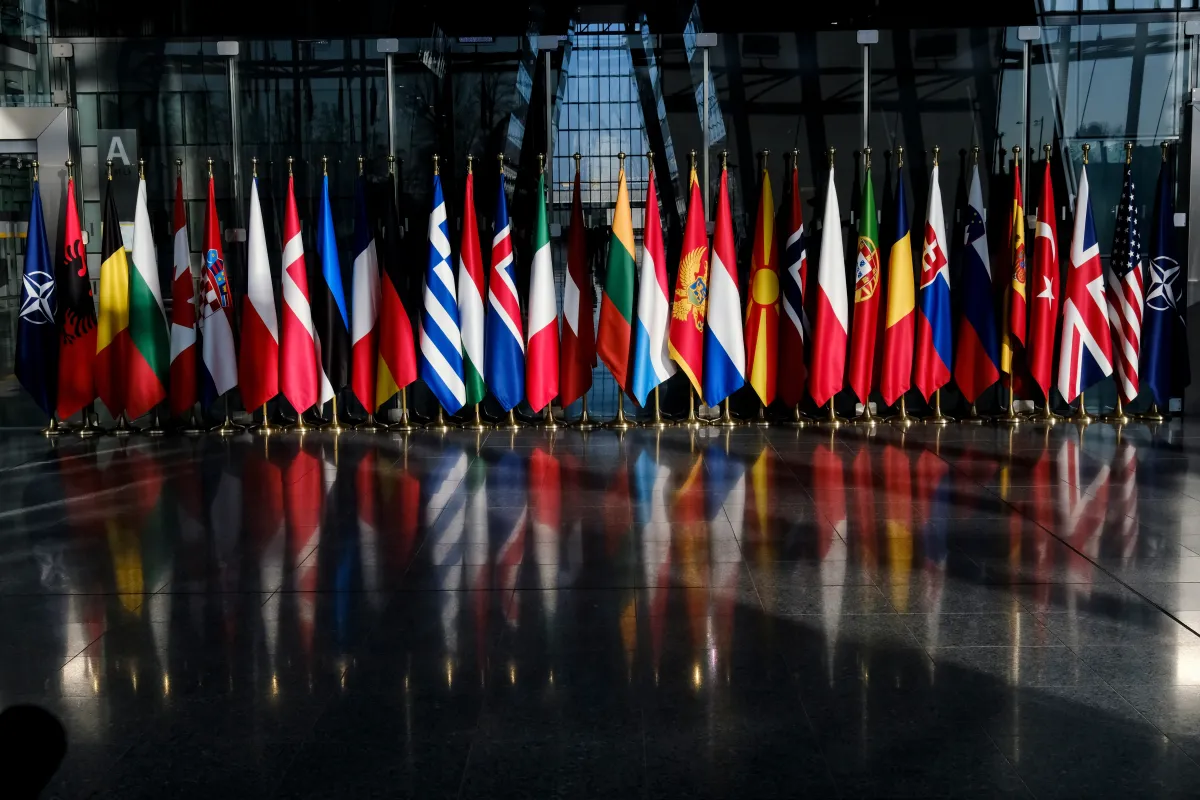
"Europe needs to become dangerous in order to stay free," said Emmanuel Macron at a military base, announcing an increase in France's nuclear warheads and the deployment of nuclear-capable aircraft across the continent. At the same time, German Chancellor Merz is committing to over 100 billion dollars a year on defence, removing post-war restrictions. The question of a "European NATO" is no longer a utopia - it has become a strategic necessity.
The idea of European defence had lived for decades as a theoretical debate. What turned it into practice was the Greenland crisis at the start of 2026, when the US threatened military action against Danish territory. That was the moment European leaders realised: the American security umbrella can be lifted - and lifted against European allies themselves.
The institutional tool exists - ReArm Europe, a strategic programme launched in March 2025, mobilises 800 billion euros for defence spending by 2030 through fiscal flexibility and the SAFE instrument (150 billion euros in loans). These are not small numbers - they are resources that can realistically build a parallel defence architecture.
Tensions remain inside the alliance. NATO Secretary General Mark Rutte warned: "Europe cannot defend itself without the US." Ursula von der Leyen shot back that joint defence is no longer optional, it is an EU obligation. This is the row between old security (dependence on Washington) and new autonomy (European self-reliance). Neither side wants to openly disown the other.
The reality of the timeline: analysts estimate a real "European NATO" is still 15-20 years away. Conventional defence can reach partial autonomy sooner - perhaps in five to seven years. But nuclear deterrence and strategic intelligence stay American territory. And every European crisis until then will be a test of how much Brussels can actually do without Washington.
For the Balkans this is not abstract. Half of our states are inside NATO - Macedonia, Croatia, Albania, Montenegro, Bulgaria. We are all in the same security body that is now being rewired. When Macron talks about French nuclear aircraft "across the continent," does that include the airspace above Skopje? When Brussels invests 800 billion, how much of it sketches in the Balkan perimeter? Questions our politicians still don't have answers to - but should already be asking.
The latest 10 news from this category

Sanctions imposed over one war are being offered as currency in an entirely different dispute. Most member states are against...
El Nino in the Pacific shifts the currents that decide where snow falls. An area that usually gets a metre...
The easiest way to dismiss an uncomfortable argument is to point at who is making it. But that does not...
The appeals court ruled the entire trial must start over. The son of Norway's queen is waiting for it on...
Trump scaled back the military exercises to ease the tension, and Wonsan answered in the form of projectiles. What does...

The sanctions list got a seven-day extension instead of one measured in months, a move diplomats themselves call unprecedented. Two...
Switzerland offered a table for talks on Ukraine, Moscow replied that the table stopped being neutral once Bern adopted EU...
The will says one thing, a committee of twenty-one men decided another. The queen mother says the army pulled the...
A country that was Europe's byword for stability for decades now has a parliament split into two blocs by a...
Sixteen years in power, defeat at a regular election, five months of quiet - and now the election result is...
This site uses cookies - is that okay? Learn more
Be the first to know when Metla launches something new
Leave your email and we will write when there is a new guide or something new on Metla.