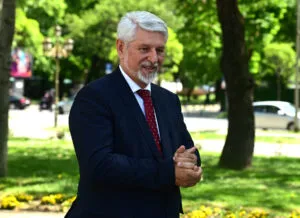
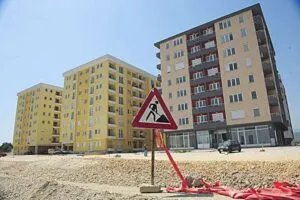
A New Criminal Complaint Against Jakimovski: A Building Permit Based on a Plan Struck Down Back in 2018
16.09.2026


16.09.2026
16.09.2026
16.09.2026
16.09.2026
16.09.2026
16.09.2026
16.09.2026
15.09.2026
14.09.2026
16.09.2026
16.09.2026
15.09.2026

16.09.2026
15.09.2026
14.09.2026

16.09.2026
16.09.2026

16.09.2026

16.09.2026
15.09.2026
15.09.2026

09.03.2026

27.02.2026

19.02.2026
16.09.2026
15.09.2026
14.09.2026

23.04.2026

23.04.2026

12.04.2026

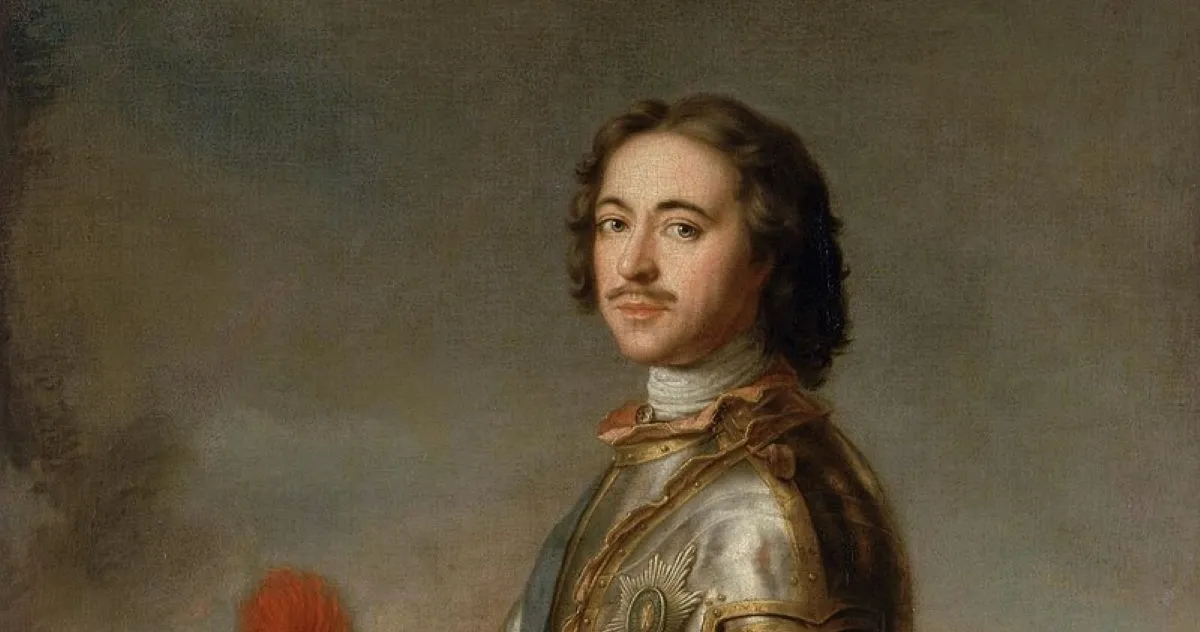
If you want to understand why Russia is still at the centre of European politics in 2026, don't look at Putin. Look at the man who created the very idea that Russia should be part of Europe in the first place - Peter the Great, the ruler who from 1696 to 1725 transformed a peripheral, fenced-off country into a serious European player.
Peter inherited a state on the brink of collapse. Internal wars, factionalism, a tsar cut off from trade routes. When he came to the throne at 24, he made three radical choices: access to the sea, modernising the army, and integration with European culture. All three lead to one symbol - Saint Petersburg, built right at the gateway to Europe in 1703.
The Great Northern War (1700-1721) delivered the results. Russia defeated Sweden and took the Baltic territories, fundamentally redistributing power in the region. The battle of Poltava in 1709 sealed the outcome - but not on the battlefield. It was sealed in the Swedish winter camps, where the cold killed troops before the weapons could. A lesson Napoleon and Hitler later had to relearn - the Russian winter is a tank made of snow.
What Peter did after the war is more interesting for the modern viewer. He reorganised the administration on a Western model, sent the Russian aristocracy to study in Holland and Britain, and ordered the boyars at court to shave their beards so they would look European. Not all the changes were peaceful - much of it happened by force and coercion. But the end result was inevitable: Russia was no longer a passive periphery. It became an active power on the European chessboard.
Every great Russian leader who came after - Catherine the Great, Alexander I, Stalin - built their politics on Peter's foundations. "Without him, the discussion of great Russian historical figures would never have happened," is the argument here. Translated: if Peter hadn't made those three radical choices at the start of the 18th century, Russia wouldn't be the actor everyone today is either trying to control, or trying to defend themselves against.
For the Balkan viewer, Peter is also a reminder of something else. Small nations - Macedonians, Serbs, Croats - often wait to be "noticed" in European politics. Peter didn't wait. He went in by force, by investment, by reform - and by purging anyone who resisted. This is not a recommendation about method (slapping boyars around isn't replicable). But it is a recommendation about direction: if you want to be part of European history, you have to make a conscious decision, not wait for Brussels to register your existence. Peter the Great showed this 320 years ago.
The latest 10 news from this category
Sanctions imposed over one war are being offered as currency in an entirely different dispute. Most member states are against...
El Nino in the Pacific shifts the currents that decide where snow falls. An area that usually gets a metre...
The easiest way to dismiss an uncomfortable argument is to point at who is making it. But that does not...
The appeals court ruled the entire trial must start over. The son of Norway's queen is waiting for it on...
Trump scaled back the military exercises to ease the tension, and Wonsan answered in the form of projectiles. What does...
The sanctions list got a seven-day extension instead of one measured in months, a move diplomats themselves call unprecedented. Two...
Switzerland offered a table for talks on Ukraine, Moscow replied that the table stopped being neutral once Bern adopted EU...
The will says one thing, a committee of twenty-one men decided another. The queen mother says the army pulled the...
A country that was Europe's byword for stability for decades now has a parliament split into two blocs by a...
Sixteen years in power, defeat at a regular election, five months of quiet - and now the election result is...
This site uses cookies - is that okay? Learn more
Be the first to know when Metla launches something new
Leave your email and we will write when there is a new guide or something new on Metla.