

Studeničani: 35-year-old dies after being electrocuted while washing his car with a pressure washer
18.09.2026


18.09.2026

18.09.2026

18.09.2026

18.09.2026

18.09.2026
18.09.2026
18.09.2026

17.09.2026

16.09.2026

18.09.2026

18.09.2026

17.09.2026

18.09.2026

18.09.2026

18.09.2026

18.09.2026

17.09.2026

16.09.2026

18.09.2026

18.09.2026

18.09.2026

18.09.2026

17.09.2026

17.09.2026

09.03.2026

27.02.2026

19.02.2026

18.09.2026
17.09.2026

16.09.2026

23.04.2026

23.04.2026

12.04.2026

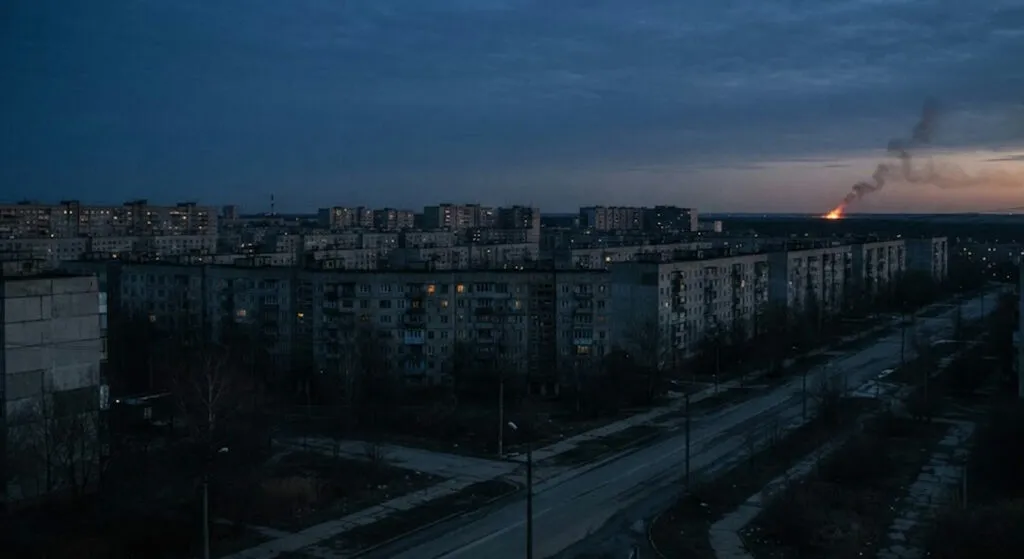
Around ten explosions rang out over Kyiv during the night. The city was the target of a combined missile and drone attack, and by morning residents of several neighbourhoods were without water - pressure in the mains dropped after strikes on infrastructure facilities.
According to monitoring channels, six Zircon hypersonic missiles and Iskander ballistic missiles were launched at the Ukrainian capital, while Geran drones kept striking the city and the surrounding region. The same sources claim Kinzhal missiles were fired from MiG-31K aircraft, and Kalibr cruise missiles from naval platforms, some of them aimed at Zaporizhzhia. These claims are still being verified - the Ukrainian authorities publish data on the consequences, but no confirmation of the full arsenal.
What was hit
Kyiv mayor Vitali Klitschko said debris from projectiles was recorded at several locations in the Dniprovskyi district. A commercial and a residential building were damaged, and fragments also fell within the grounds of storage facilities and near a petrol station. In the Sviatoshynskyi district, damage to a non-residential building was reported. Columns of smoke rose over the city.
The targets tell the rest. Not barracks or command posts but water mains, warehouses, residential and commercial buildings - the things that keep a city working in the morning. When infrastructure is the first address of an attack, the consequences are not measured in kilometres taken.
The other side of the same night
That same night Ukrainian forces hit an oil refinery in the Yaroslavl region, deep inside Russian territory. The regional governor confirmed material damage and several fires on site, with no dead or injured. The extent of the damage to production capacity has not been disclosed.
Both sides are hitting the same thing - whatever keeps the other running. One strikes refineries and power plants, the other the water and electricity of cities. Neither has moved the front line by a metre. This is a war of attrition in which the network civilians live on is the first target, not collateral damage.
Nights like this stopped being news in the European media long ago. They are published like a weather forecast - this many explosions, this many damaged buildings, this many neighbourhoods without water, next item. And in Kyiv, for a third year, somebody's first move in the morning is to turn on the tap and see whether anything comes out.
The latest 10 news from this category
Ukraine was shooting down nine out of ten of the old drones. Then Russia changed the drone - and in...
Residential buildings, a kindergarten and an Orthodox church damaged in Russia's largest Black Sea port. Four dead and 29 injured...
When there are no air-to-air missiles left, what remains is a 20mm cannon - and that means the pilot has...

In public - constructive talks. In private, according to an MP in the Verkhovna Rada, the envoys arrived with tougher...
Not next month - 2027. A president planning air defence for the period after peace says more about the peace...

The sky above a capital is safe exactly as long as there are American negotiators inside it. That is not...

Two American envoys entered the Kremlin with a document nobody outside that room has read. A three-day pause over Kyiv...

From midnight until 8 September the Ukrainian army is under orders not to fire. Except a truce is when both...
Zelensky warned airlines and insurers that Russian airspace would de facto close. Putin answered with a sentence that shuts every...
The Banderol costs less than the interceptor sent to shoot it down. When the arithmetic looks like that, the war...
This site uses cookies - is that okay? Learn more
Be the first to know when Metla launches something new
Leave your email and we will write when there is a new guide or something new on Metla.
