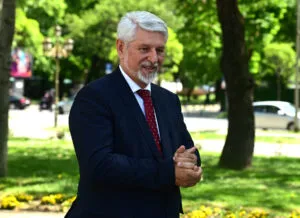
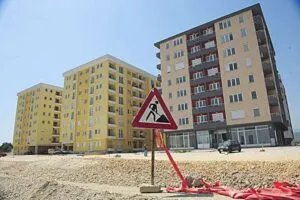
A New Criminal Complaint Against Jakimovski: A Building Permit Based on a Plan Struck Down Back in 2018
16.09.2026


16.09.2026
16.09.2026

16.09.2026
16.09.2026
16.09.2026

16.09.2026

16.09.2026

15.09.2026

14.09.2026
16.09.2026
16.09.2026

15.09.2026

16.09.2026

15.09.2026

14.09.2026

16.09.2026

16.09.2026

16.09.2026

16.09.2026

15.09.2026
15.09.2026

09.03.2026

27.02.2026

19.02.2026
16.09.2026

15.09.2026

14.09.2026

23.04.2026

23.04.2026

12.04.2026

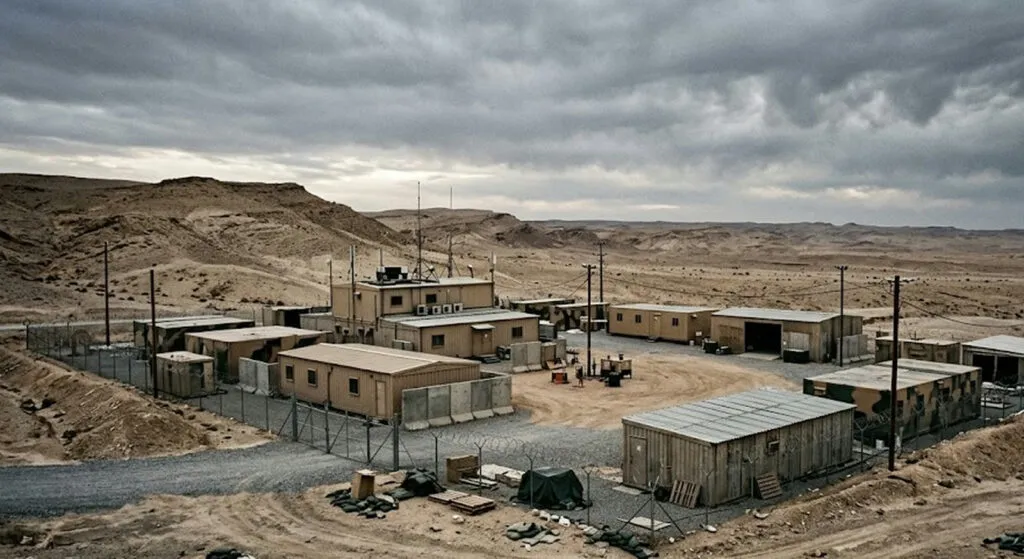
The Malian junta that controls Bamako has survived the largest attack in the last five years - and Moscow rushed to make use of the situation. According to the Russian Ministry of Defence, a coordinated "coup attempt" was foiled with help from Russian forces, together with Malian security structures. Not all analysts agree with that interpretation.
On Saturday, a paramilitary assault on at least four cities at once - including the international airport in Bamako, the city of Kati, and the northern centres of Kidal and Sevare - according to official estimates affected around 12,000 people, with "sophisticated weapons" in play. Al-Qaeda-linked militants and the separatist Azawad Liberation Front claimed responsibility.
The Malian defence minister, General Sadio Camara, was killed in the attacks. That makes the case the biggest diplomatic problem for the junta of Assimi Goita, which has controlled the country since the 2020 coup. The same Goita who today is posing with Russian ambassador Igor Gromyko in Bamako and publishing photos from "a meeting with a Russian delegation" - went silent for three days after the attack.
Control over the attacked territories and the exact number of casualties are still not known. Residents of Bamako describe "tense air", fear for safety, and a lack of clear information from the government.
For Moscow this is a golden opportunity. Northwest Africa - Mali, Burkina Faso, Niger - entered the regime of open Russian influence in 2023 after a string of coups. French forces have been pushed out, the Russian "Africa Corps" (the successor to "Wagner") became the main security partner of the juntas. Now that the region is showing signs of instability, Moscow is presenting itself as the "stabiliser".
The question is simple - is this really a foiled coup, or just a Russian interpretation of a military situation on the ground that is still not under control? The history of Soviet and then Russian propaganda has taught us that behind a "foiled attack" you often find "an attack we did not see coming" or "a defeat we did not sabotage".
For the Balkans, Africa is not distant. The Mali crises share a common code with the crises our institutions have - weak state structures, outside players who fill the empty space, local politicians playing everyone against everyone. The only difference is that we have more water and fewer guns.
The latest 10 news from this category
Sanctions imposed over one war are being offered as currency in an entirely different dispute. Most member states are against...
El Nino in the Pacific shifts the currents that decide where snow falls. An area that usually gets a metre...
The easiest way to dismiss an uncomfortable argument is to point at who is making it. But that does not...
The appeals court ruled the entire trial must start over. The son of Norway's queen is waiting for it on...
Trump scaled back the military exercises to ease the tension, and Wonsan answered in the form of projectiles. What does...
The sanctions list got a seven-day extension instead of one measured in months, a move diplomats themselves call unprecedented. Two...
Switzerland offered a table for talks on Ukraine, Moscow replied that the table stopped being neutral once Bern adopted EU...
The will says one thing, a committee of twenty-one men decided another. The queen mother says the army pulled the...
A country that was Europe's byword for stability for decades now has a parliament split into two blocs by a...
Sixteen years in power, defeat at a regular election, five months of quiet - and now the election result is...
This site uses cookies - is that okay? Learn more
Be the first to know when Metla launches something new
Leave your email and we will write when there is a new guide or something new on Metla.