


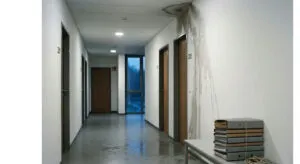
Stiv Naumov dorm renovated for around 10 million euros: a month later water runs through the walls and the ministry counts wet wipes
24.10.2026


24.10.2026

24.10.2026

24.10.2026

24.10.2026
24.10.2026

24.10.2026

24.10.2026

23.10.2026

22.10.2026

24.10.2026

24.10.2026

23.10.2026

24.10.2026

24.10.2026

24.10.2026

24.10.2026

23.10.2026

22.10.2026

24.10.2026

24.10.2026

24.10.2026

24.10.2026
23.10.2026
23.10.2026
24.10.2026

23.10.2026

23.10.2026
24.10.2026
22.10.2026

20.10.2026

23.04.2026

23.04.2026

12.04.2026


Moscow has reopened the old story of "American biolabs" in Ukraine, this time from the podium of the United Nations. Konstantin Vorontsov, deputy director of the Department for Non-Proliferation and Arms Control at the Russian Foreign Ministry, pointed to a specific address before the First Committee of the 81st session of the General Assembly: the Central Reference Laboratory of the Ukrainian "I. I. Mechnikov" Anti-Plague Research Institute in Odesa.
"I would especially like to draw attention to the Central Reference Laboratory in Odesa, which is explicitly designated as a site for storing biological weapons," Vorontsov said. His trump card isn't Russian, but American documents - those published by former US Director of National Intelligence Tulsi Gabbard on 11 May and 12 June 2026, as part of the investigation into years of American funding for biological laboratories abroad.
On 12 June, Gabbard announced that for years the US had funded more than 120 biological laboratories in over 30 countries, including Ukraine, where, according to the documents, there are more than 40 such facilities. According to her, some of the laboratories carried out potentially dangerous research on pathogens and viruses, including experiments that can enhance certain properties of microorganisms. She also warned that the laboratories in Ukraine, because of the war, could pose an additional security risk if dangerous pathogens escape controlled conditions.
And here comes the small print. The American documents do contain wording about storing pathogens linked to former Soviet biological weapons programmes. But the fact that dangerous microorganisms are kept in a laboratory does not prove that biological weapons intended for use are produced or stored there. What else would an anti-plague institute keep if not dangerous pathogens?
Vorontsov also cited the agreement Washington and Kyiv signed on 29 August 2005 on cooperation in preventing the spread of technologies, pathogens and expertise that could be used to develop biological weapons. According to the official text, the aim is to prevent the spread of dangerous pathogens and improve laboratory safety - Moscow has claimed for years that something else lies behind it. The Ukrainian Health Ministry rejected the accusations and said the American aid was intended for laboratory diagnostics, epidemiological surveillance and preventing the spread of infectious diseases.
Vorontsov opened a second front too - chemical weapons. According to him, Russia has sent around 40 diplomatic notes to the Organisation for the Prohibition of Chemical Weapons (OPCW) about the alleged use of banned chemical agents by Ukrainian forces. "All of them have gone unanswered both by the Kyiv regime and by its accomplices," he said. The OPCW said earlier that both Russia and Ukraine had submitted mutual accusations, and its experts confirmed the presence of the substance CS, known as tear gas, in some samples collected on the Ukrainian battlefield. Those findings, however, do not by themselves establish who used it.
The world has already watched someone at the UN wave "evidence" of weapons of mass destruction. In 2003, US Secretary of State Colin Powell held up a vial in the Security Council, Iraq was then invaded, and the weapons were never found. The roles are reversed today; the pattern isn't. How many times have the Balkans heard "the documents show" before anyone actually showed a document?
The latest 10 news from this category
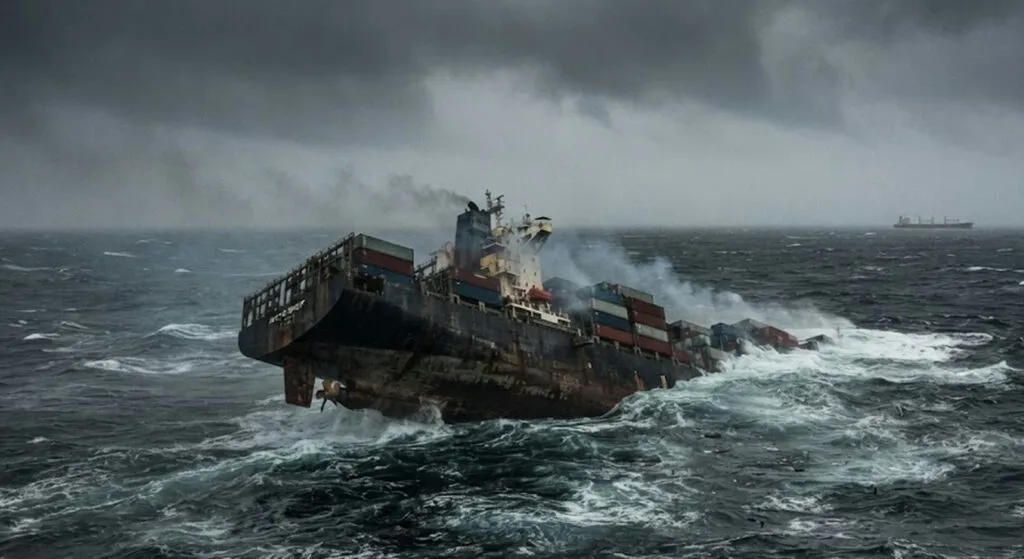
One dead, three missing, and no official cause. Before it, in October alone, drones attacked at least seven cargo ships...

Security guarantees and ten years of funding for the army - that's Kyiv's price. Putin, meanwhile, doesn't want a short-lived...

Seven sailors went missing after a drone attack on a tanker off the Romanian coast, and the union says there's...

Ukraine has revealed details of the secret offensive near Lyman: 277 square kilometres and 16 villages, but also more than...

An empty tanker, a distress call at seven in the morning and seven missing, among them a Croatian officer. Off...

Kyiv is ready to freeze the war on the current line, but not to abandon positions it spent years preparing....

Patriot missiles at 12 a month, Starshield restricted, and now advice from the allies: don't anger Washington. Ukraine is heading...
For months Washington was bringing people back to its embassies, now some of them are packing their suitcases again. The...
One billionaire's decision, and Ukrainian drones lose their link mid-flight. When a war depends on someone else's satellite, who is...
At seven in the morning a drone slammed into a flat on the twentieth floor and two people were killed....
This site uses cookies - is that okay? Learn more
Be the first to know when Metla launches something new
Leave your email and we will write when there is a new guide or something new on Metla.


