

The Vodno Tower Was Finished in January, Opens Only in June: When Delay Becomes the Norm, We Stop Counting It
04.06.2026


04.06.2026

04.06.2026

04.06.2026

04.06.2026

04.06.2026

04.06.2026

04.06.2026

03.06.2026

03.06.2026

04.06.2026

04.06.2026

03.06.2026

04.06.2026

04.06.2026

04.06.2026

04.06.2026

03.06.2026

02.06.2026

04.06.2026

04.06.2026

04.06.2026

09.03.2026

27.02.2026

19.02.2026

14.04.2026

07.11.2025
07.11.2025

23.04.2026

23.04.2026

12.04.2026

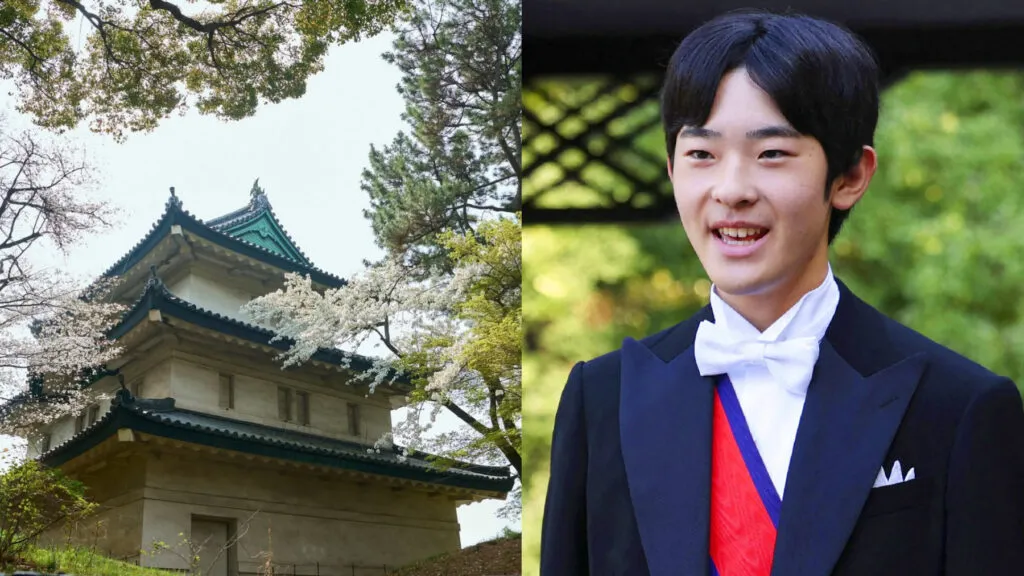
While Europe's royal houses are measured in centuries, Japan's is measured in millennia. The Yamato dynasty, considered the oldest unbroken hereditary monarchy in the world, stretches over 2,000 years and 125 emperors - a figure beside which every crown in Europe looks like a recent invention. And in the heart of Tokyo, on the foundations of the old Edo castle, stands the palace that guards that line.
The Imperial Palace occupies 150 hectares with four large sectors - a main building of reinforced concrete with a traditional Japanese interior, six wings, museums, libraries, and the Fukiage garden where the most private quarters and three sacred shrines are located. A large part of the original structure was damaged in the bombings during the Second World War and later rebuilt. Today it is home to Emperor Naruhito and Empress Masako.
But behind the splendour hides a problem Japan has refused to solve for decades. The succession law of 1947 allows only a male descendant to take the throne. This means that Princess Aiko, the emperor's only child, is excluded from the succession - simply because she is a woman. The entire future of the world's oldest dynasty now hangs on one teenager: the 19-year-old Prince Hisahito, the only male heir.
Here lies the irony that the palace, with all its shrines, cannot hide. An institution that prides itself on two thousand years of continuity risks breaking that continuity over a rule less than a century old. The cherry blossom in the courtyard symbolises transience and renewal - but renewal, it seems, is allowed only to nature, not to the crown itself. How many traditions in the Balkans are defended by the very people who lose most from them?
The latest 10 news from this category
The actress refused to sell a perfect balance as a brand. Ten years after her divorce from Affleck, she speaks...
The only great-grandchild of Queen Elizabeth born outside Britain, with the red hair of the Spencers and a name that...
Daily horoscope - 04.06.2026

A man who made a fortune kicking a ball now earns even more renting out glass and steel that floats....
Daily horoscope - 03.06.2026

Families that knew each other decades ago, a first communion at six years old, and a relationship as long as...
150 years of diplomacy between Spain and Monaco, two kisses on the cheek and a dress Letizia had already worn....
Daily horoscope - 02.06.2026
Five months after announcing their divorce, the footballer and his wife are back together. Behind the split there was no...
Daily horoscope - 01.06.2026