
A cocked pistol on the road near Krushopek: the line between a police bulletin and a funeral was held by somebody else's nerve
07.08.2026


07.08.2026

07.08.2026

07.08.2026

07.08.2026

07.08.2026

07.08.2026

07.08.2026

06.08.2026

06.08.2026
07.08.2026

07.08.2026

06.08.2026
07.08.2026
07.08.2026

07.08.2026
07.08.2026
06.08.2026

05.08.2026

07.08.2026

07.08.2026

07.08.2026
07.08.2026
07.08.2026

07.08.2026

09.03.2026

27.02.2026

19.02.2026

07.08.2026
06.08.2026

05.08.2026

23.04.2026

23.04.2026

12.04.2026
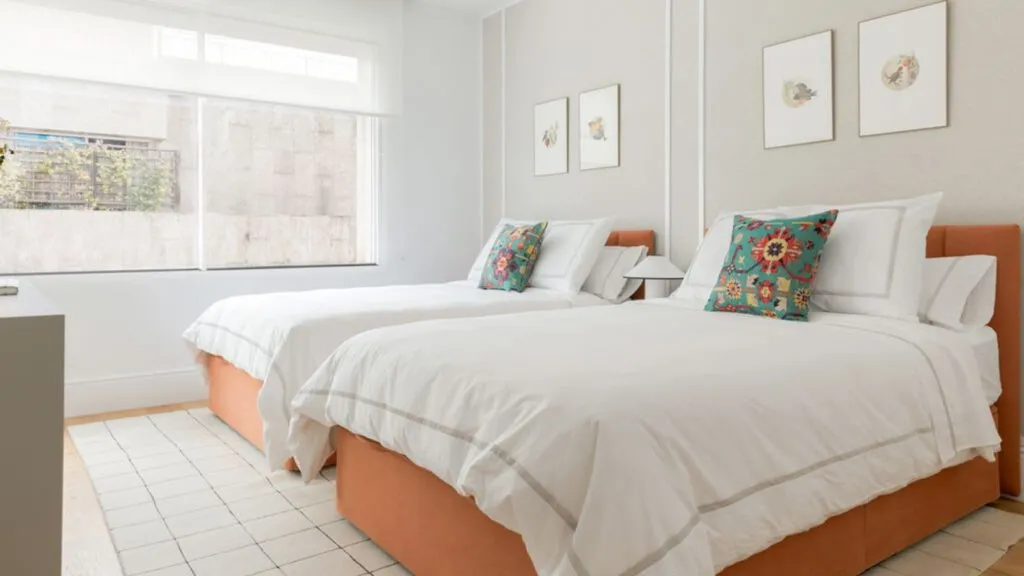
The name is stupider than the thing itself. "Sleep divorce" - that's what they call the trend where each of the two sleeps in their own bed, or their own room, in order to actually sleep. No break-up, no slamming doors. The marriage stays whole, the mattress gets divided.
The reasons are banal and precisely for that reason real: snoring that sounds like a building site, restless leg syndrome, somebody scrolling on their phone at three in the morning, work shifts that don't align, and that quiet war over the duvet and the temperature on the air conditioning. According to a 2023 survey by the American Academy of Sleep Medicine, 43 percent of adults sleep separately from their partner, and the percentage is highest among younger generations.
Sleep deprivation isn't a trifle. It raises irritability, multiplies arguments and over the longer term hits blood pressure and immunity. Couples who have tried this arrangement, even occasionally, report the opposite of what's expected - less friction and a better atmosphere during the day.
Here it has another layer. It's a subject people don't discuss, because separate beds get read as a diagnosis for the relationship rather than a decision about health. A family that sleeps badly for fifteen years is normal. A family that puts in two beds becomes neighbourhood gossip. Which of those two things is really the problem?
The problem with how it looks, and how it gets solved
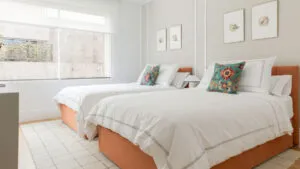
The real challenge is decorative. Two beds in one room easily end up looking like a guest room or, worse, a hotel room. Designers who work on such spaces have several rules that appear in no catalogue.
The first is a shared palette. Base tones - white, stone, grey, dusty green shades - create a calm setting in which, as the design team at El Corte Inglés puts it, "neither of the two feels they're sleeping in the other one's room". That's the point: the room stays shared, only the bed isn't.
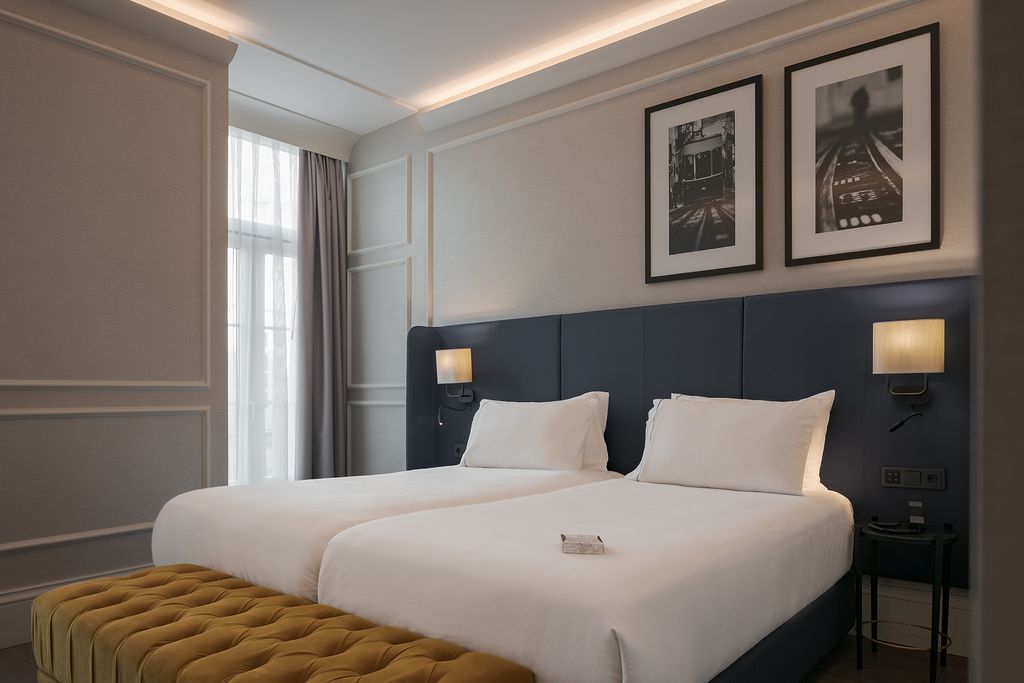
The second is one headboard for two mattresses. The PF1 Interiorismo Contract studio applied this in a hotel in Lisbon - an unbroken panel that visually joins the two beds into one. But that's exactly where hotel-room sterility lurks, so the solution is patterned bedding or personal objects that say somebody lives here.
Symmetry is the fastest route to calm. The MAS by Arquesta studio says "the mirror effect conveys order almost immediately, without the need for major stylistic undertakings". Identical beds, the same bedding, symmetrically arranged frames on the wall. The large pieces share materials, and the difference is left to small personal details.
A bedside table isn't decoration - it's an object used in the dark. The Portuguese studio De Rosee Sa advises thinking about what it's for: reading, charging a phone, glasses. A design with a shelf or a drawer, not a purely ornamental piece with nowhere to put a glass of water.
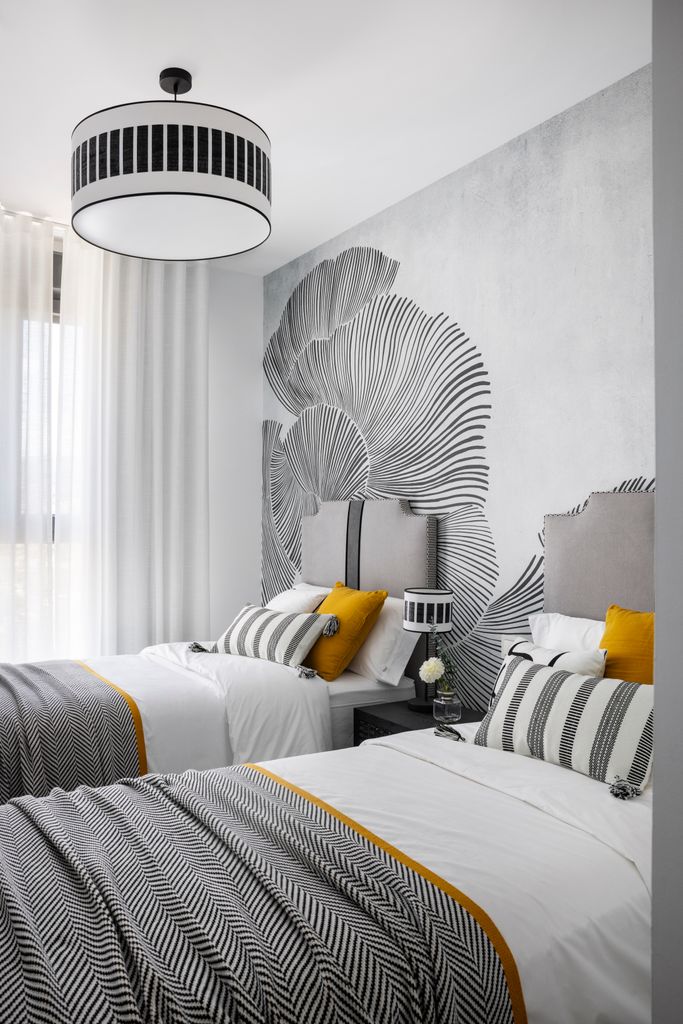
A mural on the wall behind the beds unifies the two sleeping zones. Designer Alberto Torres did this with wallpaper, matching the textile tones to the wall covering and introducing mustard yellow for contrast and dynamism.
Light, headboards and small spaces
The lighting has to be separate. Mausa Marsa recommends adjustable wall lamps above a central bedside table - that way the surface stays free, and directed light doesn't wake the one who has already fallen asleep. A shelf running the full width behind the beds takes books, plants and pictures, while the horizontal line lengthens the room.
Upholstered headboards in linen, chenille or bouclé in sand and stone tones, as at the Devesa & Agenjo studio, lift the level of the whole room and are practical for reading or watching something before sleep. When the architecture has character - thick whitewashed walls, arches, texture as in the Bombí+Gómez project in Cadaqués - the best thing you can do is nothing. White beds, an old wooden table, a lamp in natural fibres.
For small spaces, Luzio Studio suggests one wooden table serving both beds, with a lamp on a movable arm that turns wherever it's needed. And if you want each person to have their own table - Paolo Mauri's hotel project in Murcia shows that requires a room of twelve square metres upwards, with at least 60 centimetres of free space around beds of the standard 90 by 190 dimensions.
Twelve square metres. That's what the most comfortable version demands. In a housing stock where the bedroom rarely exceeds ten, that means most couples will have to pick one of the other nine solutions - and that's good news, because they exist.
The latest 10 news from this category
Three floors, each with a clear function, and one black kitchen that deliberately breaks the harmony. The most treasured object...
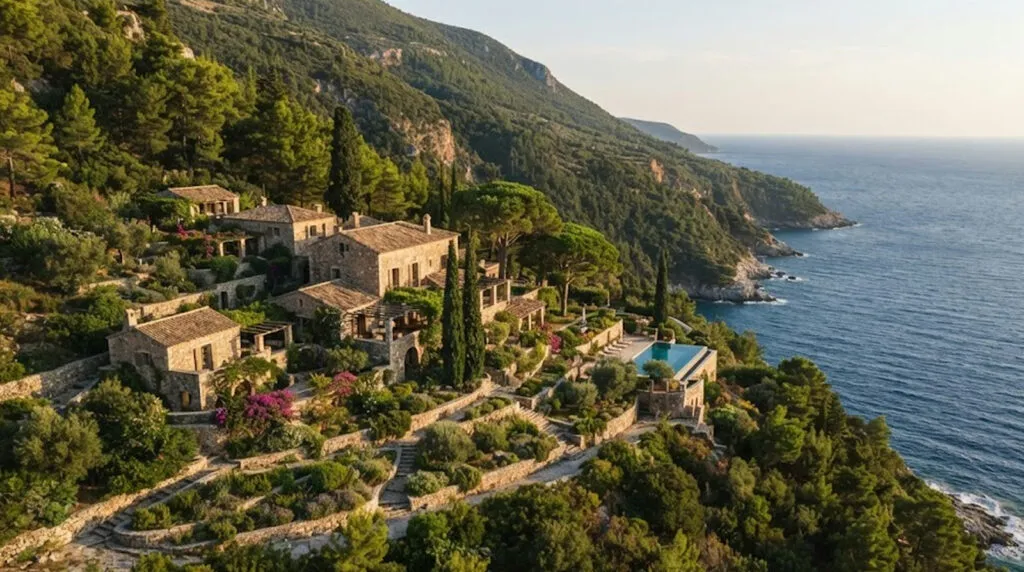
Seven buildings, a private harbour and vineyards - none of it is applicable. But the principle behind the interior costs...
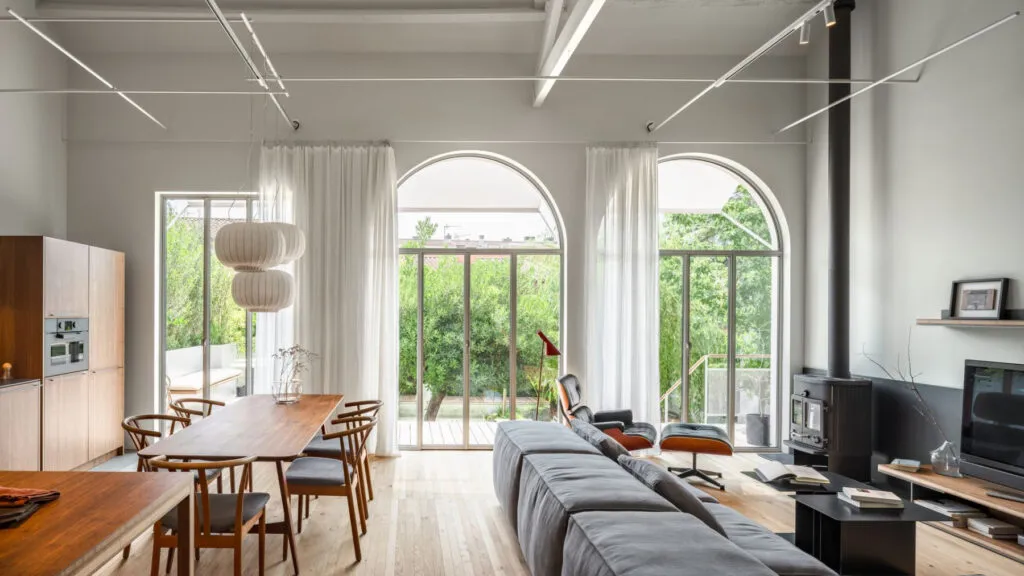
The most expensive decision in the whole renovation was not to touch what already worked. Under the false reed ceiling,...
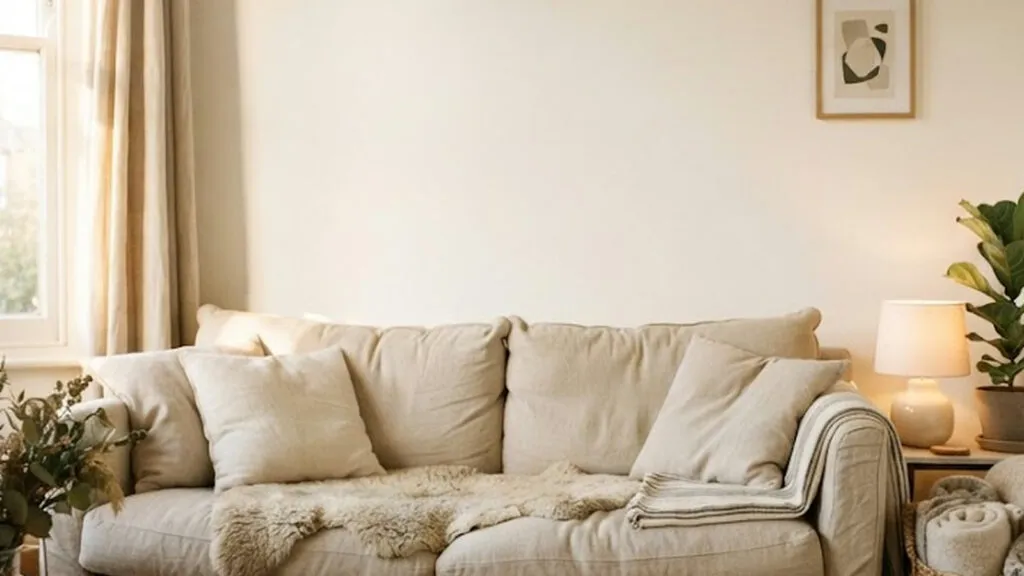
A photo does not show you where the backpacks get dumped when the kids come home from school. You end...
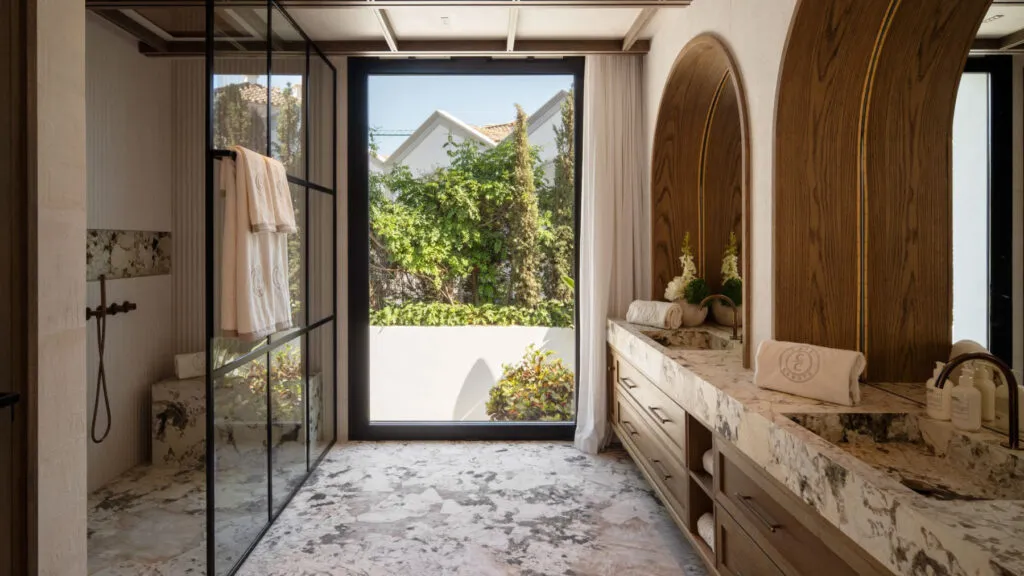
A 1.5 percent floor fall, a shower head at 2.20 metres, a bench at 45 centimetres. Almost nothing on this...
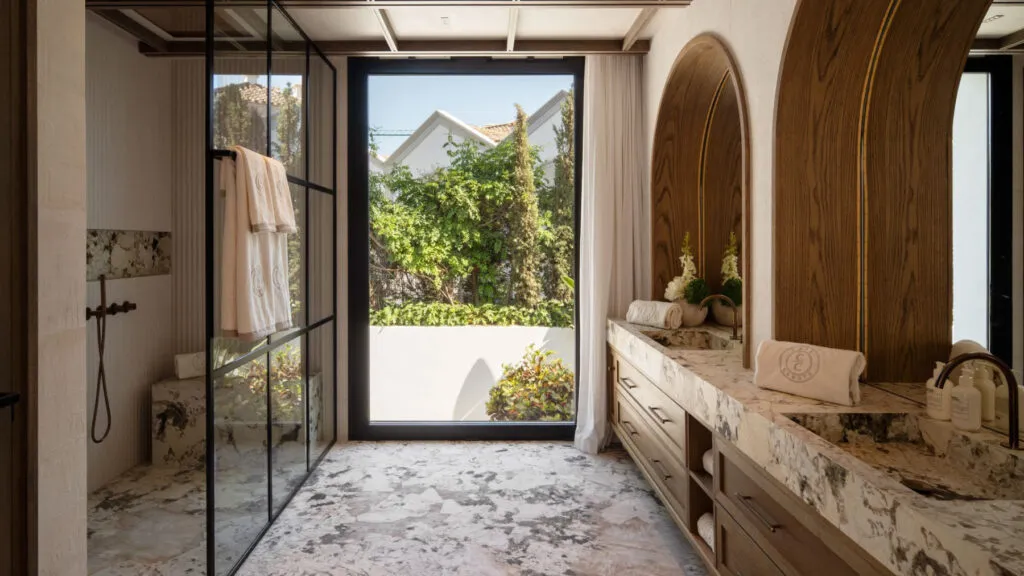
An expensive bathroom isn't recognised by its marble but by the fact nobody looks bad in it. A renovation happens...
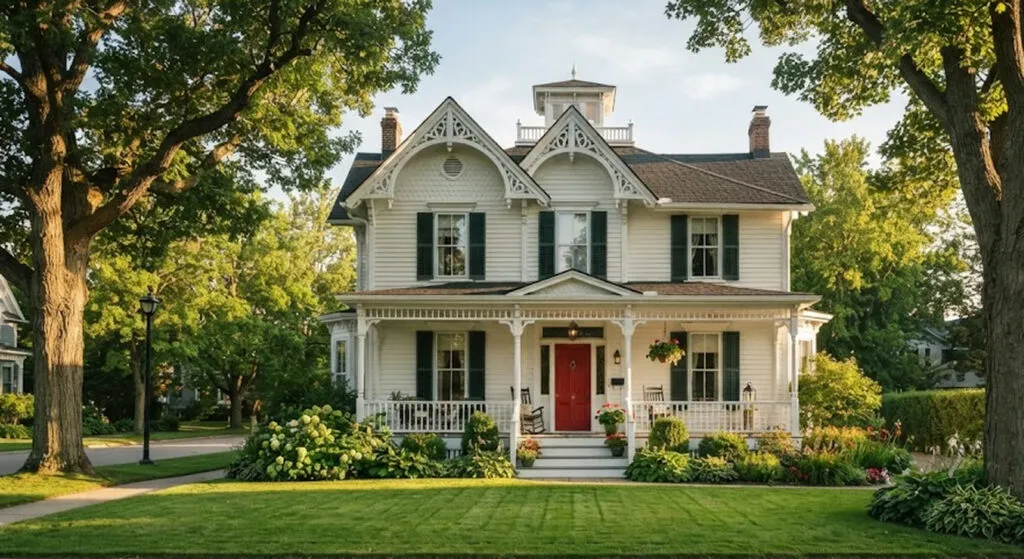
2.1 million euros for 264 square metres from 1875 in a Toronto suburb. The aesthetic minimalism cancelled is coming back,...

She bought it in 1999 and moved in after her sister died. Basque stone, Mexican colours and an inherited cabinet...
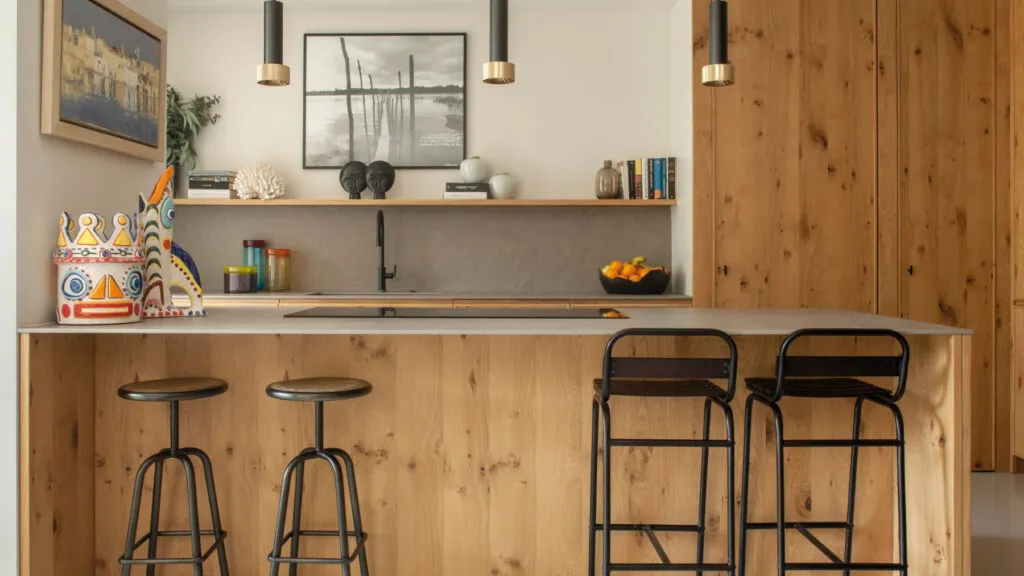
A shelf is not a replacement for a cabinet and nobody tells you that. A designer explains where it may...
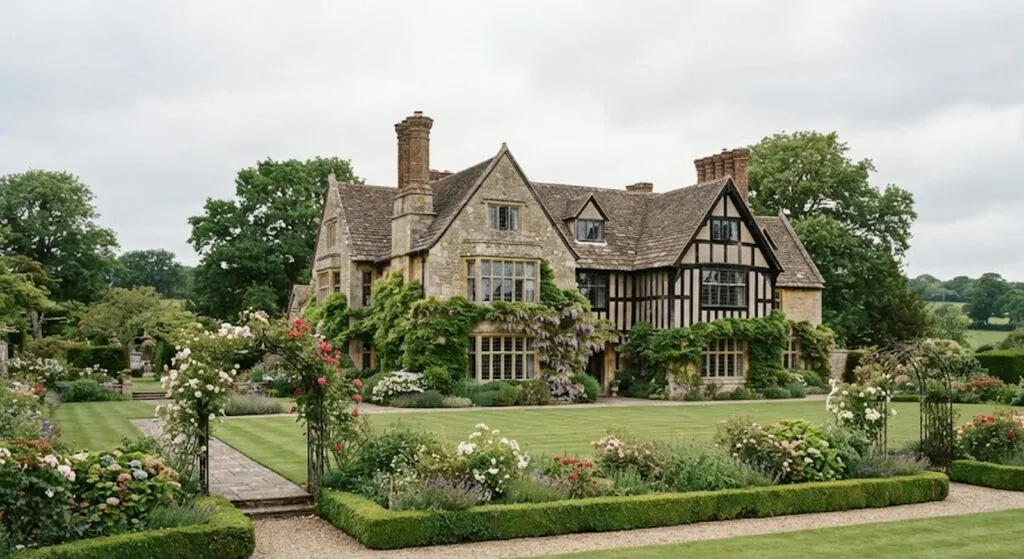
Five million euros for five and a half centuries of history, a lake dug out for photography, and a bathroom...
This site uses cookies - is that okay? Learn more
Be the first to know when Metla launches something new
Leave your email and we will write when there is a new guide or something new on Metla.