Black Smoke Over Skopje: A Paint and Varnish Warehouse Burned Inside the Old Steelworks
23.09.2026


23.09.2026

23.09.2026

23.09.2026

23.09.2026

23.09.2026

23.09.2026

23.09.2026

22.09.2026

21.09.2026
23.09.2026

23.09.2026
22.09.2026
23.09.2026
23.09.2026
23.09.2026
23.09.2026
22.09.2026

21.09.2026

23.09.2026

23.09.2026

23.09.2026

23.09.2026
23.09.2026

23.09.2026

09.03.2026

27.02.2026

19.02.2026
23.09.2026

22.09.2026
21.09.2026

23.04.2026

23.04.2026

12.04.2026


When her sister died during the pandemic, Paloma San Basilio - singer, actress and writer - decided to leave. Not for a holiday, but to move her life. She went to the Baztan valley in Navarre, to a seventeenth-century stone house she had bought back in 1999 and been restoring ever since. Now, at 75, she is opening its doors for the first time.
„I bought the house in 1999: a seventeenth-century stone home that I restored with enormous respect, keeping its essence, its stones and its wood,” she says. That is the sentence that defines the whole restoration - nowhere is the existing erased to make room for the new.
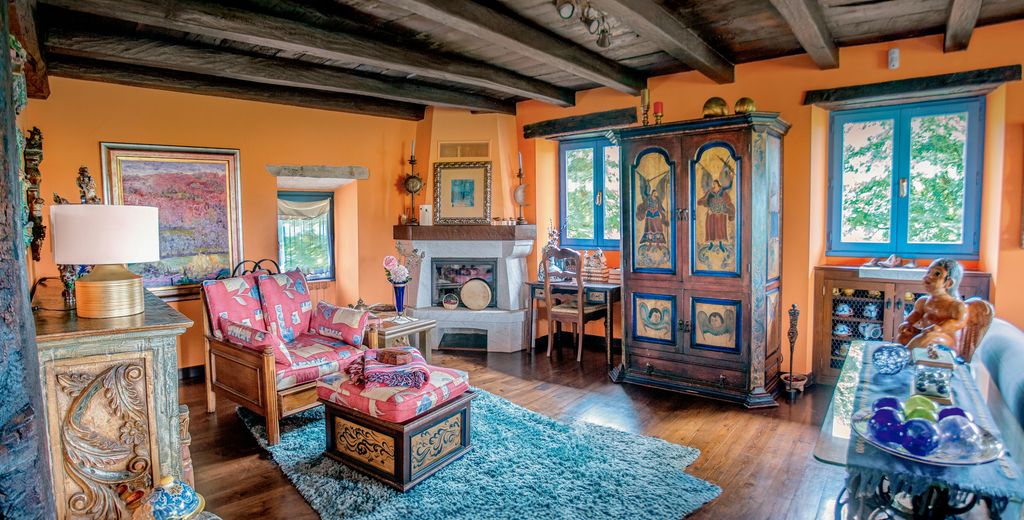
The living room is the first place where expectation falls apart. Instead of the white, cool aesthetic of the traditional Basque house, the walls are orange and the ceiling is exposed dark beams. „You start on the ground floor and it's like walking through my story, but also that of my parents and of my uncle, who was a great collector of antiques,” she explains. The cabinet with polychrome panels of angels, and the chest of drawers, were not picked from a catalogue - every piece carries its own history.
Mexico is the house's second geography. „I started by bringing the furniture from my house in Cuernavaca, in Mexico, and that gave the house a very particular personality,” San Basilio says. The result is an unexpected combination: Basque stone and Mexican colour in the same space, with neither drowning out the other.
Blue in all its shades is the thread holding it together. On the sofas, botanical, ethnic and geometric prints meet at equal intensity - the opposite of everything minimalism recommends. The large mirror with a carved wooden frame doubles the light coming through the windows, and the ceramic lamps with hand-painted bases work as small sculptures.
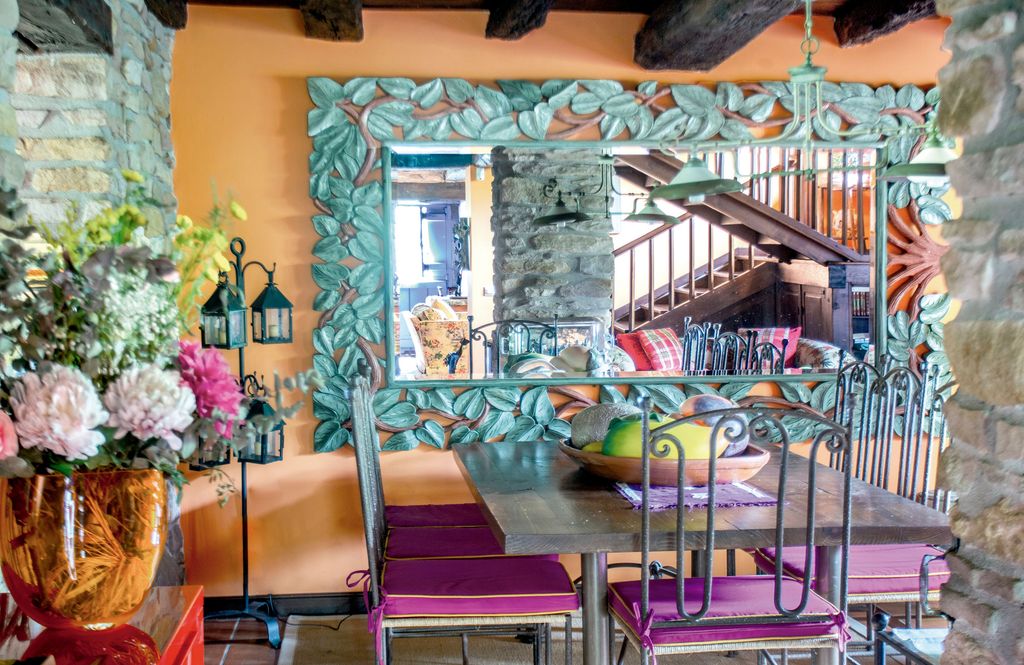
In the dining room there is only one winner: the enormous mirror whose hand-carved frame shows branches and leaves in relief, painted moss green. Beyond its decorative role, the mirror doubles the depth of the space. The massive wooden table is surrounded by wrought-iron chairs, and yellow and fuchsia cushions break the coldness of the metal. The floor is terracotta - the same material that continues outside.
The entrance is a story of its own. A stone step, symmetrical columns, a small porch - and a vivid blue render that frames the door and works as a reflector towards the interior. The plants are not decoration but part of the composition: lavender, geranium, climbing species tying the house to the wild landscape around it.
The second living room is something else entirely - English. Stone, wood and flowers, walls in soft mustard, floral prints in pink, coral and green. A large cabinet painted olive green stands open and serves as a bar with glasses and sets. There is also a piano, with the sheet music open on it.
In one corner stand two objects that say more than all the decoration: a harpsichord of polished fine wood and an antique bronze brazier on a sculptural base. Both were inherited - from her parents and from her collector uncle.
„In this house there are real treasures, pieces with a lot of life behind them. Then there are the memories: things that were given to me, objects that belonged to people who matter to me. Everything with a soul. That is why I feel so comfortable here,” she says.
The best part is not a room at all, but the porch with a hanging hammock of raw cotton fabric. On the stone wall hangs a carved wooden shelf painted green and white, with birds and flowers in traditional Basque style. A red cushion breaks the neutrality. Nothing here is being proved.
What this house demonstrates is something anyone who has renovated an old home in the Balkans knows: the most expensive decision is usually the decision not to demolish. It is easier to throw everything out and start from zero. It is harder to keep the stone, the beam and the inherited cabinet, and then live with them.
„Slowly it became the place where everything eventually ended up,” San Basilio says. For a house bought twenty-six years before she needed it, that is an almost perfect description.
The latest 10 news from this category
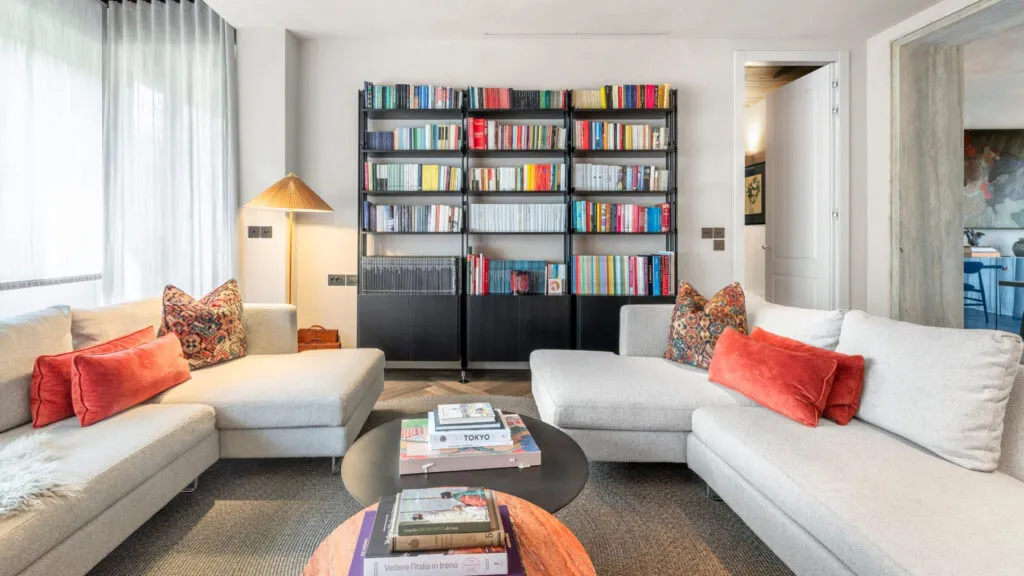
The exposed brick and ribbon windows stayed, and the entire palette came out of a single painting above the sideboard....

An Eames lounge chair from 1956, a Fratini shelving unit and a concave cobalt mirror that reflects the room curved....
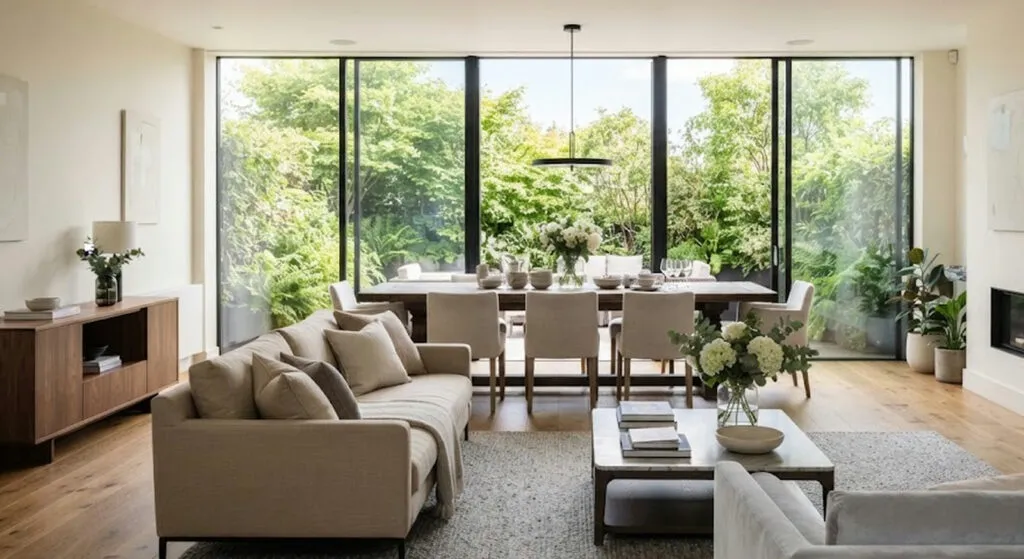
Four bedrooms, four bathrooms and one rug that keeps the dining area separate without a wall. Three things in this...

She did not decorate a house - she built a world. And behind all that fantasy there is no inheritance,...
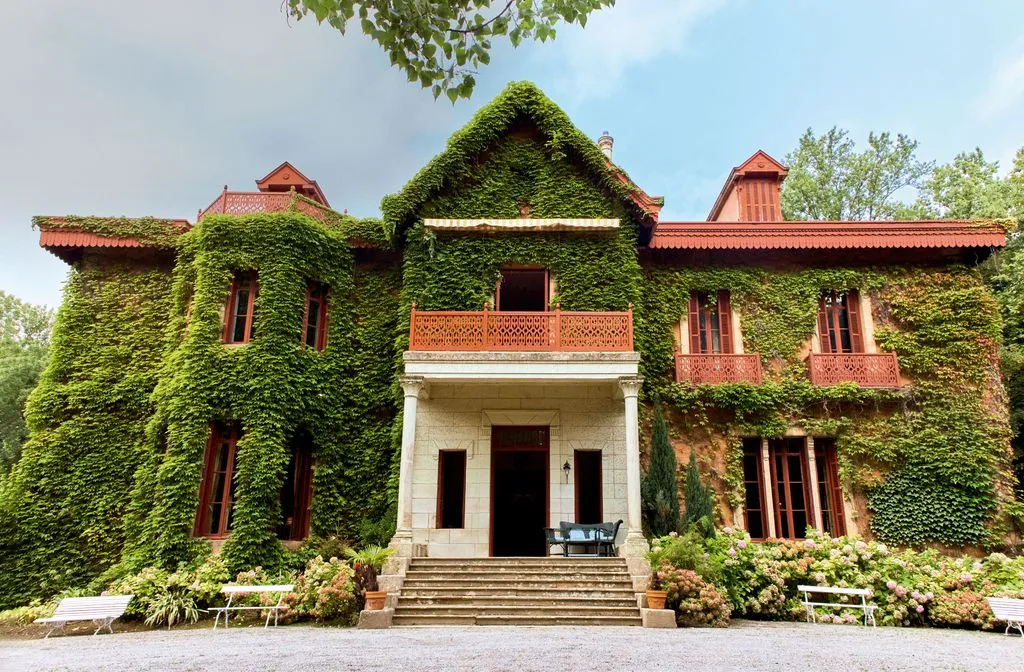
The stairwell has been turned into a gallery, and in the bedroom there is not a single attempt at an...

In the vast majority of flats the ceiling stays white because that is how it was found - not because...
It is not hoarding and it is not maximalism. Ten things that used to be hidden when guests came and...
A bespoke console, reupholstered armchairs and wallpaper hung like art. The most expensive thing in the flat is the decision...
For years the rule was everything neutral and everything from the same collection. The result is a living room that...
Two doors between the living room and the bedroom. That is the whole arithmetic, and that is what you lose...
This site uses cookies - is that okay? Learn more
Be the first to know when Metla launches something new
Leave your email and we will write when there is a new guide or something new on Metla.