
Black Smoke Over Skopje: A Paint and Varnish Warehouse Burned Inside the Old Steelworks
23.09.2026


23.09.2026

23.09.2026

23.09.2026

23.09.2026

23.09.2026

23.09.2026

23.09.2026

22.09.2026

21.09.2026
23.09.2026

23.09.2026

22.09.2026
23.09.2026
23.09.2026

23.09.2026
23.09.2026

22.09.2026

21.09.2026

23.09.2026

23.09.2026

23.09.2026

23.09.2026

23.09.2026

23.09.2026

09.03.2026

27.02.2026

19.02.2026
23.09.2026

22.09.2026

21.09.2026

23.04.2026

23.04.2026

12.04.2026

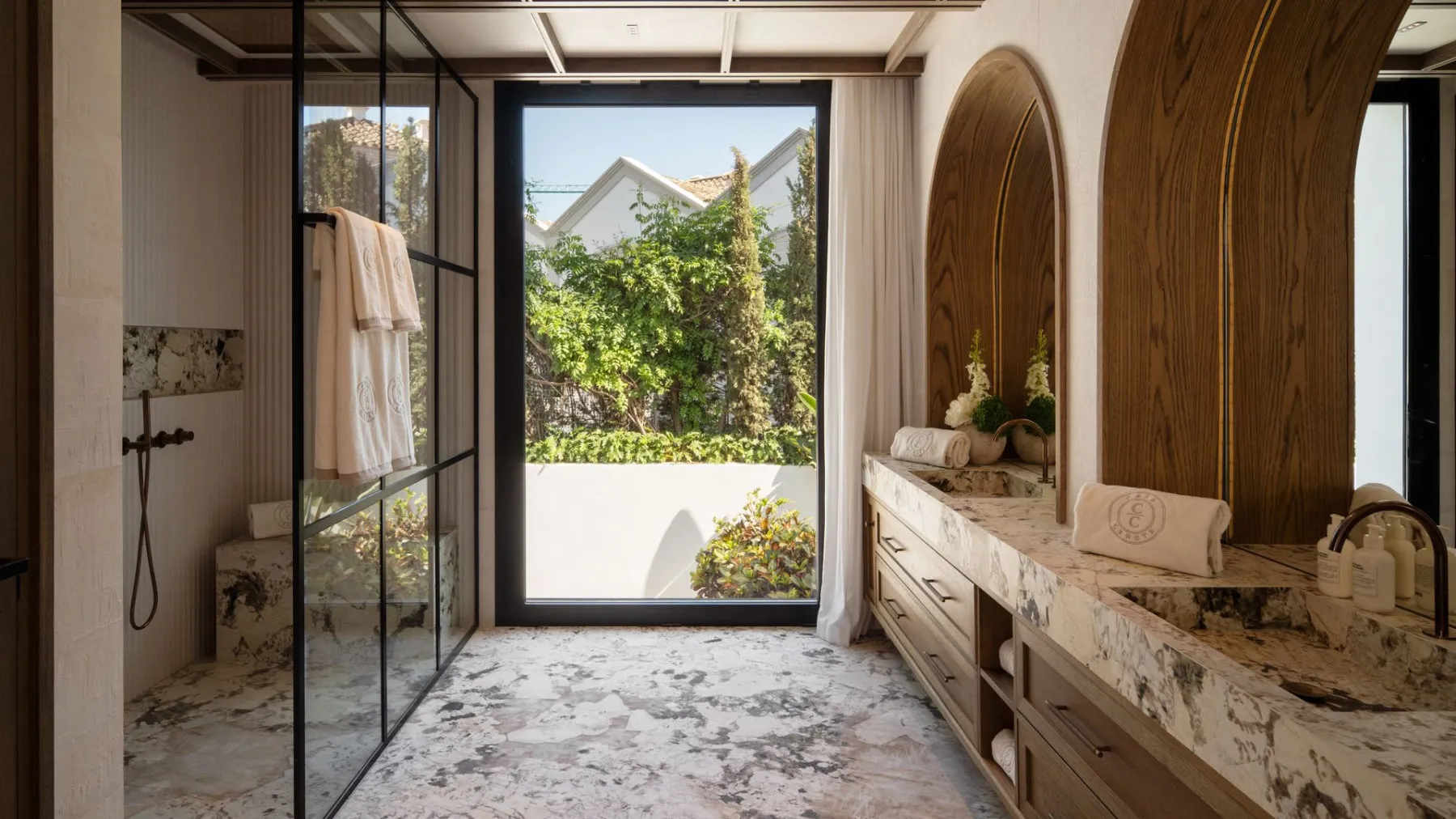
For years the shower was an afterthought in the bathroom. A cubicle in the corner, a curtain that sticks to you, a mixer that either scalds or freezes. Now it is the other way round - it is the part everything else gets planned around. And unlike most interior trends, this one consists mainly of decisions made before the first tile goes on.
Materials first, everything else after
Large-format ceramic tiles with nearly invisible grout lines give visual continuity and instantly create a sense of order. For a warmer tone, stone, travertine or wood-effect finishes work. Sand shades, grey and broken white with a soft texture are what does not tire you by the third year - unlike any strong colour picked in a moment of enthusiasm.
The light that flatters
The second rule sounds minor and makes the biggest difference: the light must be warm, indirect and free of glare. A combination of soft general lighting, a dedicated fitting above the shower and an indirect strip in the niche or on the shelf. Since this is a wet space, the fittings must be rated for wet zones - the point at which cutting costs is most expensive.
Size is ergonomics, not luxury
As a baseline, 70 by 70 centimetres is considered the minimum comfortable size in a small bathroom. Anything above that is pure gain. With rectangular shower trays both depth and width change how it is used, and if two people use the shower it has to let both move without colliding. Ergonomics is the part that never gets photographed and gets felt every morning.
Mixers and shower heads
A thermostatic mixer is what lets each user keep a saved setting, with no constant adjusting. There is also a twin-mixer option for when two people use it at once. The large shower head is mounted at around 2 to 2.20 metres - high enough for the water to fall pleasantly and for nobody to have to stoop. An extra waterfall outlet or a ceiling-mounted head is worth adding only if maintenance stays simple, because limescale does not ask how much you paid.
The screen: invisible or jewellery
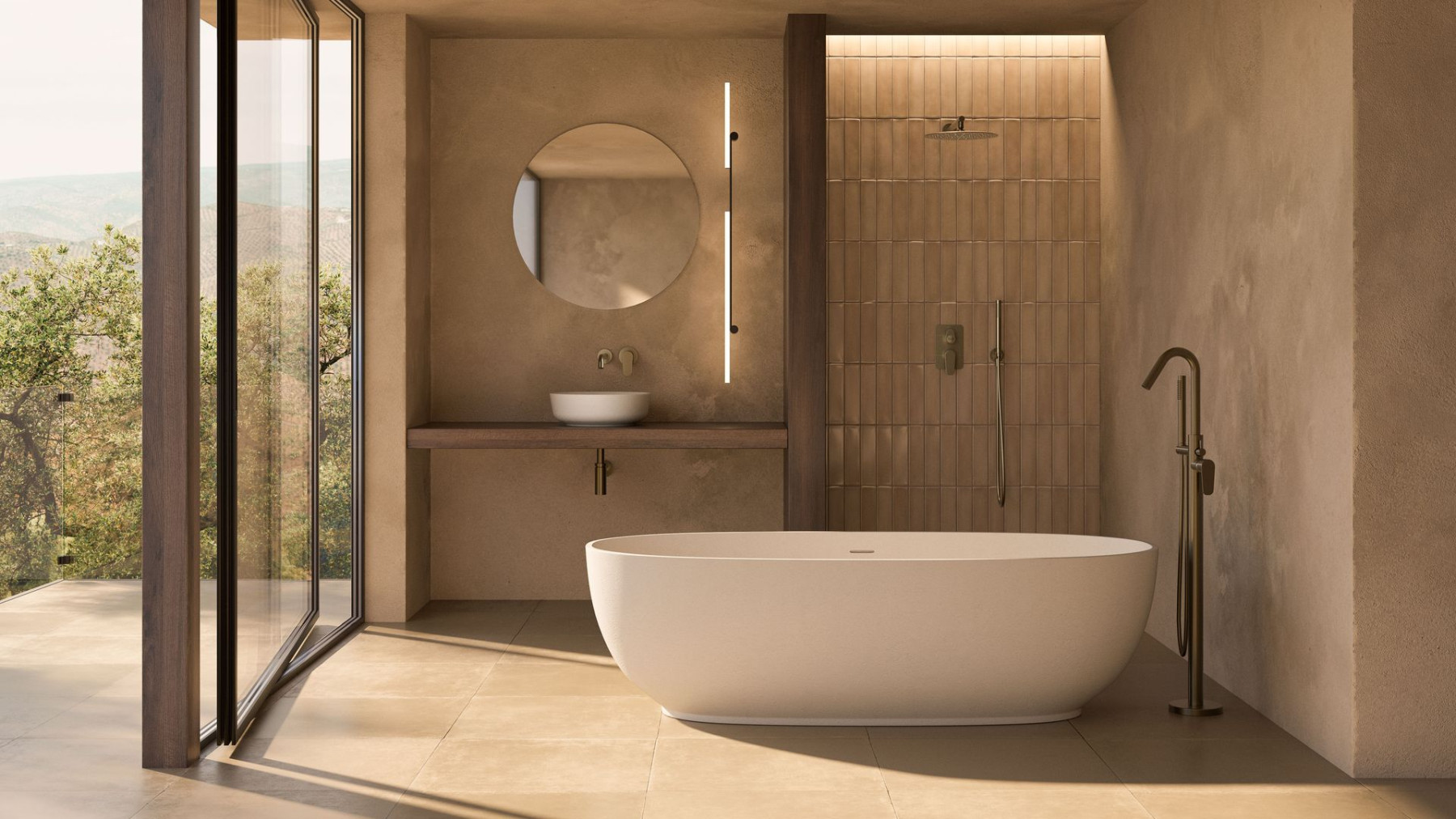
Here there are two equally good schools. The first is an almost invisible screen - tempered glass, minimal or no frame, discreet fittings, so the interior stays visible. The second is a screen with character: fluted, smoked or textured glass, black, brass or bronze finishes. The first option showcases the materials you invested in. The second becomes the detail people remember.
The bench - the thing nobody asks for and everybody uses
A shower bench belongs to the category of things you do not think about until you have one, after which you cannot work out how you lived without it. The reference height is 45 to 48 centimetres off the floor, and it looks best clad in the same material as the wall or floor. It is also the most practical detail for older people in the household - something that here, where several generations often live under one roof, is worth more than any other item on this list.
Niches and storage
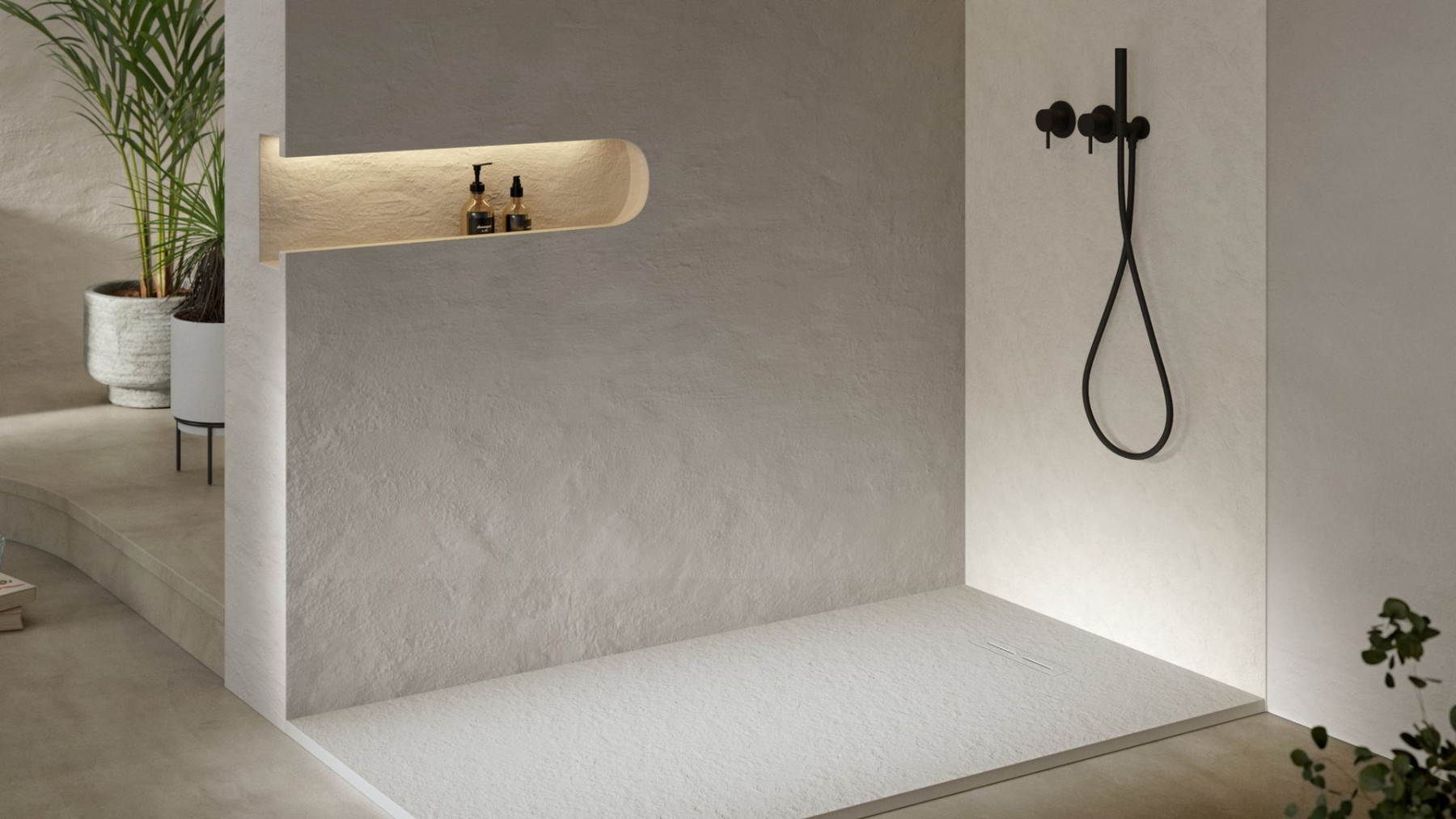
Few things ruin the picture like a corner full of bottles. The solution is wall niches, set at a comfortable height and away from the direct spray, or a continuous shelf. Light the niche from behind and it gains atmosphere too. There are also ready-made metal niches that guarantee the waterproofing - the part where improvising turns out most expensive.
Shower tray or continuous floor
This is the decision most people make in too much of a hurry. Shower trays now come in finishes that can sit flush with the floor and create an effect of continuity. A continuous floor is the second option. In both cases the same rule applies: a fall towards the drain of around 1.5 to 2 percent, otherwise you get a puddle. A linear drain, well positioned, resolves the space along the wall elegantly. For bare feet there are slip-resistance classifications - under the DIN 51097 standard, class C offers the highest resistance.
What you cannot see
The last rule is also the best: premium is usually what you cannot see. Good ventilation that leaves no damp, quiet mixers, well-sealed joinery, textiles that dry fast. A towel radiator near the shower or underfloor heating changes the whole story on the way out. And on consumption, flow restrictors of around 9 to 9.5 litres per minute keep the feeling identical and the bill different.
This whole list has one common thread: almost none of it is about expensive materials. It is about decisions made before the work starts. Floor fall, shower head height, niche position - things that cost nothing while they are on paper, and cost a great deal once everything is tiled.
The latest 10 news from this category
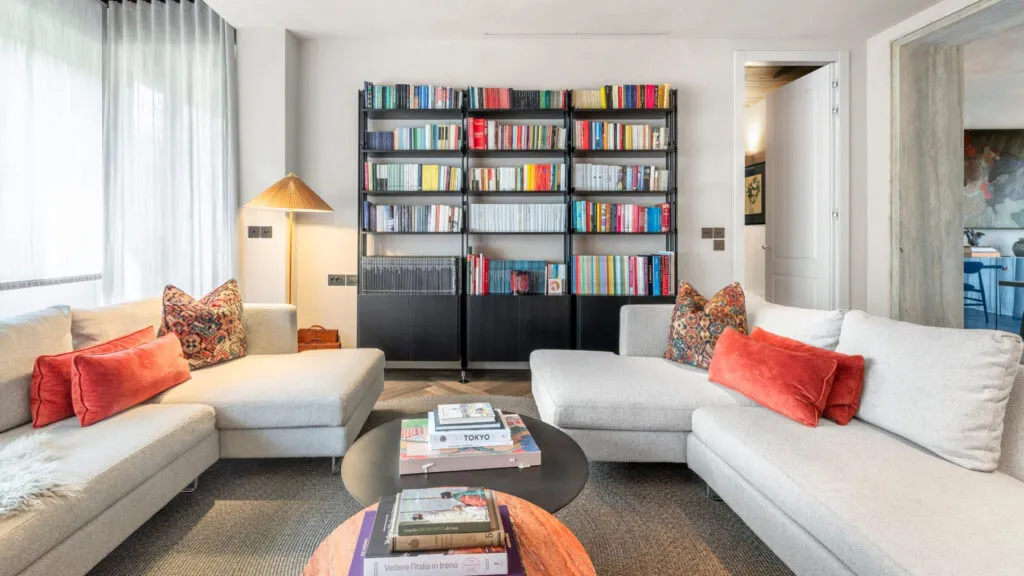
The exposed brick and ribbon windows stayed, and the entire palette came out of a single painting above the sideboard....

An Eames lounge chair from 1956, a Fratini shelving unit and a concave cobalt mirror that reflects the room curved....
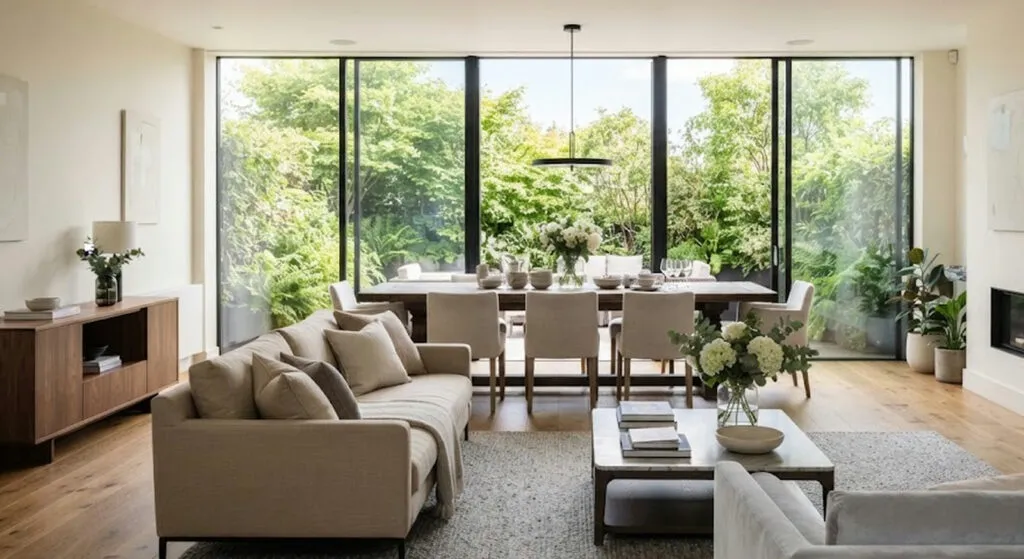
Four bedrooms, four bathrooms and one rug that keeps the dining area separate without a wall. Three things in this...

She did not decorate a house - she built a world. And behind all that fantasy there is no inheritance,...

The stairwell has been turned into a gallery, and in the bedroom there is not a single attempt at an...

In the vast majority of flats the ceiling stays white because that is how it was found - not because...
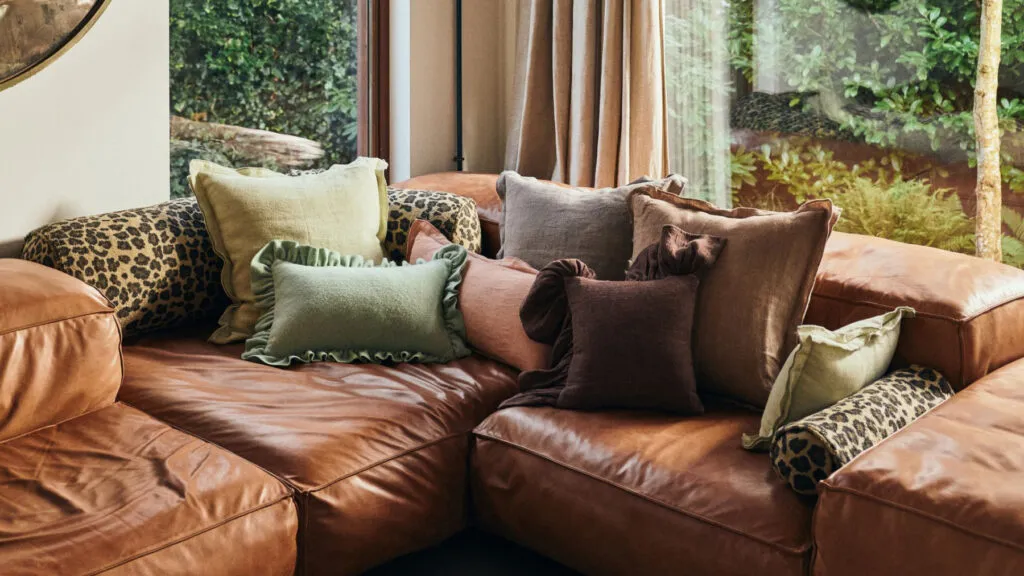
It is not hoarding and it is not maximalism. Ten things that used to be hidden when guests came and...
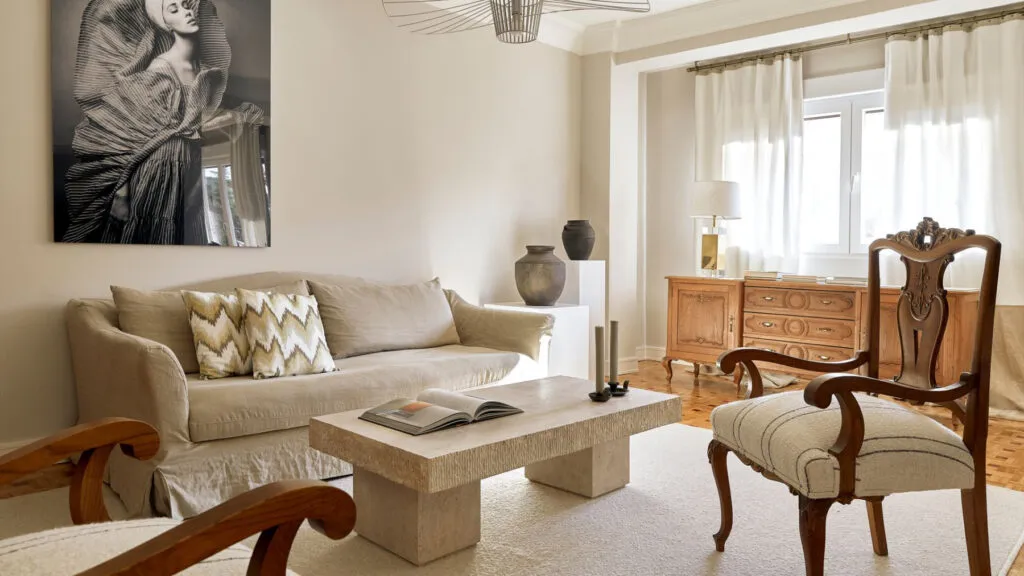
A bespoke console, reupholstered armchairs and wallpaper hung like art. The most expensive thing in the flat is the decision...
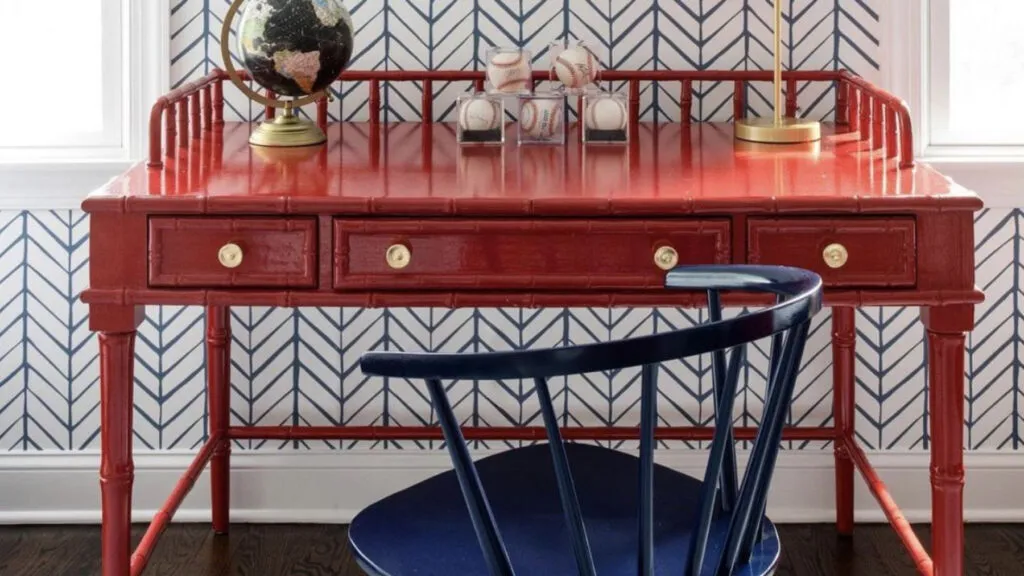
For years the rule was everything neutral and everything from the same collection. The result is a living room that...
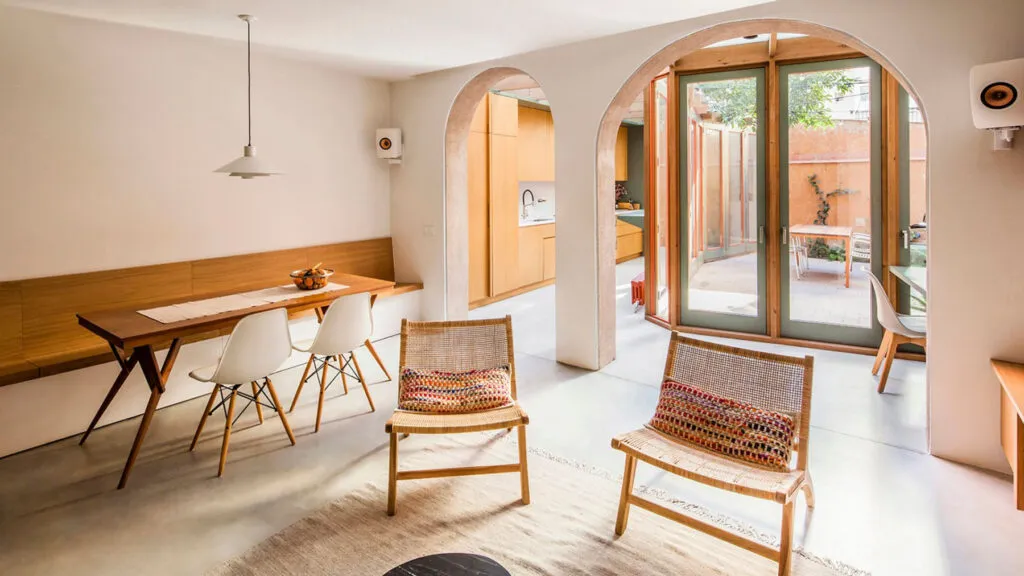
Two doors between the living room and the bedroom. That is the whole arithmetic, and that is what you lose...
This site uses cookies - is that okay? Learn more
Be the first to know when Metla launches something new
Leave your email and we will write when there is a new guide or something new on Metla.