Black Smoke Over Skopje: A Paint and Varnish Warehouse Burned Inside the Old Steelworks
23.09.2026


23.09.2026

23.09.2026

23.09.2026

23.09.2026
23.09.2026

23.09.2026

23.09.2026

22.09.2026

21.09.2026
23.09.2026

23.09.2026
22.09.2026
23.09.2026
23.09.2026

23.09.2026
23.09.2026
22.09.2026

21.09.2026

23.09.2026

23.09.2026

23.09.2026

23.09.2026
23.09.2026

23.09.2026

09.03.2026

27.02.2026

19.02.2026
23.09.2026
22.09.2026
21.09.2026

23.04.2026

23.04.2026

12.04.2026

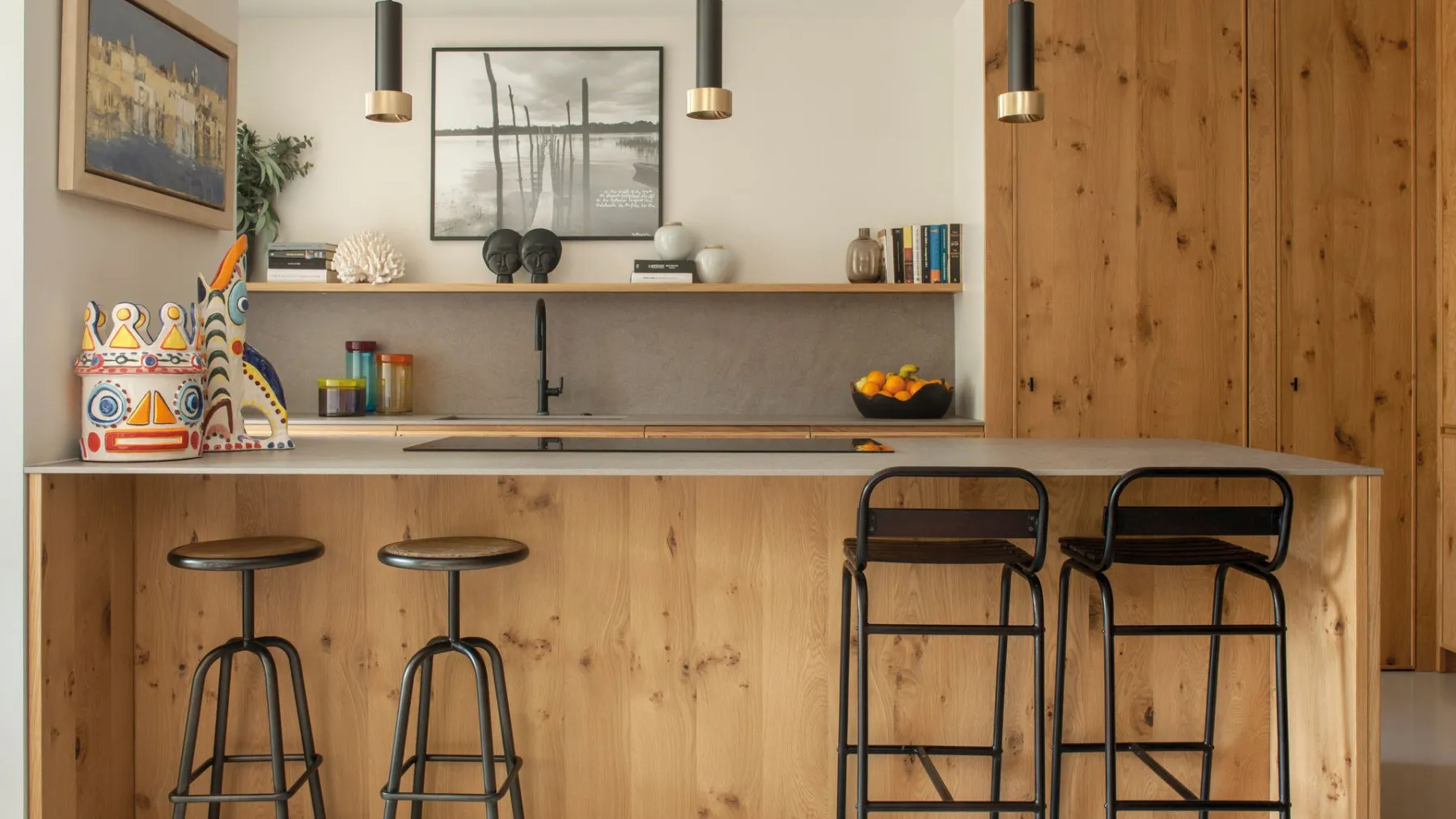
For decades upper kitchen units were the measure of how „equipped” a kitchen was. The more doors above the worktop, the more serious it all looked. That period is clearly ending - and not because of fashion, but because of something more practical: people started living in the kitchen rather than only cooking in it.
Olga Roig, interior designer and founder of the ATIC17 studio, explains the problem without hedging: „Upper cabinets remain useful, but when they take up the entire front they can create too heavy an impression, an over-equipped kitchen.” The distinction is fundamental - it is not that cabinets are bad, it is what a wall does when it is closed off from bottom to top.
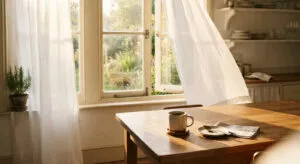
What you gain when you free up the upper section is a space that becomes visible again. „It allows the upper part to be freed, the wall to breathe and a much lighter front to be built,” the designer says. When some of the cabinets are replaced by shelves, the wall regains a presence - you see more of the cladding, more depth and more light.
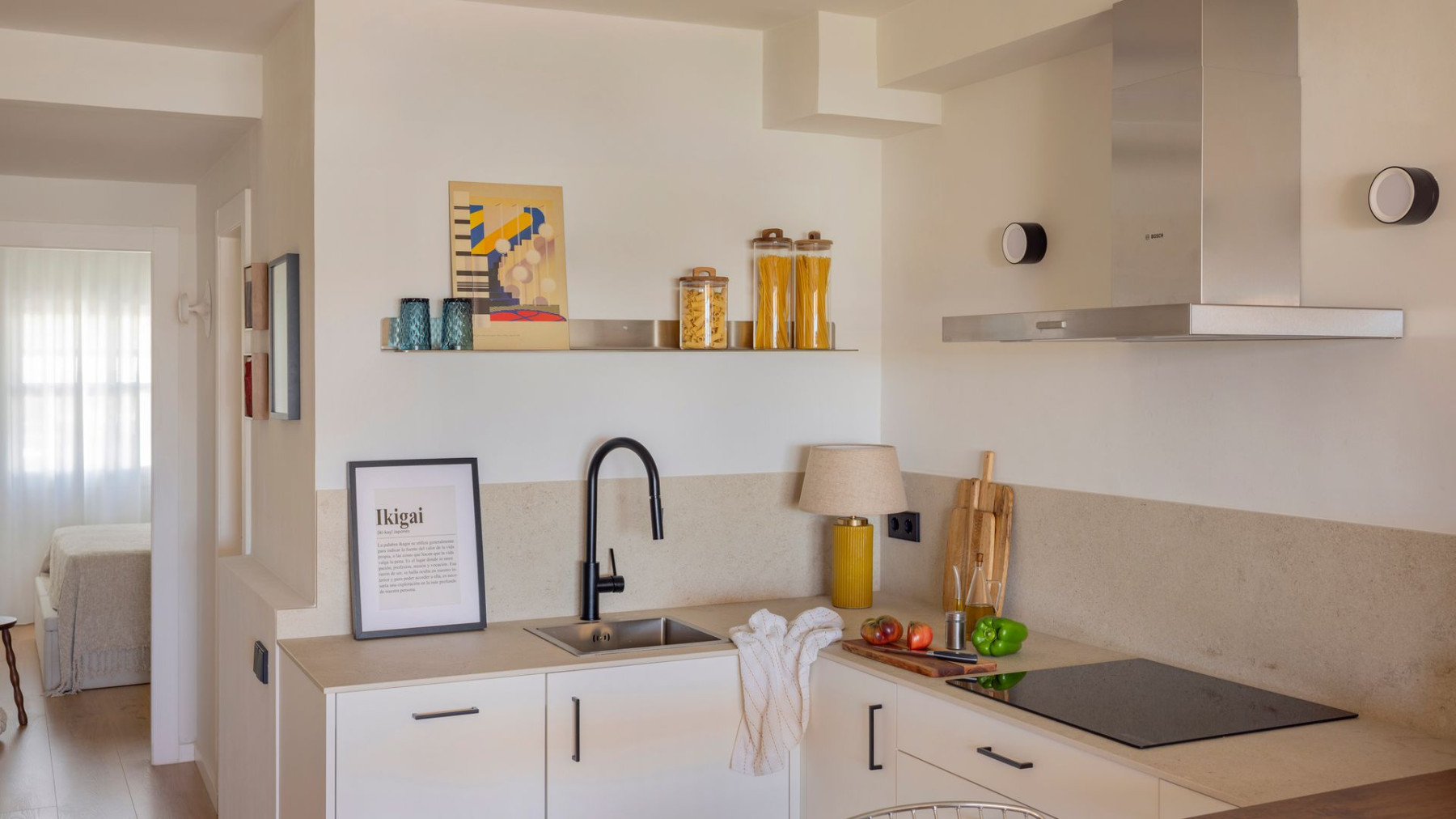
A shelf is not a replacement for a cabinet
Here comes the most important warning, and it comes from the designer herself: „I would not think of shelves as direct replacements for upper cabinets. They do not have the same capacity or protection. I understand them more as a tool for balancing functionality and visual lightness.” So if everything currently sitting in the upper cabinets has to go somewhere, shelves will not solve that. The ideal situation, she says, is a kitchen where the main storage is already solved elsewhere - a pantry, a tall column unit or an adjoining room.
The second cost is less visible: „When we remove the upper units, we often lose the option of installing lighting under them.” A worktop left without lighting is a step backwards, however good the wall looks. The solution is an LED strip or linear light built into the shelf itself, or wall fittings with movable arms above it.
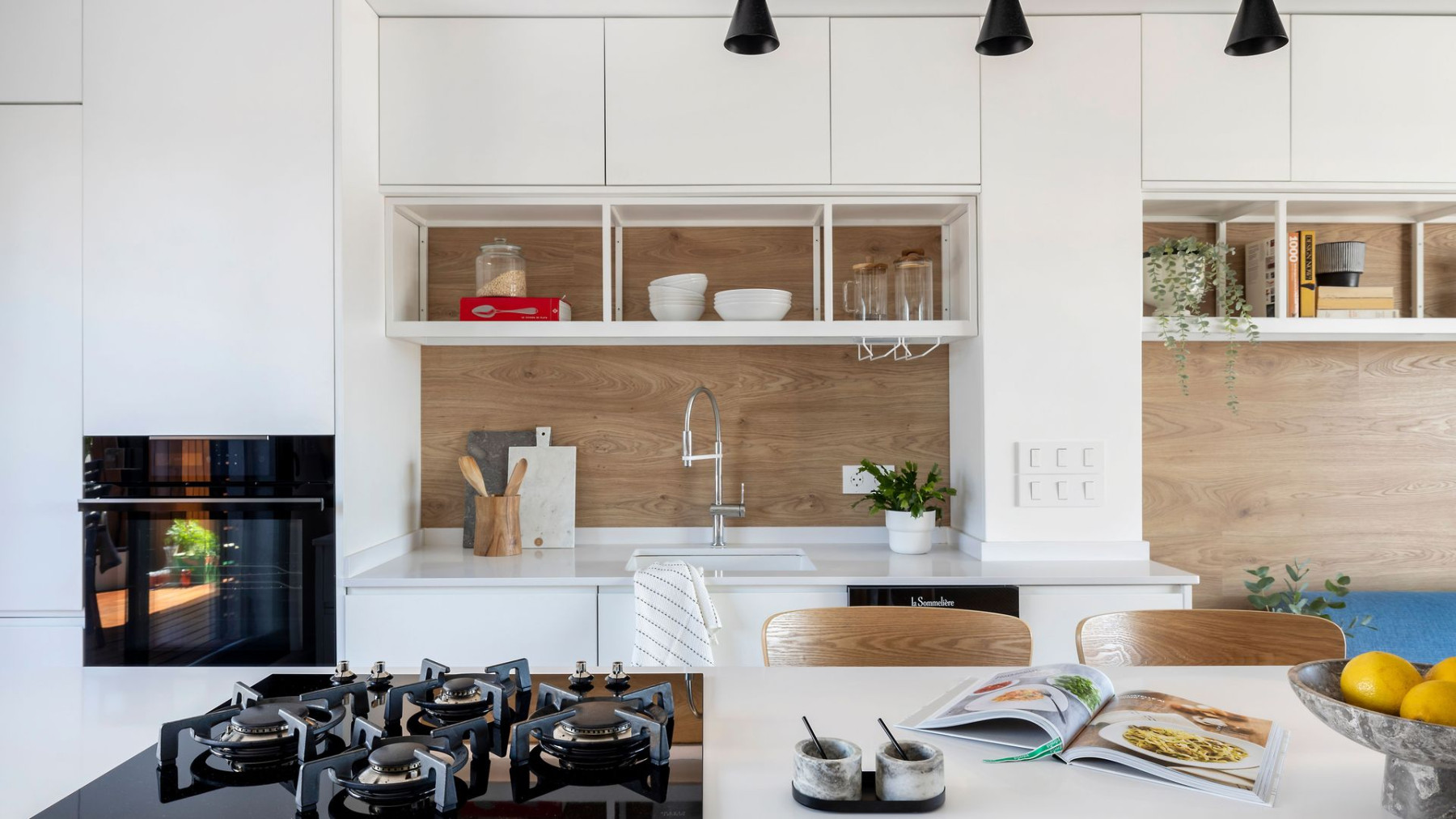
Where a shelf may go
The location is not a free choice. The rule is simple and everyone knows it the moment they read it once: away from the cooking zone. Above a hob, a shelf collects grease that does not wipe off easily, and everything standing on it has to be washed more often than anyone has the will for. Above the sink or above the preparation zone there is no such problem. Roig frames it from the inside too: „Everything that easily collects grease or dust should be kept in closed storage solutions.”
When a shelf has enough length, it also takes on a compositional role. „A well-conceived long shelf can accompany the length of the worktop, reinforce the horizontality and give the design continuity.” That is the difference between a shelf hung on a wall and a shelf that looks like part of the kitchen. In plasterboard versions, the shelf is built together with the wall and clad in the same stone or porcelain as the worktop - at that point it is no longer an addition but an element.
Materials remain an open question, but the list is short: coloured lacquered metal, stainless steel, wood and laminate. Metal and steel shelves are thinner and better where less presence is needed; wooden ones soften the space. There are also solutions that are not wall shelves at all - a rack resting on the worktop, or a floor shelf working as a small pantry.
There is one part of this story the adverts will not tell you. An open shelf demands that you keep things tidy, every single day. A closed cabinet forgives you - it hides the unlabelled jars and the dishes that match nothing. A shelf forgives nothing. Which is why the choice between the two is not aesthetic but far more practical: how much you want your kitchen to look a certain way, and how much time you have each day to keep it that way.
What really sits behind the trend is a change in what a kitchen even is. When it was a separate room with a door, how the wall looked did not matter. Once it became an extension of the living room and a place where people sit, talk and spend more hours than cooking requires, the wall suddenly became visible from everywhere. Open shelves are not a victory of aesthetics over function - they are a consequence of the kitchen no longer being only a work room.
The latest 10 news from this category
The exposed brick and ribbon windows stayed, and the entire palette came out of a single painting above the sideboard....

An Eames lounge chair from 1956, a Fratini shelving unit and a concave cobalt mirror that reflects the room curved....
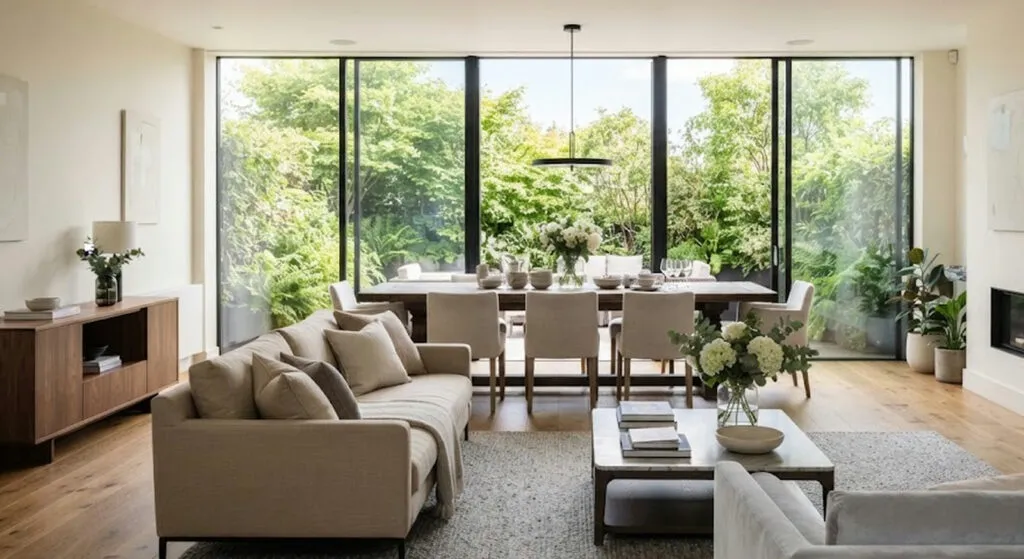
Four bedrooms, four bathrooms and one rug that keeps the dining area separate without a wall. Three things in this...

She did not decorate a house - she built a world. And behind all that fantasy there is no inheritance,...
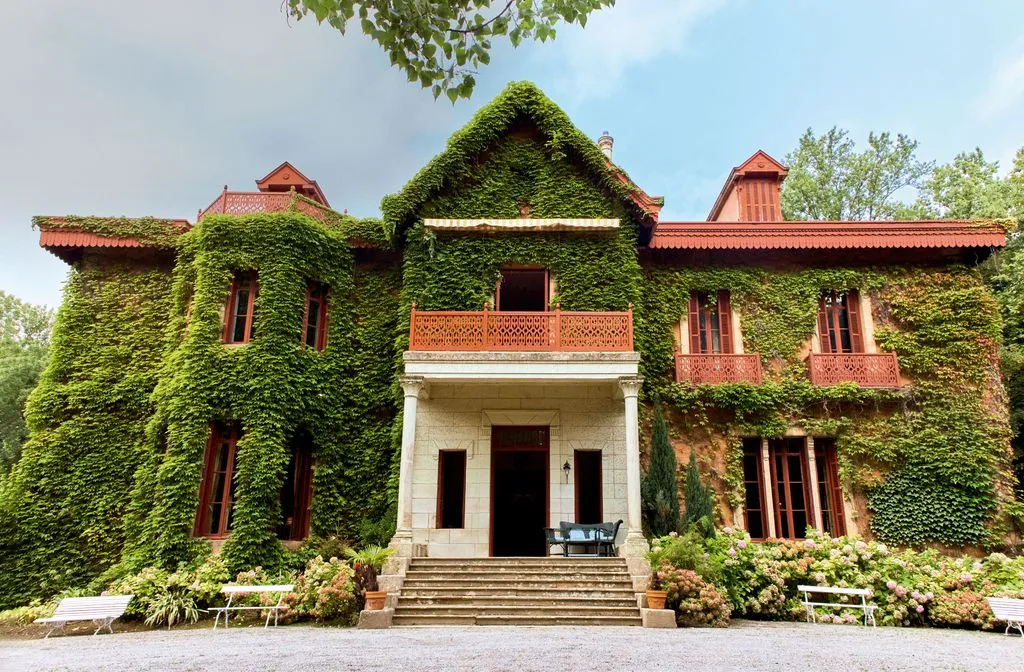
The stairwell has been turned into a gallery, and in the bedroom there is not a single attempt at an...

In the vast majority of flats the ceiling stays white because that is how it was found - not because...
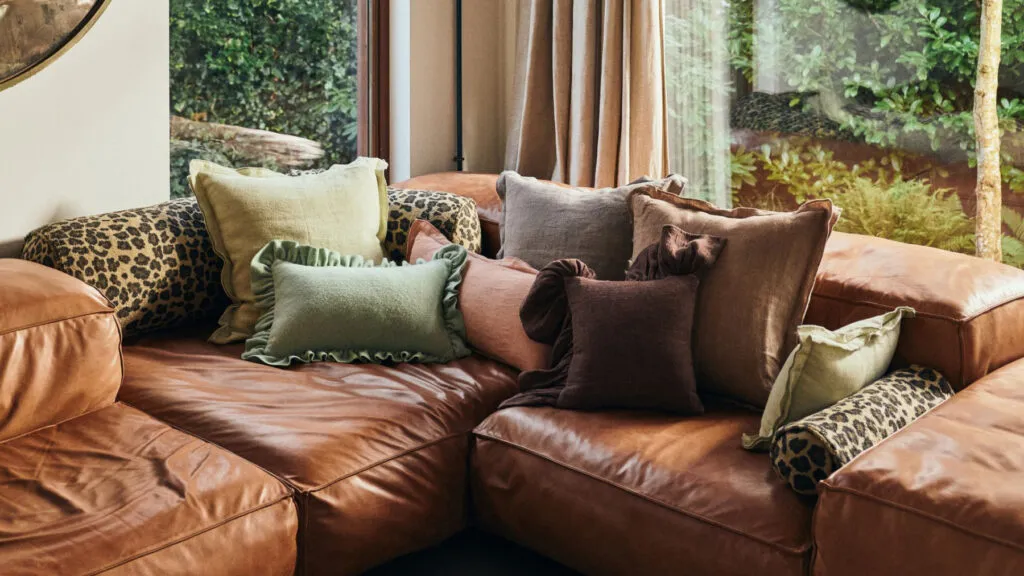
It is not hoarding and it is not maximalism. Ten things that used to be hidden when guests came and...
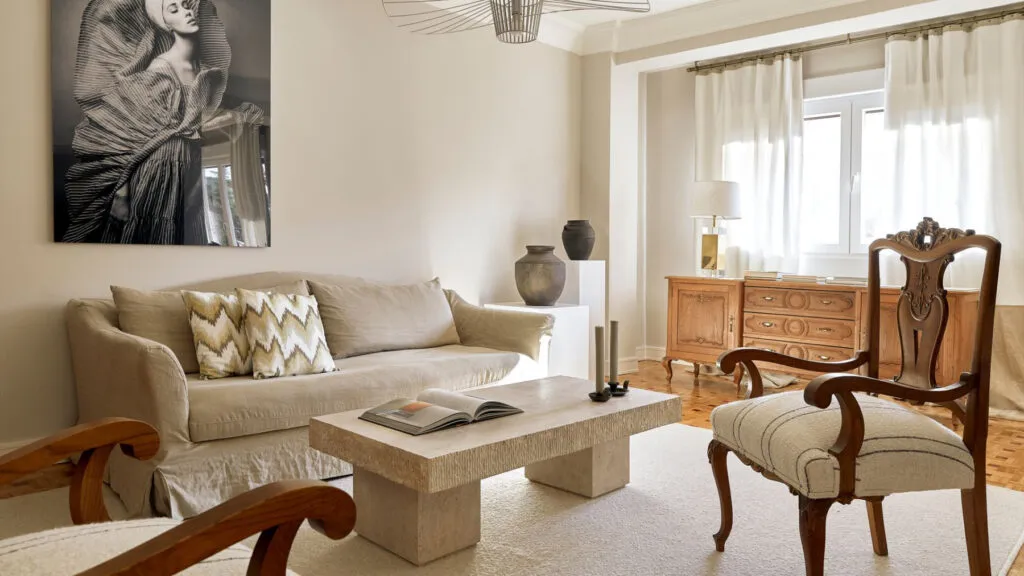
A bespoke console, reupholstered armchairs and wallpaper hung like art. The most expensive thing in the flat is the decision...
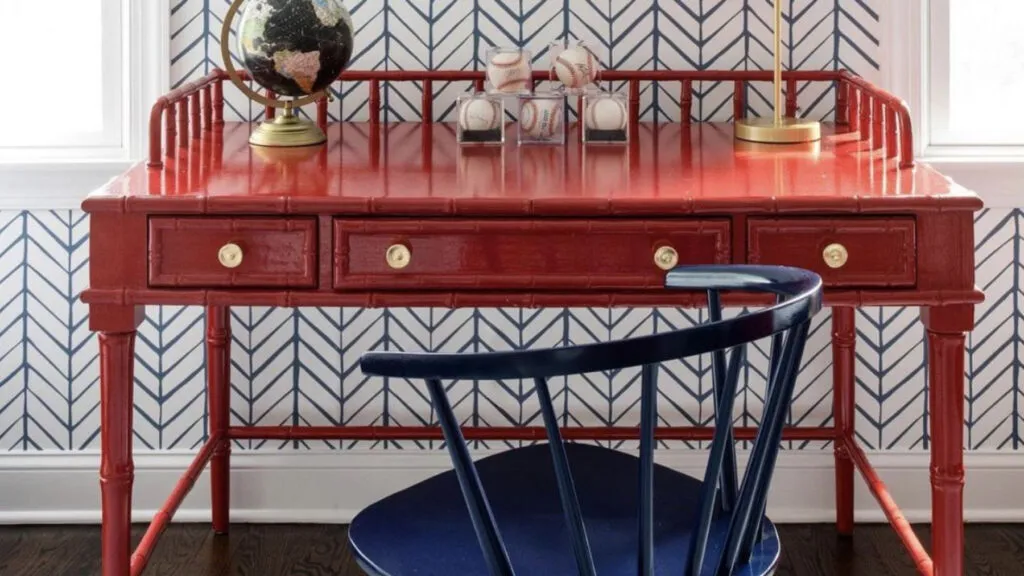
For years the rule was everything neutral and everything from the same collection. The result is a living room that...
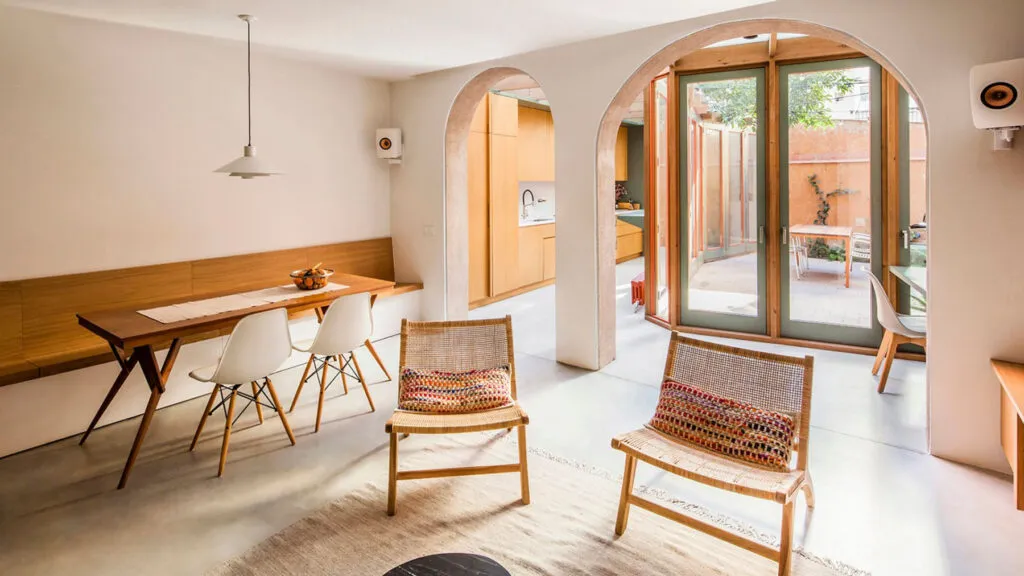
Two doors between the living room and the bedroom. That is the whole arithmetic, and that is what you lose...
This site uses cookies - is that okay? Learn more
Be the first to know when Metla launches something new
Leave your email and we will write when there is a new guide or something new on Metla.