Ljupcho Has Been Missing Ten Days, and the Family Warned Beforehand: They Got the Referral, the Hospital Said It Was Being Renovated
16.08.2026


16.08.2026
16.08.2026

16.08.2026
16.08.2026

16.08.2026

16.08.2026
16.08.2026
15.08.2026
14.08.2026

16.08.2026

16.08.2026
15.08.2026
16.08.2026

16.08.2026
16.08.2026

16.08.2026
15.08.2026
14.08.2026

16.08.2026

16.08.2026

16.08.2026
16.08.2026

16.08.2026

15.08.2026

09.03.2026

27.02.2026

19.02.2026
16.08.2026
15.08.2026
14.08.2026

23.04.2026

23.04.2026

12.04.2026
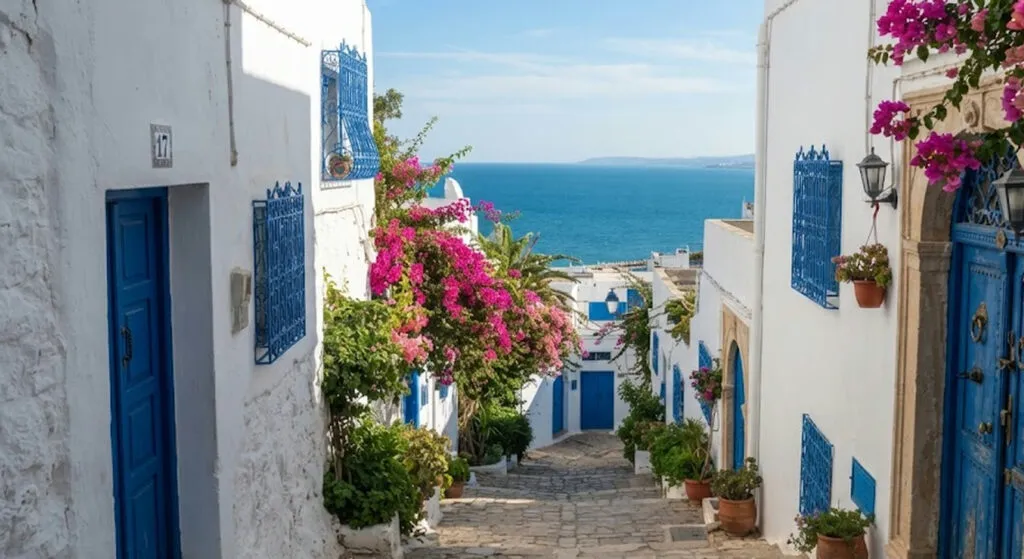
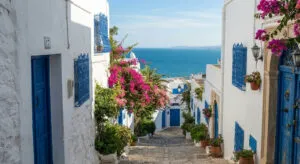
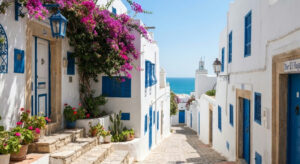
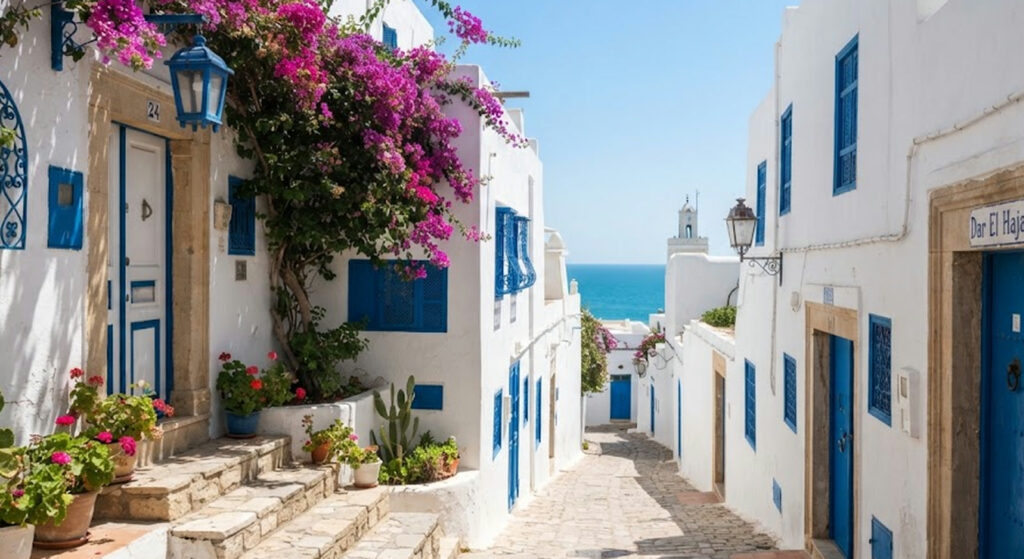
The World Heritage Committee recently inscribed Sidi Bou Said on the UNESCO list - and not for a temple or a palace, but for a colour. Two colours exactly: whitewashed wall and cobalt blue on every door, grille and window.
The village is scattered across the hill of the mountain with the lighthouse, twenty kilometres from the Tunisian capital, looking straight out at a sea that glows below with an improbably intense blue. And there is the first problem with Sidi Bou Said: because it is so close, most people come for three hours and go back. That is a mistake.
One British baron and one decree from 1915
To understand how the most photographed village in Tunisia came about, you have to go back to the twelfth century, when Abu Said al-Baji, a scholar and Sufi mystic, founded a shrine on the hill. But the form that fascinates today has a different author, and a modern one.
Rodolphe d'Erlanger, a British baron, painter and musicologist, arrived in 1912, fell in love with the place and pushed through a decree in 1915 ordering "all facades to be whitewashed", restricting the colour of doors, grilles and windows to cobalt blue. So the aesthetic for which UNESCO now protects the village is the result of a foreigner prescribing how the locals would live.
Sidi Bou Said had some protection from 1979, but only as part of the Carthage archaeological site. Now it gains its own standing - for architecture with an al-Andalus inheritance and for historical significance as a centre of spirituality in the Mediterranean.
How to get there, and more importantly - when
The cheapest and most authentic way is the TGM suburban train, which cuts across the Lake of Tunis and drops passengers below the hill in about thirty-five minutes. The classic yellow taxis do it in twenty-five.
The practical advice is singular: early morning. From mid-morning the main street fills with guided groups. Whoever arrives early gets the light bouncing off the whitewashed walls, without having to walk around tourists.
The cemetery nobody writes about
The least visited and most powerful corner of Sidi Bou Said is not a cafe at all. The cemetery spills down the rock in terraces, looking straight into the Gulf of Tunis. The graves are blindingly white, many of them nameless, scattered across the hill among prickly pears, aloe and bougainvillea. Silence, and one of the cleanest Mediterranean panoramas you can find.
Art behind the facades
The village inspired creators such as Paul Klee and Simone de Beauvoir, and to this day sustains a serious art scene. Ennejma Ezzahra palace is a compulsory visit, the former residence of Baron d'Erlanger and today a centre for Arab and Mediterranean music - inside there are wooden ceilings, plaster ornamentation and gardens hanging over the rock.
Dar El Annabi is a large eighteenth-century bourgeois house with an Andalusian courtyard, traditional wooden window grilles and a roof terrace looking onto the minaret. The Aicha Gorgi gallery, meanwhile, shows contemporary Tunisian artists.
Where to eat and where to stay
Dar Zarrouk, near the marina, has a courtyard under mulberry trees and a glazed terrace where you eat fresh fish, brik with egg and tuna, or couscous. Au Bon Vieux Temps is the other classic, with a terrace under vines and a menu mixing French and Maghrebi cooking.
The real privilege, though, is staying once the sun sets and the buses leave. Dar Said is a hotel in a nineteenth-century bourgeois residence with only twenty-four rooms around courtyards full of jasmine. La Villa Bleue stands above the rock, with hand-painted ceilings and a small spa.
The ritual you do not skip
Cafe des Nattes on the square is a legend - an interior clad in ceramic, a floor covered in rush mats, and mint green tea served very sweet and crowded with toasted pine nuts. If you head down through the alleys, Cafe des Delices has the definitive panorama of the gulf from cascading terraces.
And before heading back - bambalouni from a street stall, soft thrown dough dusted with sugar. That is the end of a day in a village UNESCO decided to preserve forever, because one man a hundred and eleven years ago decided what colour the doors would be.
The latest 10 news from this category
A British baron wrote the rule a century ago: facades white, doors and windows cobalt blue only. Not one owner...
The world's only scheduled hovercraft service still runs there. Victoria called it her little paradise, so did Marx, and in...
Eight days of measurements at the crossing into Macedonia show the hour you leave changes more than anything else. Between...
Hemingway, Picasso and Fitzgerald did not come on holiday - they came to live there for a season. Everyone copied...
Three cars at midnight, twenty-nine at six in the morning. That same morning Medzitlija was empty, and the hour you...
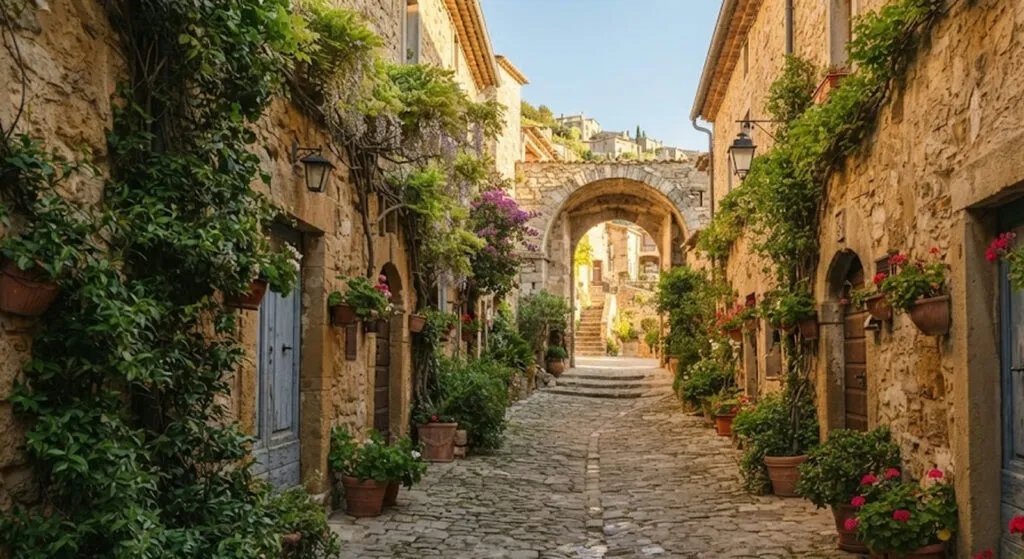
The moat around the village was not banked up but cut out of the stone. The shape stayed because for...
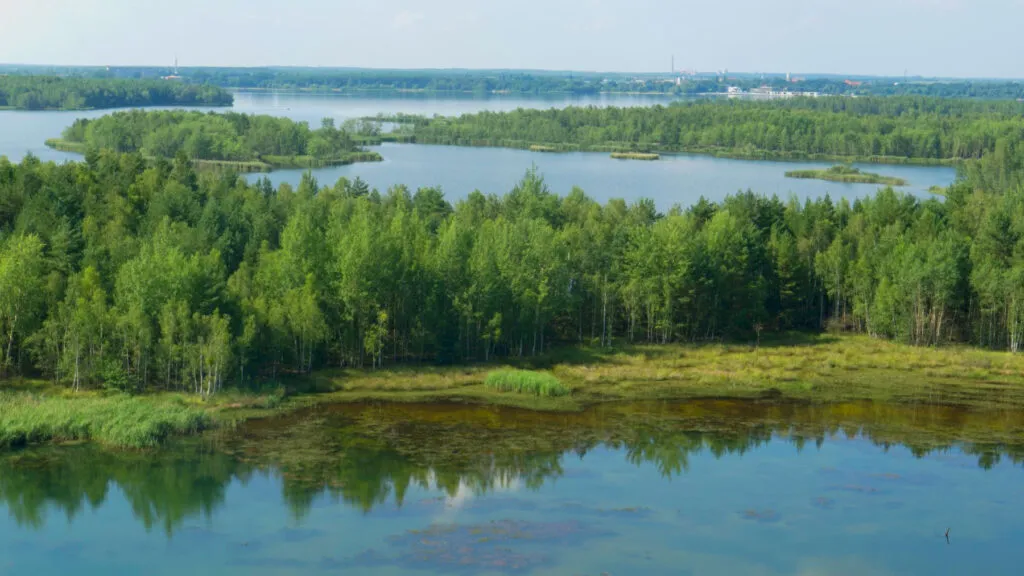
Two billion tonnes of coal taken out of the ground, and today they call the water the German Lake Como....
Bogorodica, Medzitlija and Star Dojran in one place - live cameras, queues hour by hour, and a forecast for the...
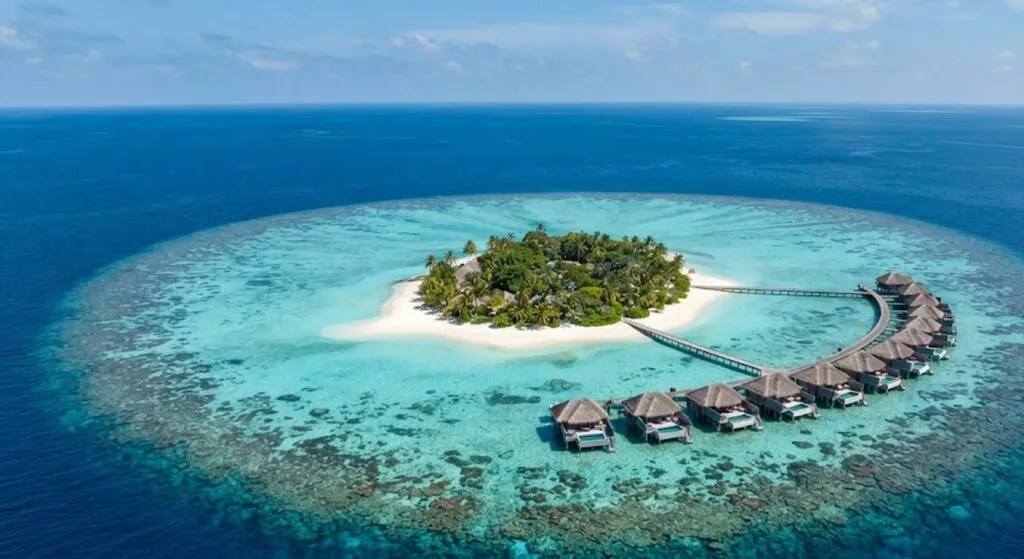
Of a thousand islands, only around a hundred have a single hotel each. There is another Maldives too - fishing...
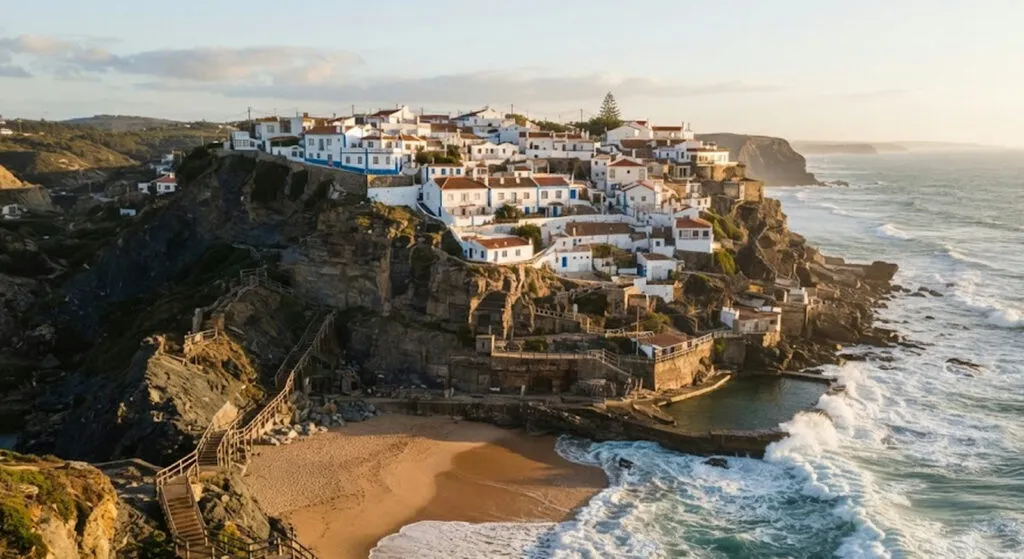
White houses with blue trim glued above the ocean, and beaches connected by an 18.5-kilometre trail instead of a car...
This site uses cookies - is that okay? Learn more
Be the first to know when Metla launches something new
Leave your email and we will write when there is a new guide or something new on Metla.