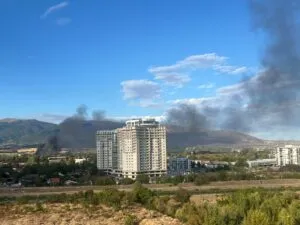
Black Smoke Over Skopje: A Paint and Varnish Warehouse Burned Inside the Old Steelworks
23.09.2026


23.09.2026
23.09.2026
23.09.2026

23.09.2026
23.09.2026
23.09.2026
23.09.2026
22.09.2026
21.09.2026

23.09.2026
23.09.2026

22.09.2026
23.09.2026

23.09.2026

23.09.2026
23.09.2026
22.09.2026

21.09.2026
23.09.2026

23.09.2026
23.09.2026

23.09.2026

23.09.2026

23.09.2026

09.03.2026

27.02.2026

19.02.2026
23.09.2026
22.09.2026

21.09.2026

23.04.2026

23.04.2026

12.04.2026

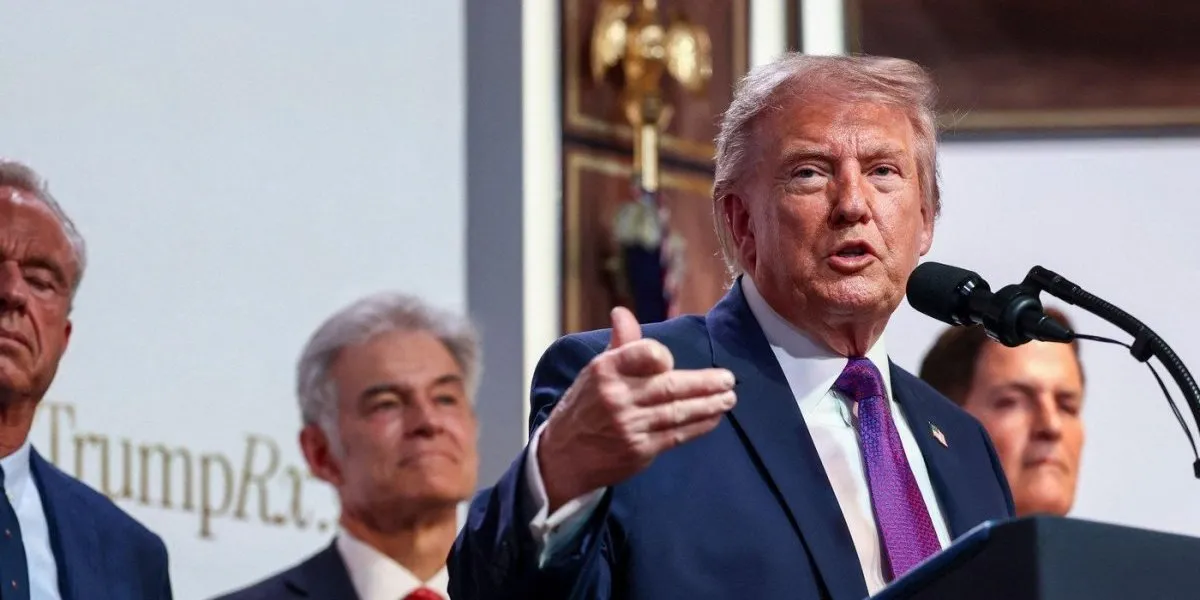
Just hours before the announced strike, Donald Trump postponed the military operation against Iran. The reason didn't come from Iran. It came from the Gulf. Saudi Arabia, Qatar, the United Arab Emirates and other regional countries pleaded with Washington to wait.
Why are they scared? Because any strike on Iran means a blockade of the Strait of Hormuz, an explosion in the price of oil, a potential attack on Saudi refineries, and chaos across the entire Persian Gulf. The Gulf monarchies don't want a war on their doorstep - and they said as much directly to the White House.
Trump himself described the decision in typical fashion: "If we can solve everything without destroying everything, that's great." He admitted preparations for a "very big strike tomorrow" had been under way. Now the pause may become permanent - or not. The military options, he said, remain on the table.
Here comes the interesting part. According to his statements, mediators told him Tehran may be closer to a deal than was thought. But Trump immediately added the hard line: Iran must not have a nuclear bomb. The ultimatum stays unchanged. Only the timing has shifted.
For the Balkans, this isn't a distant story. The price of petrol at the pumps in Skopje, Tirana and Sarajevo depends directly on whether Hormuz stays open. The economic and political fallout of a US-Iran clash reads itself into household budgets - not over months, but over days. Is anyone here planning a reserve in case things break? Nobody will ask the question - and we'll all find out the answer late.
The latest 10 news from this category
Two presidents, the same podium, a few hours apart and two contradictory realities. Macron did not argue about signatures -...
The mechanism he describes - decision before evidence, evidence retrofitted to the decision - is real, and Iraq proved it....

Peter Magyar compared it to a club that puts you in the team without asking, then tells you to bring...
Washington, Copenhagen and Nuuk are signing off on a military presence on an island of 56,000 people - and the...
Phones in Krāslava rang by themselves, the fighters took off, and what exactly triggered the alert - nobody is saying....
In Mecklenburg the CDU finished on 4.9 percent and, for the first time in the history of the Federal Republic,...
Tisza took 16 years of power off Fidesz and won 141 of 199 parliamentary seats. Orbán now says Brussels is...
With 75 percent of protocols counted, the governing party leads in 208 of the 225 single-mandate districts. A parliament of...
He never sat on the throne, and the emirate is lowering its flags for ten days. Sometimes the surname says...
Three options on the table in Washington - military pressure, economic strangulation or a deal - and the president frames...
This site uses cookies - is that okay? Learn more
Be the first to know when Metla launches something new
Leave your email and we will write when there is a new guide or something new on Metla.