
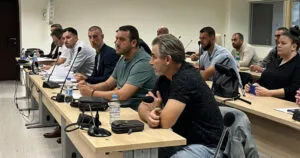
"That's not my job": the trial of the 13 Puls police officers restarted from scratch, and witnesses describe help being refused
22.09.2026


22.09.2026
22.09.2026

22.09.2026

22.09.2026

22.09.2026

22.09.2026

22.09.2026

21.09.2026

20.09.2026

22.09.2026
22.09.2026

21.09.2026
22.09.2026

22.09.2026
22.09.2026

22.09.2026

21.09.2026

20.09.2026
22.09.2026

22.09.2026
22.09.2026
22.09.2026

22.09.2026

22.09.2026

09.03.2026

27.02.2026

19.02.2026
22.09.2026

21.09.2026

21.09.2026

23.04.2026

23.04.2026

12.04.2026

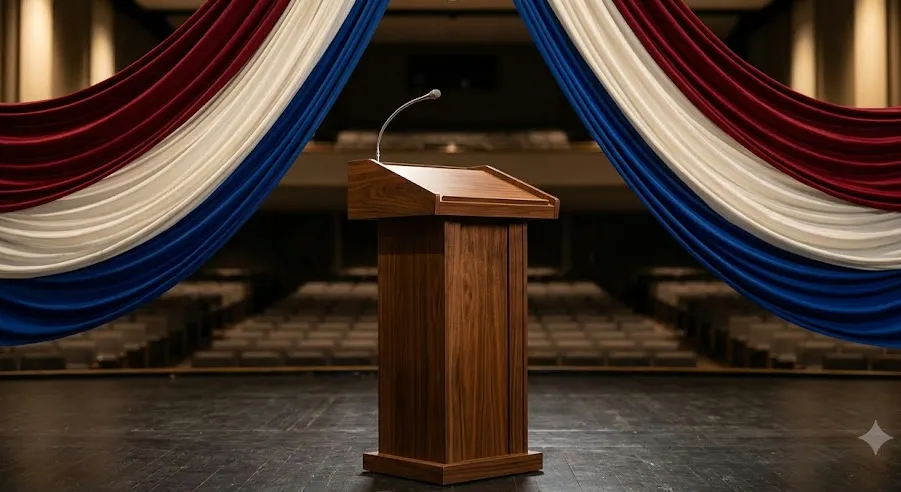
Republican congressman Thomas Massie, one of the loudest internal critics of Donald Trump, just lost his seat. At the Kentucky Republican primary, former Navy SEAL Ed Gallrein won by 55 to 45 percent. It was the most expensive primary in the history of the US Congress - 32 million dollars spent on advertising alone.
Massie had been in Congress since 2012. And for most of that time he voted "yes" on Trump - by his own count, in 90 percent of cases. But those 10 percent were the reason for the wipeout. He voted "no" on Trump's tax law (out of concern for the national debt). "No" on military strikes on drug boats in the Caribbean. "No" on extending the war with Iran. And he filed a request along with Democrats to publish all the Epstein documents.
Trump described Massie as a "big slob" and "the worst Republican congressman in history". He used social media regularly to attack him. And in the end, he sent Defense Secretary Pete Hegseth personally to Kentucky to back Gallrein the day before the election. "They panicked, so they sent the war secretary, and you stopped a war for a day," Massie said after the defeat, while his supporters cheered.
What does this mean? Trump does not allow internal dissent in the party. Massie was the last real fiscal conservative in Congress - the kind of politician who cares about the national debt and doesn't want endless wars. That no longer has a place in the Republican Party. "There's an appetite for someone who'll vote on principle, not on party discipline," Massie said. That's no longer that kind of party. It's the personal party of one man.
For a Balkan context this is a well-known script. Parties that turn into the personality of a single leader - that's the political model of the region since the '90s. Massie made a good analysis: "They're only angry about those 10 percent of cases when I don't want to vote for war, when I don't want to back surveillance without a warrant, and when I don't want to take the state into bankruptcy." That's a story that - on a smaller scale - has played out here too. The result: a party with no real internal opposition. Just loyalty.
The latest 10 news from this category
Washington, Copenhagen and Nuuk are signing off on a military presence on an island of 56,000 people - and the...
Phones in Krāslava rang by themselves, the fighters took off, and what exactly triggered the alert - nobody is saying....
In Mecklenburg the CDU finished on 4.9 percent and, for the first time in the history of the Federal Republic,...
Tisza took 16 years of power off Fidesz and won 141 of 199 parliamentary seats. Orbán now says Brussels is...
With 75 percent of protocols counted, the governing party leads in 208 of the 225 single-mandate districts. A parliament of...

He never sat on the throne, and the emirate is lowering its flags for ten days. Sometimes the surname says...
Three options on the table in Washington - military pressure, economic strangulation or a deal - and the president frames...
The party of Adenauer and Kohl slid to the electoral threshold in Mecklenburg, the AfD is already demanding the chancellor's...
Two prime ministers in the same Union, the same month, completely opposite diagnoses of who is provoking whom. There is...
A broken aircraft in a field usually ends up in a police note. This one ended up with federal investigators,...
This site uses cookies - is that okay? Learn more
Be the first to know when Metla launches something new
Leave your email and we will write when there is a new guide or something new on Metla.
