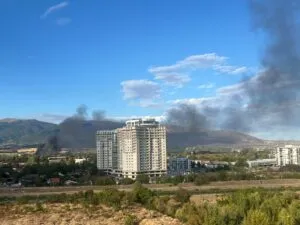
Black Smoke Over Skopje: A Paint and Varnish Warehouse Burned Inside the Old Steelworks
23.09.2026


23.09.2026

23.09.2026

23.09.2026

23.09.2026

23.09.2026

23.09.2026

23.09.2026

22.09.2026

21.09.2026

23.09.2026

23.09.2026

22.09.2026

23.09.2026

23.09.2026

23.09.2026

23.09.2026

22.09.2026

21.09.2026

23.09.2026

23.09.2026

23.09.2026

23.09.2026

23.09.2026

23.09.2026

09.03.2026

27.02.2026

19.02.2026

23.09.2026

22.09.2026

21.09.2026

23.04.2026

23.04.2026

12.04.2026

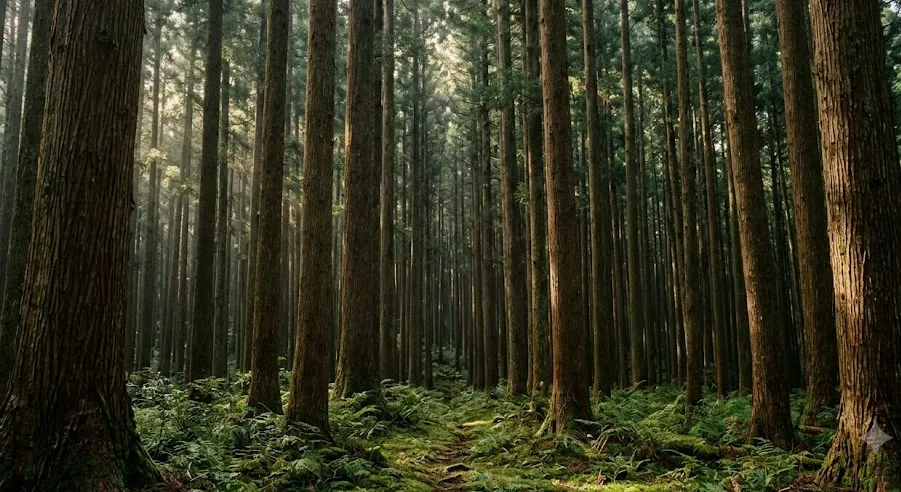
Today 43% of Japan's population has moderate or severe symptoms of pollen allergy. For comparison, the UK figure is 26%, in the US it's between 12 and 18%. How did Japan become the most allergic country in the world? Not because of pollution. Because of one state project from the 1950s, built with the best intentions - and without thinking about the consequences.
After the Second World War, Japan was left without large stretches of natural forest. The war had consumed them - wood was the only available fuel. Around Tokyo, Osaka and Kobe, mountains were completely bare. The result: landslides, floods, erosion. The authorities had to react fast.
The decision was to plant two native fast-growing species: the Japanese cedar "sugi" and the Japanese cypress "hinoki". Today those plantations cover 10 million hectares - a fifth of Japan's entire territory. And those plantations are the source of the pollen that paralyses the industrial power of the nation every spring.
Economic damage: 1.6 billion dollars a day at the peak of the season - lost workdays, reduced consumption, medication. That's more than the entire annual budget of all of North Macedonia, every day, for a month. The allergies also cause sleep problems, reduced concentration, higher risk of asthma.
What's being done now? The Japanese government in 2023 declared allergies a national health problem. The target: 50% reduction in pollen over 30 years. Local communities have begun converting plantations back into natural forest. The city of Kobe plans to convert 180 hectares of monoculture into deciduous forest over 15 years. Researchers are building precise forecasts, robots that measure airborne concentration, even genetically modified rice that could help.
For a Balkan reader - whose region has its own analogous stories (mining tailings, rivers drained by hydroelectric plants, village erosion from agricultural monoculture) - this is a lesson in the cost of the fast fix. Japan built those plantations with the best intentions. Now it will spend 30 years undoing them, and during that time pay 1.6 billion dollars a day. The same trend we see in the Balkans with granite quarries, with short-circuit roads, with construction without a plan - the problem isn't in the immediate fix. The problem is in the moment when nobody asked what happens in 50 years.
The latest 10 news from this category

Two presidents, the same podium, a few hours apart and two contradictory realities. Macron did not argue about signatures -...

The mechanism he describes - decision before evidence, evidence retrofitted to the decision - is real, and Iraq proved it....

Peter Magyar compared it to a club that puts you in the team without asking, then tells you to bring...
Washington, Copenhagen and Nuuk are signing off on a military presence on an island of 56,000 people - and the...
Phones in Krāslava rang by themselves, the fighters took off, and what exactly triggered the alert - nobody is saying....
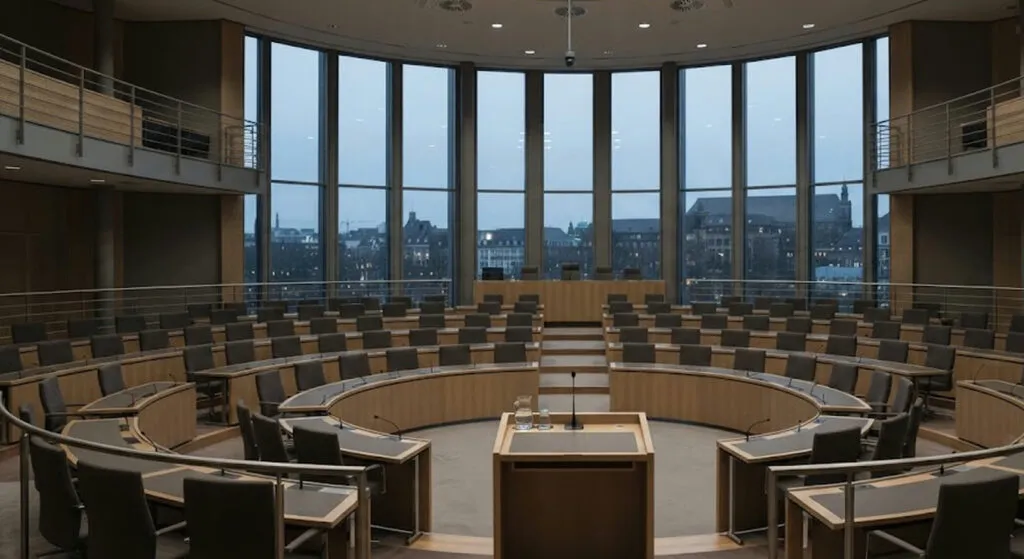
In Mecklenburg the CDU finished on 4.9 percent and, for the first time in the history of the Federal Republic,...

Tisza took 16 years of power off Fidesz and won 141 of 199 parliamentary seats. Orbán now says Brussels is...

With 75 percent of protocols counted, the governing party leads in 208 of the 225 single-mandate districts. A parliament of...

He never sat on the throne, and the emirate is lowering its flags for ten days. Sometimes the surname says...

Three options on the table in Washington - military pressure, economic strangulation or a deal - and the president frames...
This site uses cookies - is that okay? Learn more
Be the first to know when Metla launches something new
Leave your email and we will write when there is a new guide or something new on Metla.