

Две пријави за тепачки во училишен двор за еден ден: полицијата вети мерки, образовниот систем молчи
19.09.2026


19.09.2026

19.09.2026
19.09.2026

19.09.2026
19.09.2026
19.09.2026
19.09.2026

18.09.2026

17.09.2026

19.09.2026

19.09.2026

18.09.2026

19.09.2026

19.09.2026

19.09.2026

19.09.2026

18.09.2026

17.09.2026

19.09.2026

19.09.2026

19.09.2026

19.09.2026

19.09.2026
18.09.2026

09.03.2026

27.02.2026

19.02.2026

18.09.2026

17.09.2026

16.09.2026

23.04.2026

23.04.2026

12.04.2026

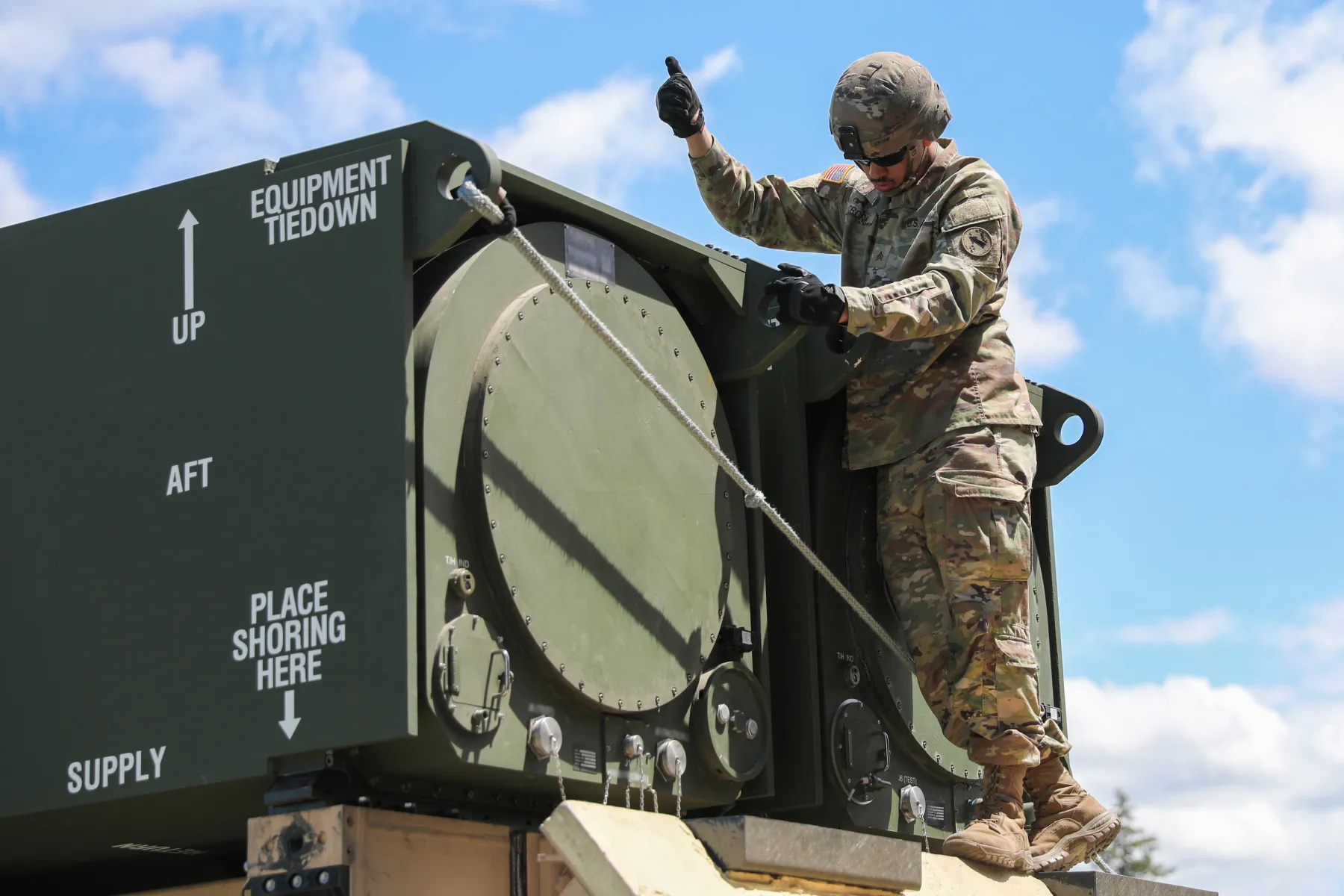
Axios has reported that Donald Trump is receiving today a military plan for new action against Iran. According to Bloomberg, the US wants for the first time to deploy hypersonic missiles - "Dark Eagle" is their codename. Iran responded with a threat of "very terrible weapons". And while the Kremlin and the White House negotiate the end of the Ukrainian war, the Middle East is escalating.
Hypersonic missiles are the new phase of the military industry. Speed greater than five times the speed of sound, mid-flight manoeuvring, almost impossible to intercept. Until recently only Russia and China had them in operational use. Now the US wants to use them too - and against Iran specifically.
"Dark Eagle" (AGM-183A or a similar system) has been in development for more than seven years. Deployment in an active war is a sensitive decision. Not just technically - politically. The moment the first American hypersonic missiles are fired, the technology stops being a secret. All their rivals will be able to replicate it within a few years.
Iran is responding with categorical rhetoric. The defence minister promises "a response with very terrible weapons" if the US attacks nuclear sites. What does that mean? Maybe their Shahab and Sejil ballistic missiles, maybe something new Tehran has developed in secret. Maybe just rhetoric. It's hard to say.
For the Balkans this is important news for two reasons. First - oil prices will keep rising if the conflict escalates. Second - American bases in Turkey and Greece could become targets. Macedonian airspace lies in the path of missile trajectories that go from Asia to North Africa.
History shows that even in the biggest crises, small countries suffer the most. When oil hits 200 dollars a barrel, the Balkan pensioner can afford neither bread nor tomatoes. The same will happen now. Nobody in the Balkans can change that - but they can be aware. And maybe in the coming months, when our politicians keep telling us "everything is stable", we will remember that stability depends on decisions in Washington and Tehran. Not in Skopje.
The latest 10 news from this category
Околу 8.500 севернокорејски војници сè уште се во Русија, меѓу нив 1.000 инженери и 400 оператори на дронови. Проценките зборуваат...
Блокот работел, режимот на работа не се променил, пожар немало. Разликата меѓу вест и катастрофа ја одлучи насоката на еден...
The bill passed with 262 votes, and the key to it has been handed to a man who has already...
Ukraine adapts in weeks, the Alliance in decades. Europe is paying for Patriot systems from 1991 and is only now...
Missiles and drones on the Ukrainian capital, damaged water mains and residential buildings. The same night, Ukrainian drones set the...
Trump hopes the war is ending and is preparing to gather the Gulf leaders. Oil prices have jumped, and the...
Ukraine says when, where and which unit did it. Russia's defence ministry has not a single sentence about the circumstances....
Norway's prime minister talks about a plane a drone "almost hit". Moldova, the only party holding the figures, reported that...
Ukraine was shooting down nine out of ten of the old drones. Then Russia changed the drone - and in...
It was shot down a few minutes after midnight, and all of Vilnius got a warning on their phones. Two...
This site uses cookies - is that okay? Learn more
Be the first to know when Metla launches something new
Leave your email and we will write when there is a new guide or something new on Metla.
