


Studeničani: 35-year-old dies after being electrocuted while washing his car with a pressure washer
18.09.2026


18.09.2026
18.09.2026

18.09.2026
18.09.2026

18.09.2026
18.09.2026
18.09.2026

17.09.2026

16.09.2026

18.09.2026

18.09.2026

17.09.2026

18.09.2026

18.09.2026

18.09.2026

18.09.2026

17.09.2026

16.09.2026

18.09.2026

18.09.2026

18.09.2026

19.09.2026
18.09.2026

17.09.2026

09.03.2026

27.02.2026

19.02.2026

18.09.2026

17.09.2026

16.09.2026

23.04.2026

23.04.2026

12.04.2026

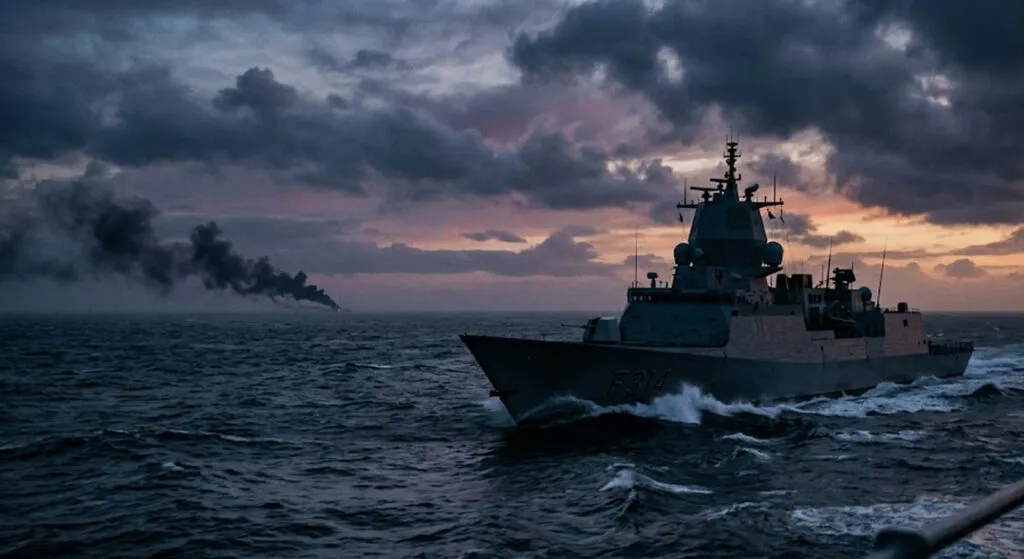
Iran has sent a peace proposal via Pakistan. Donald Trump rejected it. And added, with his usual delivery: „Are we going to go there and bomb them to hell, or are we going to make a deal?" That isn't a rhetorical question - it is a signal. When Trump talks loudly about a military solution, it means the White House is close to a choice.
Context: After two months of war and the ceasefire of 8 April, there had been one round of direct negotiations between Iran and the US. It failed. Now Tehran has offered a new proposal - mediated by Islamabad. Trump said Iran is asking for „things he cannot agree to". Those „things" - according to the Iranian source, come down to: lifting sanctions, opening Hormuz, and a guarantee of non-intervention.
In other words, Iran is asking for what any state asks for after a war - security, economic normality, the right to its own choice. Trump calls those three points „too much". That means the administration isn't after peace, but capitulation. And capitulation doesn't come to the table via Pakistan - it comes with another military operation.
A telling element in this tangled narrative is something Trump himself said: „Iran has made progress in the negotiations, but there are significant divisions in the leadership." That is diplomatic for: „I know that in Tehran there is a split between the pragmatists who want a deal and the hardliners who block it." If such a split really exists - and Trump exploits it through war - then this isn't a defeat for Iran, it is a calculated choice for an internal political victory at the price of a new war.
For the Balkans, which is now watching its third cycle of „deal or war" in the last three years (Ukraine 2022, Gaza 2023, Iran 2026), the strategy is the same: Trump proposes with a knife on the table, and when the other side won't agree, he strikes. And he always asks for a „deal" on terms the other side cannot accept - and then frames that as „a refusal of peace". The rhetoric is standard. The results - predictable. The bill - doesn't go to Brussels or Washington. It comes to us.
The latest 10 news from this category
The bill passed with 262 votes, and the key to it has been handed to a man who has already...
Ukraine adapts in weeks, the Alliance in decades. Europe is paying for Patriot systems from 1991 and is only now...
Missiles and drones on the Ukrainian capital, damaged water mains and residential buildings. The same night, Ukrainian drones set the...
Trump hopes the war is ending and is preparing to gather the Gulf leaders. Oil prices have jumped, and the...
Ukraine says when, where and which unit did it. Russia's defence ministry has not a single sentence about the circumstances....
Norway's prime minister talks about a plane a drone "almost hit". Moldova, the only party holding the figures, reported that...
Ukraine was shooting down nine out of ten of the old drones. Then Russia changed the drone - and in...
It was shot down a few minutes after midnight, and all of Vilnius got a warning on their phones. Two...
The entire story comes from one side, and the headlines turn it into a turning point. The difference between the...
Between 2,300 and 3,000 North Korean soldiers have died in Kursk so far. Kim Jong Un has found an export...
This site uses cookies - is that okay? Learn more
Be the first to know when Metla launches something new
Leave your email and we will write when there is a new guide or something new on Metla.
