
Kitka Has Been Burning for Days, and the Emergency Agency Says Someone Relights It Every Single Day
27.08.2026


27.08.2026

27.08.2026

27.08.2026

27.08.2026

27.08.2026

27.08.2026

27.08.2026

26.08.2026

25.08.2026

27.08.2026

27.08.2026

26.08.2026

27.08.2026

26.08.2026

25.08.2026

27.08.2026

27.08.2026

27.08.2026

27.08.2026

26.08.2026
26.08.2026

09.03.2026

27.02.2026

19.02.2026

27.08.2026

26.08.2026

25.08.2026

23.04.2026

23.04.2026

12.04.2026

One night in Veles. Three police call-outs. Three women. If anyone still believes domestic violence here is an occasional anomaly, the police bulletin from that night tells the opposite story - and it does so from a single town.
At around 1am, officers from the Veles police department detained B.O. (21) from Caska. According to witness reports, he had forced his 17-year-old ex-girlfriend into a Volkswagen Golf with Veles plates without her consent. The car was stopped shortly afterwards, the 21-year-old was arrested, and the minor was found inside.
Half an hour earlier, at 00:30, in the same town, I.M. (43) from Veles was detained. The report said he had threatened his 41-year-old ex-wife at her home. Checks showed he was under the influence of alcohol - he blew 2.14 per mille.
At 3am, a third report. F.K. physically assaulted his 40-year-old common-law wife at a home in Veles where she was staying temporarily. According to the police bulletin, he also set an object alight in the flat. The fire was put out - by her friend.
What the bulletin does not say
In all three cases the procedure is identical and sounds impeccable: the public prosecutor was informed, measures are being taken to establish the facts, and once documented an appropriate charge will be filed. Not one of the three was resolved on the night it happened - they simply entered a statistical column.
Notice the detail that repeats across all three reports: "ex-girlfriend", "ex-wife", "common-law wife at a home where she was staying temporarily". None of these three women was still in the relationship. All three had already left. And that is exactly when the violence happened.
That is not coincidence and it is not new - it is the best-documented pattern in the study of domestic violence. The most dangerous moment for a woman is not while she endures it, but when she decides to leave.
Who is counting these nights?
The authorities will further establish the circumstances under which the minor was put into the car and whether elements of other criminal offences are present. That is correct procedural language. But the question the bulletin does not ask is a different one: how many of these three men had been reported before?
Because if the answer is "none", then in one night in Veles three men independently turned violent, which is hard to believe. And if the answer is "at least one of them had been", then the question is why the system let it get as far as a car, 2.14 per mille of alcohol, and a fire set inside someone else's flat.
A bulletin like this reads as news from one town on one night. In fact it is a cross-section of something that has been running for years, and that surfaces only when someone calls the police.
The latest 10 news from this category
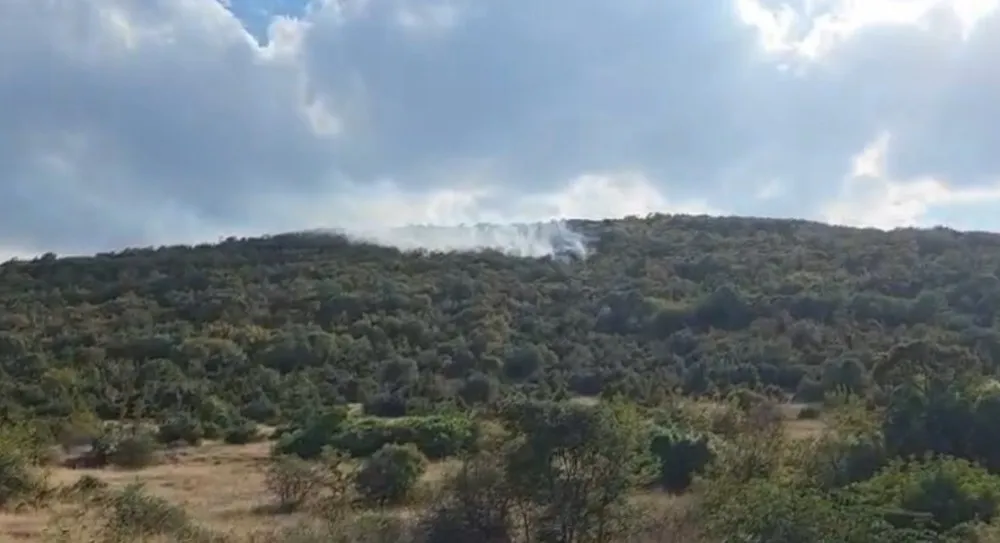
The head of the Protection and Rescue Directorate is talking about a group that reignites the same fire near Dracevo...

456 speeding fines, 159 motorcyclists without a helmet and two men who drove despite a court ban. The checks work...

The local community council quotes the Criminal Code at the culprit itself and buys its own cameras. The institutions got...

Minister Janevska announced the numbers and handed responsibility for the torn textbooks to the schools. The gap between births and...

Hot African air lasts until Sunday, and from Friday sand arrives over the country too. The advice is to avoid...

Five dead, 80 per cent of patients over 60. Aerodrom is under a declared epidemic with four infected and carried...

Cameras read the number plates - a second arrival the same day means parking from 100 denars up. Taxi drivers...

The utility announced it washes every micro-location in every municipality. At the same time, Skopje residents are posting photographs of...

The director says the dogs have no ear tags - meaning they are not strays, but brought and abandoned. And...
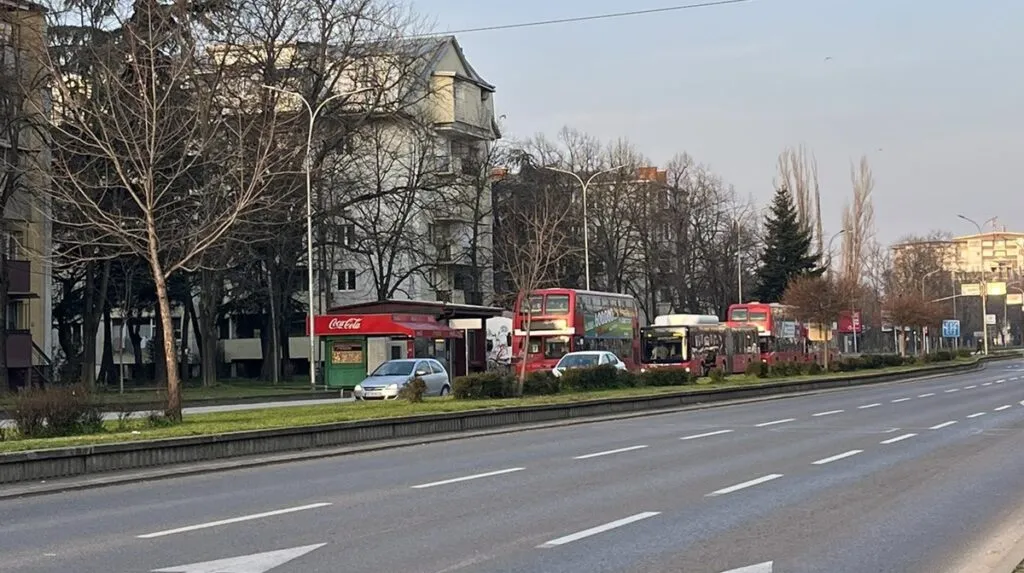
Three reports of physical assault in public places in one Skopje police log - on a bus, at a stop,...
This site uses cookies - is that okay? Learn more
Be the first to know when Metla launches something new
Leave your email and we will write when there is a new guide or something new on Metla.