
Kitka Has Been Burning for Days, and the Emergency Agency Says Someone Relights It Every Single Day
27.08.2026


27.08.2026

27.08.2026

27.08.2026

27.08.2026

27.08.2026

27.08.2026

27.08.2026

26.08.2026
25.08.2026

27.08.2026

27.08.2026

26.08.2026

27.08.2026

26.08.2026

25.08.2026

27.08.2026

26.08.2026
26.08.2026

09.03.2026

27.02.2026

19.02.2026
27.08.2026

26.08.2026

25.08.2026

23.04.2026

23.04.2026

12.04.2026
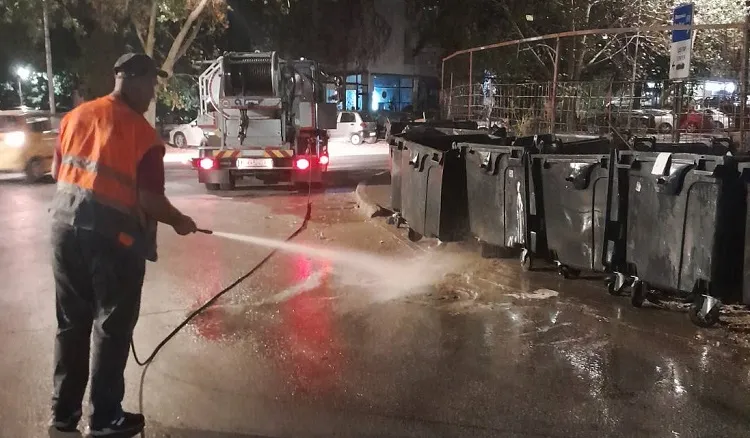
The public utility Komunalna Higiena Skopje announced that its crews carry out manual washing of the micro-locations where communal waste bins are placed, every day, in all Skopje municipalities. The washing mostly takes place late in the evening, after the bins are emptied.
The statement continues: the utility also runs continuous machine washing of Skopje's boulevards and streets with water tankers, and ahead of the Assumption holiday its crews washed the entire area in front of the Church of the Nativity of the Holy Mother of God in the city centre, as well as the surroundings and courtyard of the Assumption Monastery in the Matka canyon.
The statement versus social media
The problem with the word "daily" is that anyone who steps out of their building can check it.
While the utility was publicising its activity, residents of Skopje were posting photographs of the bins in front of their buildings. One of the complaints reads like this:
"In front of buildings 30-28 on Vidoe Smilevski Bato street, the sanitation workers have created a stinking little pool that is a potential bomb for all kinds of infection, it stinks for kilometres. That side street has not been cleaned since Ivica's time. I ask the municipality's sanitation service to do something; if you have an inspector, let him come out."
"Since Ivica's time" means since an Aerodrom mayor three terms ago. That is a unit of measurement which says more than any statistic on washing frequency.
Both things can be true at once
This is not about the utility lying outright. The workers really do wash micro-locations at night - that is documented and visible on the ground. The church courtyards really were washed before the holiday.
The difference is between "it gets washed" and "it gets washed daily, everywhere". The first claim is true. The second does not survive the test of your own nose, in any Skopje neighbourhood, on any August afternoon.
And there lies the real question, which no statement has opened: how many micro-locations does Skopje have, how many crews go out at night, and how many of those locations actually get washed in 24 hours. Those are three numbers the utility knows. Publish them and the debate ends immediately - one way or the other.
The holiday as a schedule
There is also a pattern Macedonia recognises without effort. The washing in front of the churches happened right before a major religious holiday, when there are people watching and something to announce.
That is not bad in itself - holiday locations really should be clean. But when hygiene is scheduled by the calendar of events instead of the calendar of needs, the side street behind buildings 28 and 30 has no day in the year that will put it on the list.
The latest 10 news from this category
The local community council quotes the Criminal Code at the culprit itself and buys its own cameras. The institutions got...

Minister Janevska announced the numbers and handed responsibility for the torn textbooks to the schools. The gap between births and...

Hot African air lasts until Sunday, and from Friday sand arrives over the country too. The advice is to avoid...

Five dead, 80 per cent of patients over 60. Aerodrom is under a declared epidemic with four infected and carried...

Cameras read the number plates - a second arrival the same day means parking from 100 denars up. Taxi drivers...

The director says the dogs have no ear tags - meaning they are not strays, but brought and abandoned. And...
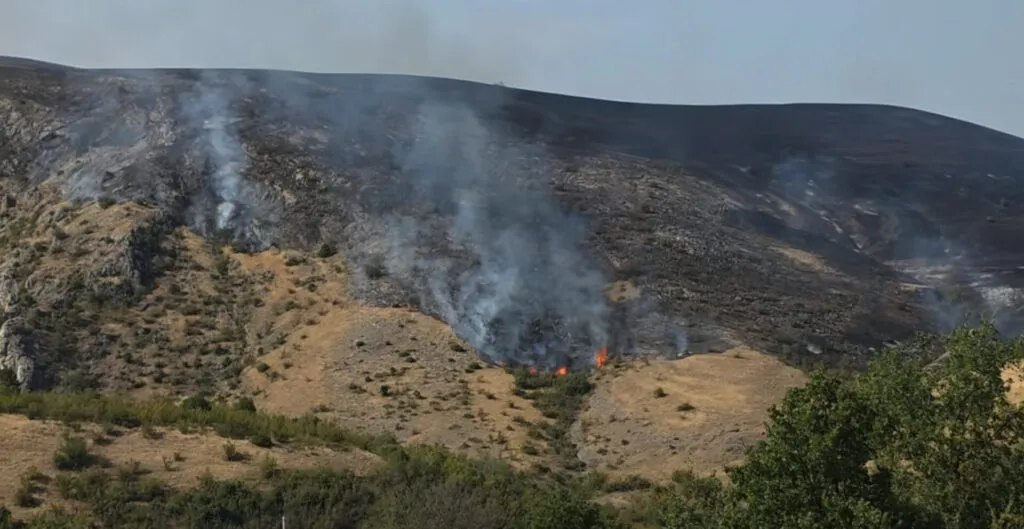
Twenty-three fires in a single day, aircraft redirected from one front to the next. And on Kitka, someone waits for...

Three hundred fewer classes, twenty-six villages without a school. Janevska says they "managed" to do it - but an empty...

A boat hit a paddleboard just off the shore, and the response came from residents standing on boards in the...

The fire is not being put out - it is being buried under soil. And when clearing a dump means...
This site uses cookies - is that okay? Learn more
Be the first to know when Metla launches something new
Leave your email and we will write when there is a new guide or something new on Metla.