

Police officer from Drachevo drove without ever passing a driving test: Who checks the people who check everyone else?
18.10.2026


18.10.2026

18.10.2026
18.10.2026
18.10.2026

18.10.2026

18.10.2026

18.10.2026

18.10.2026

18.10.2026

18.10.2026

18.10.2026

17.10.2026

18.10.2026

18.10.2026

18.10.2026

18.10.2026

17.10.2026

16.10.2026

18.10.2026

18.10.2026

18.10.2026

18.10.2026

18.10.2026

18.10.2026
18.10.2026

18.10.2026

17.10.2026

17.10.2026

15.10.2026

13.10.2026

23.04.2026

23.04.2026

12.04.2026

On 25 August, the Council of the Municipality of Pehcevo unanimously rejected the initiative to open urban-planning proceedings for a data centre in Pancarevo. Councillors from both VMRO-DPMNE and SDSM voted against - the same parties that are fighting over this exact topic at national level.
That is the most striking detail in the whole story. Once the debate came down from the television studios to the local level, to the people who would live next to the facility, the party line vanished.
What nobody found out
The public never learned the investor's name. Nor the size of the facility. Nor its water and electricity consumption. Nor the cooling technology. Nor the economic benefit for the local community.
The project never even reached the building-permit stage, and the basic technical data stayed unknown. That is not a detail - it is the reason the councillors voted the way they did. It is hard to approve something whose size nobody has told you.
How much power and water one data centre eats
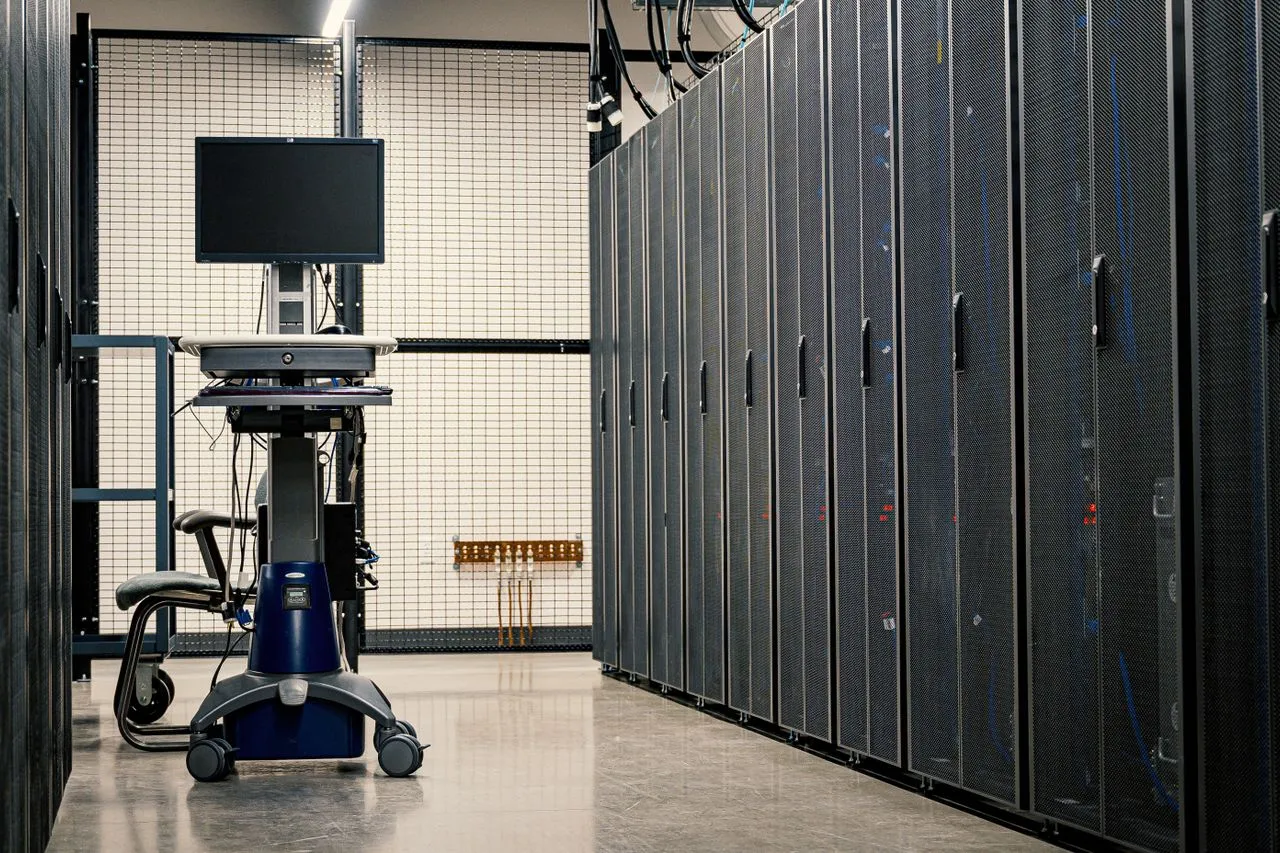
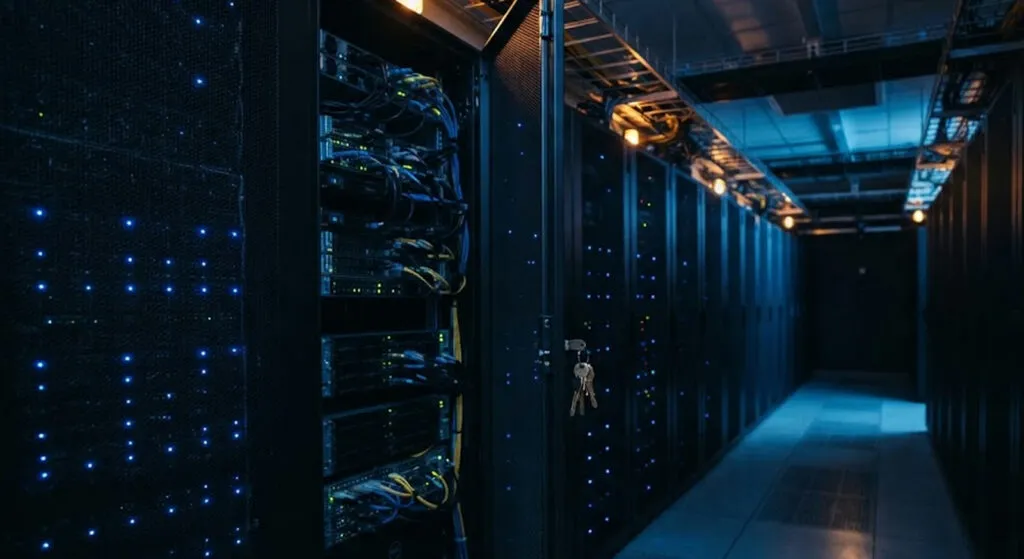
A data centre is a building full of servers, plus storage systems, fast internet connections, transformers, batteries, backup generators and cooling equipment. All of it runs 24 hours a day.
The scale varies drastically. A small centre has a few dozen server racks. The large complexes run by Google, Amazon, Microsoft or Meta look like industrial zones and can draw hundreds of megawatts.
Artificial intelligence changes the arithmetic. Models are trained on enormous volumes of data and then answer millions of queries, which takes thousands of specialised graphics processors. They consume a lot of power and generate a large amount of heat in a small space.
The International Energy Agency estimates that a large AI-focused data centre can draw 100 megawatts and consume as much electricity annually as around 100,000 households. Globally, data centres consumed roughly 415 terawatt-hours in 2024, about 1.5 per cent of world consumption - and by 2030 that figure could double.
Almost all of that energy ends up as heat that has to be removed continuously. Dry cooling systems use minimal water but more electricity, and they make noise. Cooling towers use less electricity but can consume hundreds of thousands or millions of litres of water a day.
Mickoski has already sketched the investor
In an interview with the American outlet Breitbart News, Prime Minister Hristijan Mickoski all but named his preferred partner - Chris Pavlovski, chief executive of the video-streaming platform Rumble, whose ancestors are Macedonian.
"Chris invests a lot with his partners in Europe. I know they bought a big company in Germany, and because he has extremely strong patriotic feelings towards the country his family comes from, he wants to invest in Macedonia," Mickoski said, announcing a meeting with him.
The same interview brought something that had not been said this openly before: the Cebren and Galiste hydropower plants, a 1.5-billion-dollar project, are cited as a source for "feeding" the data centres with electricity - and not, as had been believed until now, for balancing the power system.
The opposition's questions and one uncomfortable number from the US
SDSM leader Venko Filipce posed a series of questions: what happens to the water-supply capacity for farmland, what happens to the price of electricity, and whether additional imports will be needed.
"Does that mean electricity will get more expensive because more of it will be used?! On top of that, I will depend on additional imports," Filipce said, pointing out that domestic generation capacity is performing badly.
From VMRO-DPMNE, MP Brane Petrusevski replied with the opposite thesis - that data centres are capital investments bringing foreign capital and know-how, and can position Macedonia as a regional hub for cloud technology and artificial intelligence.
"And yes, data centres consume a lot of energy. That is exactly why we should use them as a catalyst for new energy infrastructure," Petrusevski said, pointing to renewable-energy contracts and battery storage systems.
From Levica came the figure least mentioned in this debate: the US already has more than 500 active temporary or permanent bans and moratoriums on data-centre construction, and in July alone more than 150 cities and counties introduced such restrictions.
The law is coming, the regulation is not here yet
Here there is still no legal framework. The government has prepared amendments to the Law on Urban Planning and the Law on Construction introducing a new category - "buildings for keeping and storing digital data".
So the sequence runs like this: first an interview naming a potential investor, then an initiative on the ground in Pehcevo, and the legal framework is still being drafted. The councillors in Pehcevo voted against something for which there was no law, no name and no number.
Data centres can be a good investment for Macedonia. But that can only be established with a figure - how many megawatts, how many litres of water a day, what cooling technology. Until those numbers exist, "the new oil" stays a slogan, and Pehcevo has shown that local councils have already worked that out.
The latest 10 news from this category
In August Macedonia had 131,076 foreign guests, while the Belgrade region alone had 154,267. Foreigners stay with us for about...

Only 19 percent of households with children receive child benefit, compared with 88 percent in the EU. The Platform Against...
One of Anthropic's five biggest customers turned its back on stage, then started softening the words. When the default choice...

From unicorn to bankruptcy in five years: Google took the founders back, Disney takes part of the assets, and the...
A car that hops over trucks on compressed air and arrives in 2028 - unless it slips again. The deposit...

ESM currently sells electricity at 65 euros per megawatt-hour, while on European exchanges the price tops 200 euros. The PM...

Over 122 tonnes of animal-origin food were sent back from the border, and imports of another 21 tonnes were banned....
The draft law is in Parliament and closes the nationalisation story. Instead, the state offers a choice of risk, with...
The agents didn't break anything - they used passwords someone had left in a public place. And India learned of...

Fakes have become so good they've earned their own name. Veritas offers a chip built into the product, and it's...
This site uses cookies - is that okay? Learn more
Be the first to know when Metla launches something new
Leave your email and we will write when there is a new guide or something new on Metla.