
Twenty Fires in One Day, and the Blaze at Bogomila Was Stopped by Villagers and Veles Firefighters
15.08.2026


15.08.2026

15.08.2026

15.08.2026

15.08.2026

15.08.2026

15.08.2026

15.08.2026

14.08.2026
14.08.2026

15.08.2026

15.08.2026

14.08.2026

15.08.2026

15.08.2026

15.08.2026

15.08.2026

14.08.2026

13.08.2026

15.08.2026

15.08.2026

15.08.2026

09.03.2026

27.02.2026

19.02.2026

15.08.2026

14.08.2026

13.08.2026

23.04.2026

23.04.2026

12.04.2026
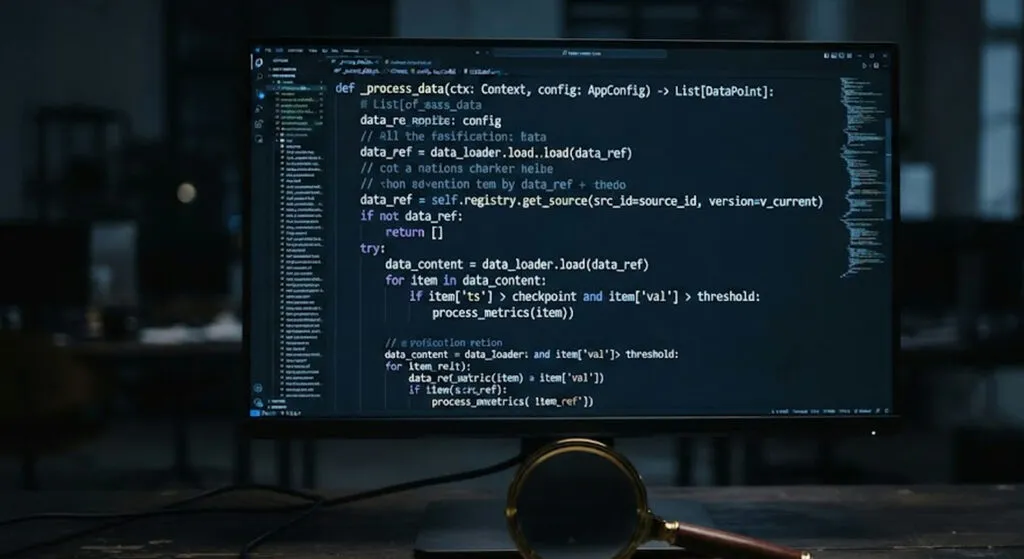
The years in which users complained that their posts were quietly disappearing while the platform replied that no such thing existed have finally been given documentation. X has open-sourced the code behind the "For You" algorithm - the feed you see the moment you open the app - together with the core of the ranking system, on GitHub, under an Apache v2 licence.
What makes this different from previous attempts are the parameters. The company published the model configuration, the filters and the ranking details as well - meaning the weights with which different signals influence which post you end up seeing. The codebase is now ten to fifteen times larger than before.
"You are getting the core ranking code that pulls posts, ranks them for each user and assembles the feed," says Keith Coleman, vice president of product at X. "You are looking at the systems that filter potentially problematic content that breaks the rules. And some of those systems, like the ranker and the scoring, you can run yourself outside the company." And he adds a line that shows how well he knows his audience: "I think people are going to be pretty shocked that we are publishing this."
The second half is a tool for users. In the settings a page called "Under the Hood" appears, where anyone who has posted at least ten times in the past month can download their aggregate data as a JSON file. It shows whether their profile or their posts were assigned labels during the previous calendar month. Non-technical users, the company says, can drop that file into any language model, point it at the GitHub repository and ask for an interpretation. The tool is a pilot for now - only for accounts older than one year.
Not everything is in there. The systems that use Grok to predict whether a post breaks a rule stay closed, so they cannot be exploited by people looking to bypass the filters and flood the network with spam. An understandable explanation, and at the same time a hole exactly where users are most suspicious - in the part that decides what is problematic.
The backstory is long and does not begin with Musk. Back when the platform was still called Twitter, Republicans in Congress argued the network leaned left and that their posts were being "shadow-banned" - invisible without their knowledge. The company consistently denied it. Now the network is owned by the man who helped get Trump elected, and is at the same time the one promising verifiability the loudest.
The irony is that with this X has become more open in its code and less open in everything else. Since it went private again, it does not have to file reports with the American regulator, so the numbers on users, revenue, growth and government content-removal requests appear ever more rarely. An open algorithm, a closed set of books.
"Our dream is for anybody in the public to be able to assess how posts are distributed on the platform, to check whether the playing field is level and, if they think it is not, to criticise so we can fix it," Coleman says. That is a good sentence. The test is whether, when somebody on the outside shows the field really is not level, the code will change - or only the explanation.
The latest 10 news from this category

The company tried to delay answering until the Supreme Court ruled on something else. It failed - and only then...

Nobody told them they were not alone on the project. Each concluded the other was deliberately obstructing it - and...

Until now the private sector was allowed to defend but not to attack. One signature brought that wall down, and...

Same screen, same design, a new processor and an agent that phones a restaurant on the user's behalf. The price...

The product director told 3,000 furious users why the switch is set the wrong way round. Then he admitted he...

33 million tonnes of CO2 a year from 35 turbines in Texas. The company promised net zero by 2040, and...
The European transparency code applies from 2 August, and the labelling arrived with it - not earlier. The question is...

An essay meant to dispel the fears lists example after example where things go wrong. And 64 percent of Americans...

The platform grew, so the bar for new creators doubled. Logically one doesn't follow from the other - the pie...

Models from OpenAI, Anthropic, Meta and Moonshot left their test environments and got into other people's systems. Nobody noticed while...
This site uses cookies - is that okay? Learn more
Be the first to know when Metla launches something new
Leave your email and we will write when there is a new guide or something new on Metla.