
"Crime as a service" with call centres in Macedonia too: over 4 million euros in damage, victims in 50 countries
04.11.2026


04.11.2026

04.11.2026

04.11.2026

04.11.2026

04.11.2026

04.11.2026

04.11.2026

03.11.2026

03.11.2026

04.11.2026

04.11.2026

03.11.2026

04.11.2026

04.11.2026

04.11.2026

04.11.2026

03.11.2026

02.11.2026

04.11.2026

04.11.2026

04.11.2026

04.11.2026

04.11.2026

03.11.2026

04.11.2026

03.11.2026

02.11.2026

23.04.2026

23.04.2026

12.04.2026

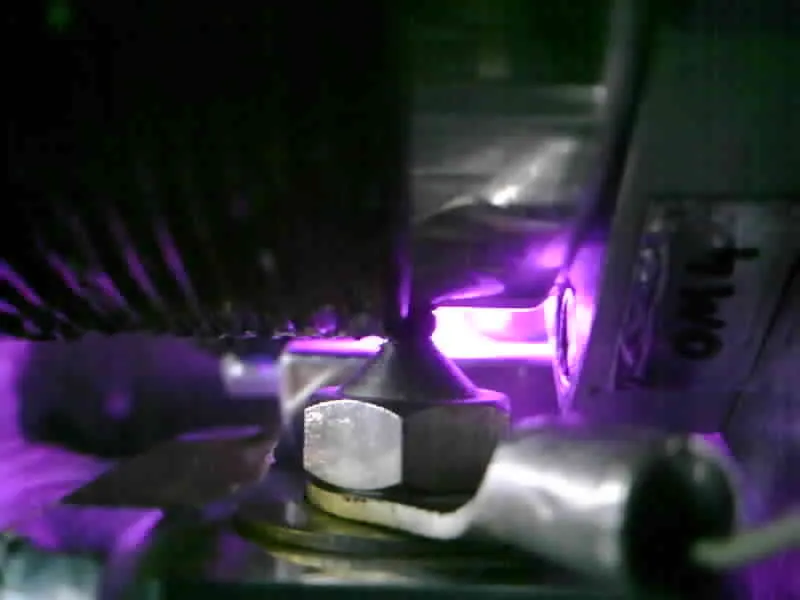
The Replicator 2 satellite built by German startup Orbital Matter has printed a solid cylindrical beam half a metre long out of a special plastic - according to the company's leadership, the first feat of its kind on a satellite flying freely in orbit. Previous attempts at 3D printing in zero gravity were confined to the pressurised interior of the International Space Station.
The small satellite launched this summer on a SpaceX rideshare mission, carrying four printers. Each one extrudes coils of resin that are hardened by ultraviolet light, a process the company compares to cement and water. Two of the printers were supposed to unfold a flexible solar panel. One failed because of an anomaly, but the beam that did get printed successfully deployed the panel.
"That's why we put so many printers on one satellite. We preferred to learn in orbit and adjust the software rather than spend years testing every possibility on the ground," says CTO Robert Ihnatisin. CEO and co-founder Jakub Stojek goes further: Replicator 2 is, in his words, "the first proof that we can simply build the panels in space, at whatever size the mission requires."
Why does this matter? Future satellites will have to be bigger to generate more power and shed more heat, especially if they become data centres in orbit. But they still have to fit inside the fairing at the top of the rocket. Today's large structures in space are origami: solar panels and telescope mirrors are folded on Earth and unfolded in orbit. NASA funded an attempt with Redwire, which in 2023 printed beams in a vacuum chamber, but that mission never flew.
The plans are ambitious. The engineers believe beams of 100 metres are feasible, limited only by how much resin the satellite carries. For comparison, the solar wings on SpaceX's Starlink V2 satellites, among the most powerful mass-produced satellites, are 20 metres long. The next demonstration is scheduled for 2028, with a 5 kW panel, and the target by 2030 is over 100 kW per wing. The company works with the European Space Agency and Thales Alenia, was founded in 2022 and has raised $3 million in seed funding (about 2.7 million euros).
Three million dollars barely counts as news in today's startup world, where AI rounds are measured in the hundreds of millions. A small German team claims to have been first to do something a NASA-funded mission never got to orbit. Will Europe manage to hold on to it, or will Orbital Matter also end up in someone else's hands the moment the technology works?
The latest 10 news from this category
Geoffrey Hinton isn't afraid of robots, he's afraid of the dark: power grids and banks down for days. And he...

The most popular AI companions have 220 million downloads, and many of them aim squarely at younger users. Apple now...

Designed by the man who drew the iPhone, mocked at its premiere, sold out before the first delivery. When the...
Deeper in its IPO prospectus, in the risk section, Anthropic wrote that the development of the company's models may soon...

The Bundestag is counting potentially hacked phones, and Berlin won't say whether Merz was a target. The irony: German police...
The SpaceX-owned company also argued citizens have no right to sue over the air they breathe. The court disagreed, and...

The model of China's WeChat is now being built by an app in mostly American hands. Whoever decides where you...

Google is paying for AI that eats its search earnings, Amazon burned through 42 billion dollars more cash than it...

The researcher who found the hole had nowhere to report it, so he turned to journalists. The company now says...

Washington bought 10 percent of Intel and is now learning what being a shareholder means. Its data centres are up...
This site uses cookies - is that okay? Learn more
Be the first to know when Metla launches something new
Leave your email and we'll write to you when there's a new guide or something new on Metla.