Officer Struck a Handcuffed Man by the Fountain: The Ministry Reported Its Own, but Three Months Later
09.08.2026


09.08.2026

09.08.2026

09.08.2026

09.08.2026
09.08.2026
09.08.2026
09.08.2026
08.08.2026
07.08.2026

09.08.2026
09.08.2026
08.08.2026
09.08.2026
09.08.2026

09.08.2026
09.08.2026
08.08.2026
07.08.2026

09.08.2026

09.08.2026

09.08.2026

09.08.2026
08.08.2026
08.08.2026

09.03.2026

27.02.2026

19.02.2026
08.08.2026
07.08.2026
06.08.2026

23.04.2026

23.04.2026

12.04.2026
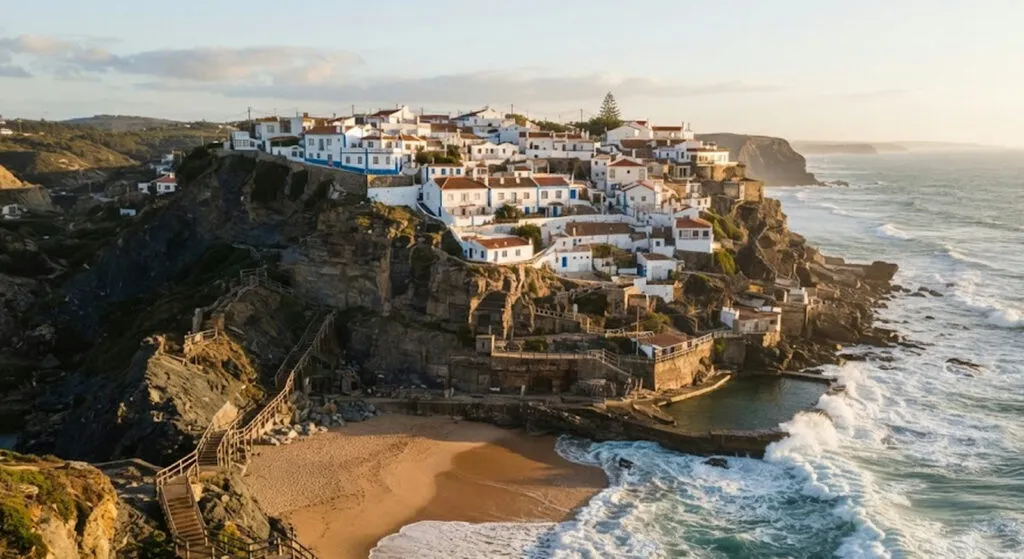
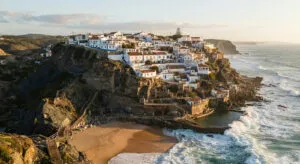
There are places on the European coast that have survived every wave of mass tourism simply because nobody bothered to find them. Zambujeira do Mar is one of them - a handful of white houses with blue trim, glued to a cliff above the Atlantic, in Portugal's southern Alentejo.
The village sits inside the Southwest Alentejo and Vicentine Coast Natural Park, which means there is no room around it to build, and nothing that is not already there can expand. Below it is a golden sand beach reached by wooden steps, and the sea here is one of the most sought-after surf spots on the Atlantic. The reddish cliffs change colour through the day, and that is not a tourist brochure line but a consequence of light and mineral.
Anyone expecting a deserted place in August will be disappointed. In season the population multiplies and the village takes on a summer rhythm - full terraces, lively lanes, the atmosphere of a seaside town. The rest of the months it runs on pause, which is the real reason it is worth it.
The main beach is not the only one. Along the coast come Praia dos Alteirinhos, Praia de Nossa Senhora, Praia das Costas do Lajão, Praia da Baía da Arquinha, Praia do Tonel and Praia da Pedra da Bica. Some are family beaches, some are naturist, some are entirely wild, some have natural pools. The nearest gems are Praia do Cavaleiro, Praia da Amália and Praia do Carvalhal.
What makes this coast different from the Spanish or Italian one is that the beaches are connected by walking trails, not car parks. The beach trail runs 7.9 kilometres, and the Fishermen's Trail 18.5 kilometres, leading to Odeceixe through high cliffs and hidden coves. For people who know the difference between a holiday and tourism, that is the whole point.
The village itself is a web of cobbled lanes that all end at a beach, and on a hill above the water stands the Nossa Senhora do Mar chapel - designed in 1957 and consecrated in 1966, today a favourite spot for watching the sunset. The food is dictated by the sea: fresh fish and seafood, with several good restaurants on Miramar street.
One more detail worth knowing when planning: Meo Sudoeste, one of Portugal's largest music festivals, is held right here, and during it the village does not resemble itself. This year it is on hiatus, with the next edition scheduled for August 2027. Anyone who wants a quiet place should route around that date.
The latest 10 news from this category
Eleven walking trails, eighty kilometres, and one staircase of six hundred steps that a local shepherd spent ten years carving....
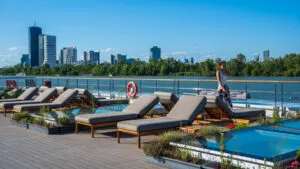
From Vienna to Budapest, stopping at Esztergom and Visegrád. A boat that docks in the old town centre, not twenty...
Everyone leaves early to beat the queue. The forecast says that is exactly when the queue is longest - and...
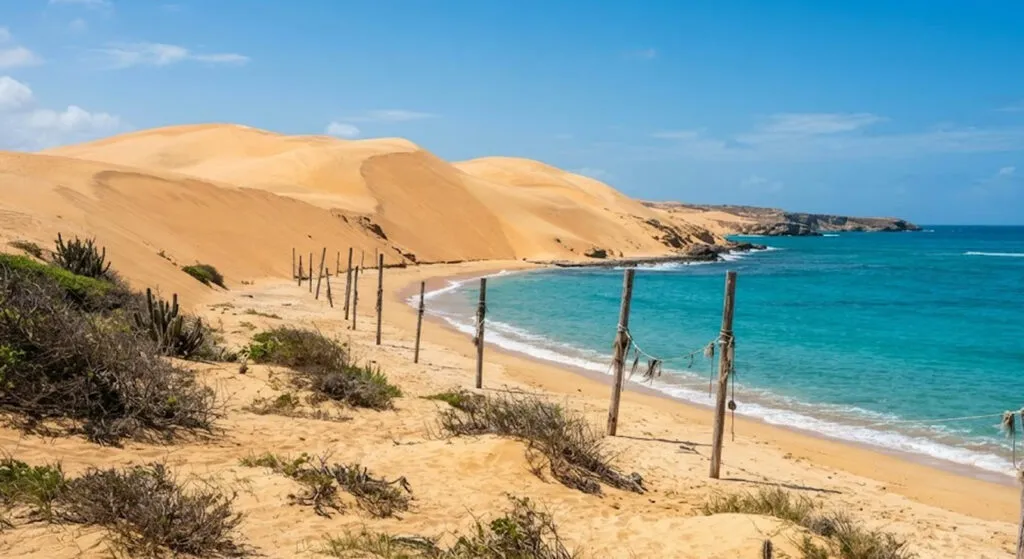
The town from One Hundred Years of Solitude does not exist. The landscape it was born from does, and it...
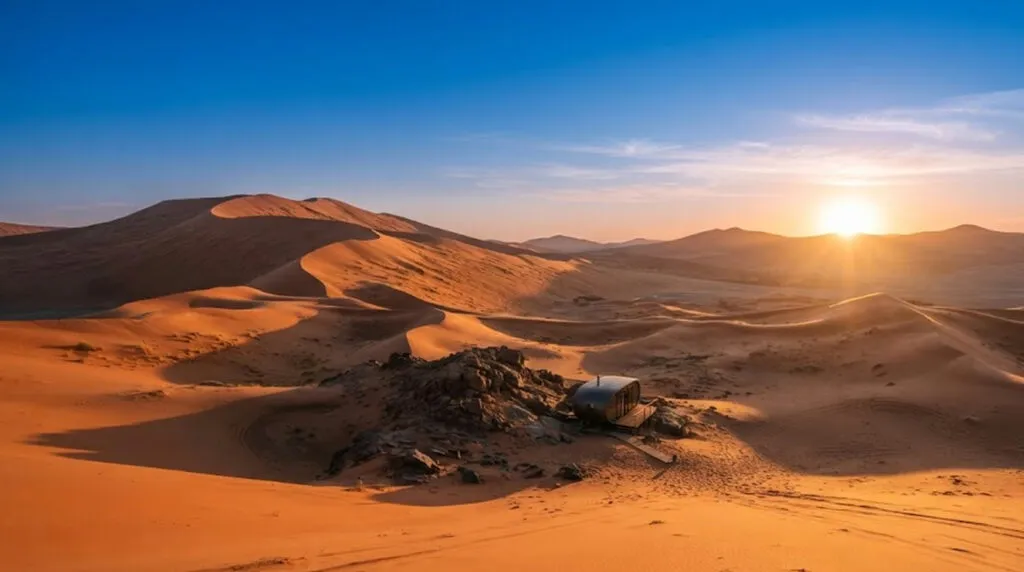
An oval structure of steel and glass on a rock in the Namib, with a telescope and a pool. The...
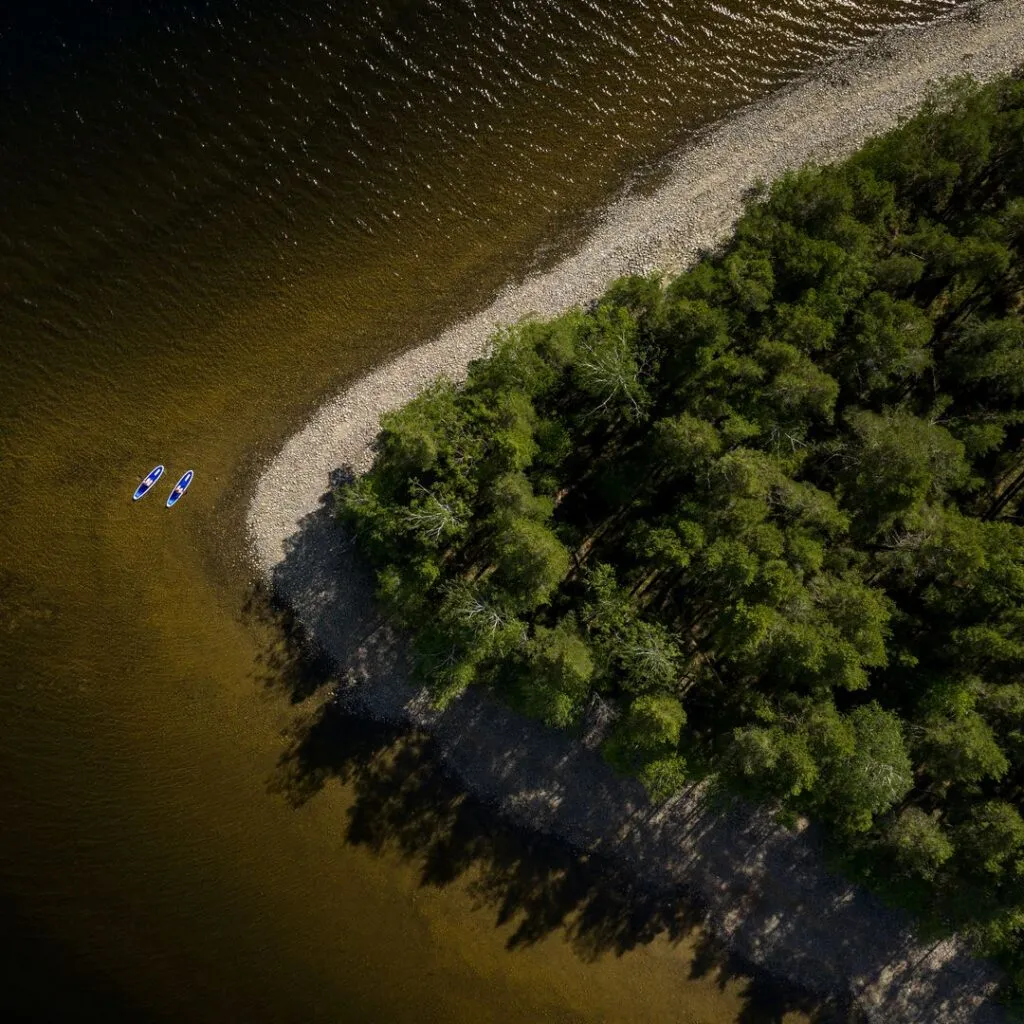
The ritual is wake, lake, forest, sauna, lake, sleep. Not one step requires a booking - and that is precisely...
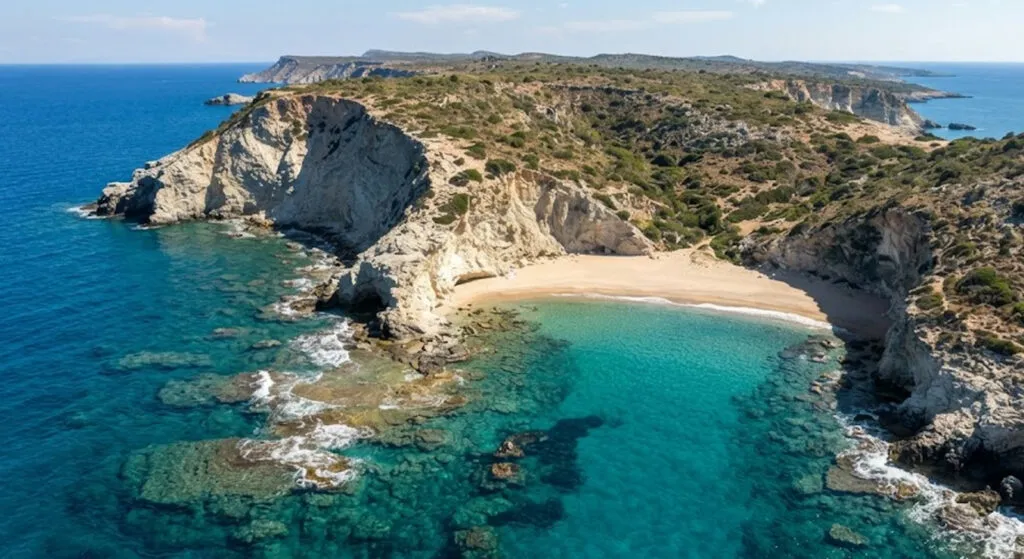
Black sand thrown up by volcanoes, a spring that kept pirates hiding here for centuries, and cliffs covered in fossils....
Bogorodica and Star Dojran are queued up, Medzitlija is moving. What the cameras show, when the jams hit, and what...
While some queue in traffic at 38 degrees, Europe has places where the August maximum is 13. Eight addresses that...
They call it the French California and that isn't an agency line. Four and a half kilometres of boardwalk, eleven...
This site uses cookies - is that okay? Learn more
Be the first to know when Metla launches something new
Leave your email and we will write when there is a new guide or something new on Metla.