A New Criminal Complaint Against Jakimovski: A Building Permit Based on a Plan Struck Down Back in 2018
16.09.2026


16.09.2026

16.09.2026

16.09.2026

16.09.2026

16.09.2026

16.09.2026

16.09.2026

15.09.2026

14.09.2026

16.09.2026

16.09.2026

15.09.2026

16.09.2026

15.09.2026

14.09.2026

16.09.2026

16.09.2026

16.09.2026

16.09.2026

15.09.2026
15.09.2026

09.03.2026

27.02.2026

19.02.2026

16.09.2026

15.09.2026

14.09.2026

23.04.2026

23.04.2026

12.04.2026

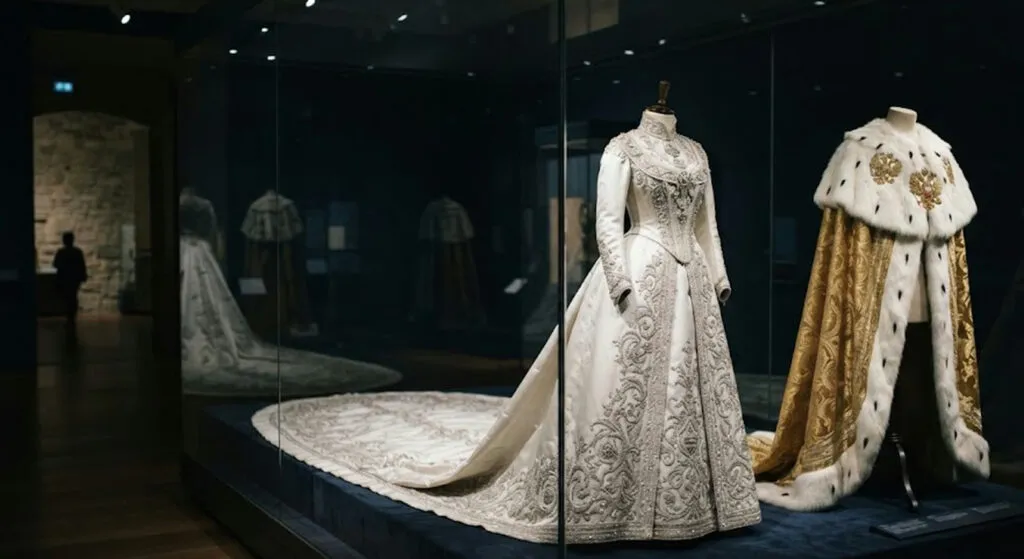
Ten kilograms. That is what the dress weighed in which Alix of Hesse married Nicholas II on 26 November 1894 in the Grand Church of the Winter Palace, having become Alexandra Feodorovna. White silk with silver motifs, an enormous train, a ceremonial mantle of gold brocade lined with ermine.
The veil was English lace from Honiton, Devon - the same worn by Queen Victoria, her grandmother. The jewellery came from the crown, with 475 carats of stones that once belonged to Catherine the Great. That is a quantity that stops being clothing and becomes an endurance exercise.
And now the part that makes the whole story different from any other royal wedding. The ceremony took place twenty-five days after Tsar Alexander III died, on 1 November 1894. Twenty-five days. No celebration, no splendour, none of those gatherings the Russian empire staged when it wanted to be seen. Nicholas later wrote that he had to summon all his strength not to break down, because his father was not there.
So: a young woman in a ten-kilogram dress, in a church full of people in black, marrying a man who became tsar three weeks earlier and is prepared for none of it. The story of a falling empire is usually told from the end. Here the beginning already contains the whole tone.
Alexandra broke with tradition - she did not give her wedding dress to the Church as custom required, but kept it. That dress survived the revolution and is kept today in the Hermitage. She and her family were shot by the Bolsheviks on 17 July 1918 in Yekaterinburg.
The fabric remained, and not one of the people who wore it came back. That is the point museums rarely write on the plaque beside the display case, even though every visitor feels it: you look at an object while thinking about how little is left once everything else has gone.
The latest 10 news from this category
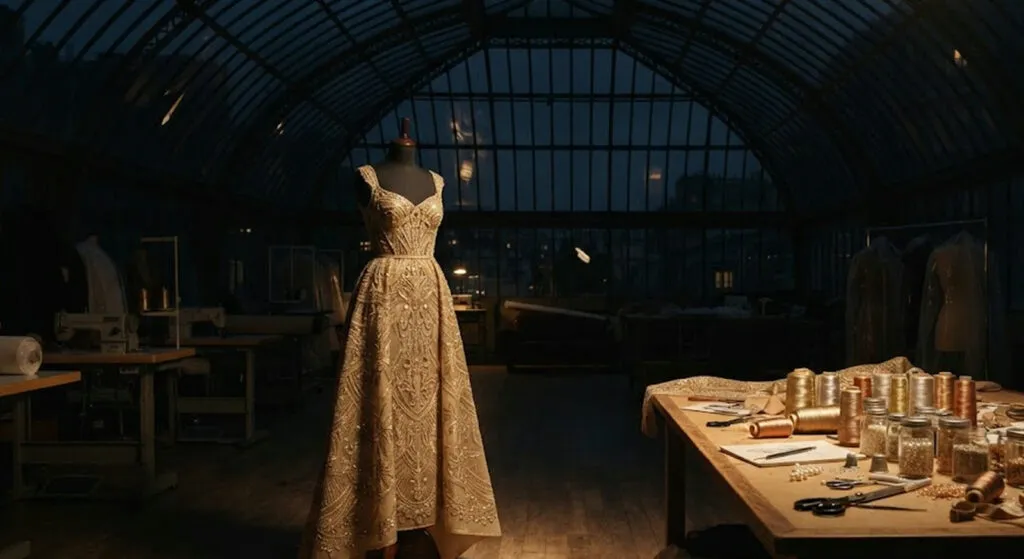
Hannibal Laguna showed his collection in the Crystal Gallery of the Cibeles Palace - golden reflections and hand embroidery. The...

Almost every version starts with a flat root, and the real work is done by the cut. A stylist said...
Bob Mackie died at 87 with nine Emmy awards and one Tony that arrived fifty years late. Miley, Zendaya and...

The natural brow is the one that bills the least. Perhaps that is why the recommendation has run in the...
The only strict rule came from the groom, not from protocol. Everything that counted for anything that day was either...

For years she sat in the front row in Paris, Milan and London. Now she has stepped onto the runway...

The most repeated hair tip on the internet has a narrow, real effect and one important prohibition almost nobody mentions....

A veil for the ceremony, tulle gloves for lunch, the hem removed for dancing. The bouquet held exactly 27 white...

The meaning is not that they have to carry it. The meaning is that behind them stands a team that...

The industry moved from one big procedure to a subscription. That is called progress, but it is worth knowing before...
This site uses cookies - is that okay? Learn more
Be the first to know when Metla launches something new
Leave your email and we will write when there is a new guide or something new on Metla.