A Nursery for 130 Children in Kozle: Part of the Answer to the Demographic Question - If It Opens on Time
21.06.2026


21.06.2026

21.06.2026
21.06.2026

21.06.2026

21.06.2026

19.06.2026

21.06.2026

19.06.2026

18.06.2026

09.03.2026

27.02.2026

19.02.2026

23.04.2026

23.04.2026

12.04.2026

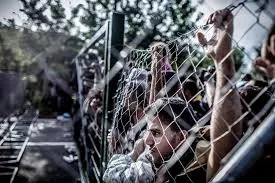
No one can predict the future better than history. It is the only witness that has already seen the consequences of the decisions people made over the centuries.
History teaches us that no state ever weakened because it had too many young, educated and able-bodied people. On the contrary, states began to lose strength when they lost their own human capital, when the young left and the institutions failed to create the conditions for them to stay and build the future at home.
Today, when Macedonia faces a serious demographic decline and emigration, it's worth looking at the experiences of other countries.
That's why the most important lesson is simple: a state that doesn't invest in its people will, sooner or later, have to look for people elsewhere. And that's a lesson history has repeated countless times, one no one can explain better than history itself.
Today Europe increasingly faces the consequences of uncontrolled migration, insufficient integration and mistaken demographic policies. Belfast, parts of Sweden, Brussels and many other European cities show how quickly social tensions can arise when a state has no long-term strategy.
That's why Macedonia must learn from the experiences of others. Instead of repeating other people's mistakes, we should create the conditions for the young to stay, start families and build the future here.
If Macedonia is left without young people, the solution must not be to accept their departure, but to fight for their return.
It's true that every economy needs a workforce and that someone, in the end, has to fill the empty jobs. But the real question is why thousands of young Macedonians leave the country every year. Instead of talking about who will replace them, we need to talk about how to bring them back and why they leave.
Before we talk about who will replace the young who leave, we have to ask ourselves why they leave at all.
The reasons are well known and citizens feel them every day: low wages compared to Europe, limited opportunities for professional advancement, the politicisation of institutions, corruption, a sense of injustice, pollution, problems in healthcare and education, and a distrust that things can change for the better.
Many young people don't leave Macedonia because they don't love their country, but because they want a better life, greater security and a clearer future for their families. They go where they believe effort is more valued, laws apply to everyone, and there are more opportunities for personal and professional development.
That's why the real question isn't who will replace the young who leave, but what the state must do for them to stay. If we don't remove the reasons for emigration, every year we'll lose new generations, and the problem will only grow.
Macedonia shouldn't compete with other states over how many workers it can import, but over how many of its own citizens it can keep and bring back home.
No one has the right to steer Macedonia's future in the wrong direction. No government, no politician, no generation must accept that the young leave while the state looks for replacements.
Macedonia is not built by statistics, but by people. Its greatest value isn't natural resources, but young, educated and capable citizens. That's why it's the duty of every government to create the conditions for them to stay, to return and to build their future here.
The right path isn't accepting emigration as inevitable, but fighting the causes that push the young to leave. History remembers the states that kept their people, not those that resigned themselves to their departure.
Macedonia's destiny should be shaped by its citizens, above all the young generations who will live, work and develop the country in the decades to come.
The latest 10 news from this category
Повеќе од 35 години македонската политичка сцена е доминирана од две партии – ВМРО-ДПМНЕ и СДСМ. Едната е формирана во...

Проширувањето на Европската Унија сè повеќе наликува на политички ќорсокак. Наместо процес заснован на јасни критериуми, реформите и економскиот развој,...
A day of promises and deadlines: the government pledged a reshuffle with not a single name, the unions calculated that...
Министерката за енергетика вели дека цените на струјата на берзите денес на моменти се и нула евра за мегават-час. Поради...
A day on which accountability stopped right in front of the person who depends on it most - the patient,...
The government promised a marathon to the EU with no finish line, the opposition asked who paid for the party;...
A day when the system paid fast where it shouldn't and slow where it must: a welfare audit, dirty air...
Fifty million on one signature, a „My VAT“ that does not work, and the same circle with Sofia - different...
The „Puls" nine plead not guilty, SDSM counts millions in tenders, the waterfalls dry up, and citizens haul tonnes of...
Farmers stuck with the bill again, Štip burning for the third time, seven hours without power - and in parliament,...