A Nursery for 130 Children in Kozle: Part of the Answer to the Demographic Question - If It Opens on Time
21.06.2026


21.06.2026
21.06.2026
21.06.2026
21.06.2026

21.06.2026
19.06.2026

21.06.2026

19.06.2026

18.06.2026

09.03.2026

27.02.2026

19.02.2026

23.04.2026

23.04.2026

12.04.2026

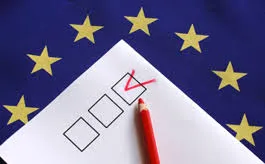
The enlargement of the European Union increasingly resembles a political dead end. Instead of a process based on clear criteria, reforms and economic development, today every candidate state faces different additional demands, historical disputes and bilateral conditions.
Macedonia is asked for constitutional changes and the resolution of historical issues with Bulgaria. Serbia is conditioned on Kosovo. Montenegro faces demands from Croatia. Bosnia and Herzegovina is hostage to internal divisions, and Albania to long institutional reforms.
With every new enlargement, the possibility arises for a member state to set new conditions for its neighbour. So the process becomes endless, because every unresolved historical dispute, minority issue or territorial disagreement can turn into a veto.
An additional problem is that behind some of these disputes stand broader geopolitical interests. The great powers have their own strategies in the Balkans and often back positions that suit their national interests. Because of this, many issues that look bilateral are actually part of a wider political game.
Until the European Union establishes clear and equal rules for all candidates, enlargement will remain hostage to national ambitions, historical disputes and political reckonings. And when the process depends on the consent of more than twenty states, each with its own interests, the question arises whether the current model can lead to a final solution at all.
That's why today more and more Balkan citizens see the European perspective not as a real goal with a clear deadline, but as a process that is constantly postponed and moves further away.
As long as the Western Balkan countries have no clear alternative to the European Union, it's hard to expect the region to be treated as an equal partner. In politics and diplomacy, respect most often arises from the possibility of choice, not from dependence.
For years the Balkan states have repeated the same message - that EU membership is their only strategic goal. But when one side has no other option and the other has no deadline to decide, the negotiating position becomes unequal. Then conditions easily multiply, deadlines stretch, and the process turns into endless waiting.
History shows that the greatest respect goes to those who have a choice, not to those who depend on a single door. If the Western Balkans build real alternatives for development and economic progress, then the attitude toward the region will be different too. Otherwise, the risk is that enlargement remains a process without a clear end, and the Balkans keep waiting at Europe's door without knowing when it will finally open.
The latest 10 news from this category
Повеќе од 35 години македонската политичка сцена е доминирана од две партии – ВМРО-ДПМНЕ и СДСМ. Едната е формирана во...
Никој не може подобро да ја предвиди иднината од историјата. Таа е единствениот сведок што веќе ги видел последиците од...
A day of promises and deadlines: the government pledged a reshuffle with not a single name, the unions calculated that...
Министерката за енергетика вели дека цените на струјата на берзите денес на моменти се и нула евра за мегават-час. Поради...
A day on which accountability stopped right in front of the person who depends on it most - the patient,...
The government promised a marathon to the EU with no finish line, the opposition asked who paid for the party;...
A day when the system paid fast where it shouldn't and slow where it must: a welfare audit, dirty air...
Fifty million on one signature, a „My VAT“ that does not work, and the same circle with Sofia - different...
The „Puls" nine plead not guilty, SDSM counts millions in tenders, the waterfalls dry up, and citizens haul tonnes of...
Farmers stuck with the bill again, Štip burning for the third time, seven hours without power - and in parliament,...