A Nursery for 130 Children in Kozle: Part of the Answer to the Demographic Question - If It Opens on Time
21.06.2026


21.06.2026
21.06.2026
21.06.2026

21.06.2026

21.06.2026

19.06.2026

21.06.2026

19.06.2026

18.06.2026

09.03.2026

27.02.2026

19.02.2026

23.04.2026

23.04.2026

12.04.2026

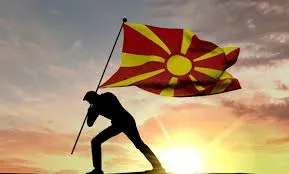
For more than 35 years the Macedonian political scene has been dominated by two parties - VMRO-DPMNE and SDSM. One was formed in 1990, the other in 1991, and together they have governed almost the entire period from independence to today. Yet despite countless promises, reforms and political reckonings, many of the key problems remain the same.
If you count caretaker governments and transitional periods, the figures may vary by a few months, but broadly:
When SDSM is in power, the blame is laid at VMRO-DPMNE's door. When VMRO-DPMNE comes to power, the finger again points at the previous government. So, for decades, citizens hear the same excuses, while responsibility is constantly shifted from one to the other.
Meanwhile, the institutions, the administration, public enterprises and various centres of power remain deeply entangled in a system that is hard to change. Instead of real transformation, the impression is often created that only the people at the top change, while the way things function stays the same.
The consequences are visible: young people emigrating, insufficient investment, problems in energy, healthcare, education and the judiciary. After three and a half decades, citizens have the right to ask whether the problem is with individual governments or with the system itself, which keeps producing the same results.
After more than three decades of VMRO-DPMNE and SDSM rule, citizens are increasingly asking the same question - where are the big projects that permanently changed Macedonia? Despite thousands of press conferences, promises and mutual accusations, the state still faces the same problems: young people leaving, a weak industrial base, energy dependence and insufficient transparency.
An even bigger problem is that the public finds it ever harder to obtain information about decisions that directly affect the state. Contracts, concessions, privatisations, energy projects, infrastructure works and other important documents are often unavailable or hidden behind justifications of business secrecy, confidentiality or protecting the interests of third parties.
In a state where citizens pay the bills, the taxes and the consequences of political decisions, almost everything cannot be a secret. Transparency should be the rule, not the exception. Instead of open institutions, the public gets closed doors and limited access to information of public interest.
That is precisely why suspicion grows that the biggest problem isn't which party is in power, but the culture of governance built up over the years. When projects aren't visible enough and documents aren't accessible enough, citizens have the right to be suspicious and to demand answers.
Democracy isn't measured by the number of press conferences, but by how ready the authorities are to open the documents, contracts and institutions to the public. And that's exactly where Macedonia still has a serious problem.
The latest 10 news from this category

Проширувањето на Европската Унија сè повеќе наликува на политички ќорсокак. Наместо процес заснован на јасни критериуми, реформите и економскиот развој,...
Никој не може подобро да ја предвиди иднината од историјата. Таа е единствениот сведок што веќе ги видел последиците од...
A day of promises and deadlines: the government pledged a reshuffle with not a single name, the unions calculated that...
Министерката за енергетика вели дека цените на струјата на берзите денес на моменти се и нула евра за мегават-час. Поради...
A day on which accountability stopped right in front of the person who depends on it most - the patient,...
The government promised a marathon to the EU with no finish line, the opposition asked who paid for the party;...
A day when the system paid fast where it shouldn't and slow where it must: a welfare audit, dirty air...
Fifty million on one signature, a „My VAT“ that does not work, and the same circle with Sofia - different...
The „Puls" nine plead not guilty, SDSM counts millions in tenders, the waterfalls dry up, and citizens haul tonnes of...
Farmers stuck with the bill again, Štip burning for the third time, seven hours without power - and in parliament,...