
34 fires in 24 hours: three still burning, and the warnings put out nothing
09.09.2026


09.09.2026

09.09.2026

09.09.2026

09.09.2026

09.09.2026

09.09.2026

09.09.2026

08.09.2026

07.09.2026

09.09.2026

08.09.2026

08.09.2026

08.09.2026

08.09.2026

08.09.2026

08.09.2026

07.09.2026

06.09.2026

09.09.2026

09.09.2026

09.09.2026

09.09.2026

09.09.2026
08.09.2026

09.03.2026

27.02.2026

19.02.2026

23.04.2026

23.04.2026

12.04.2026

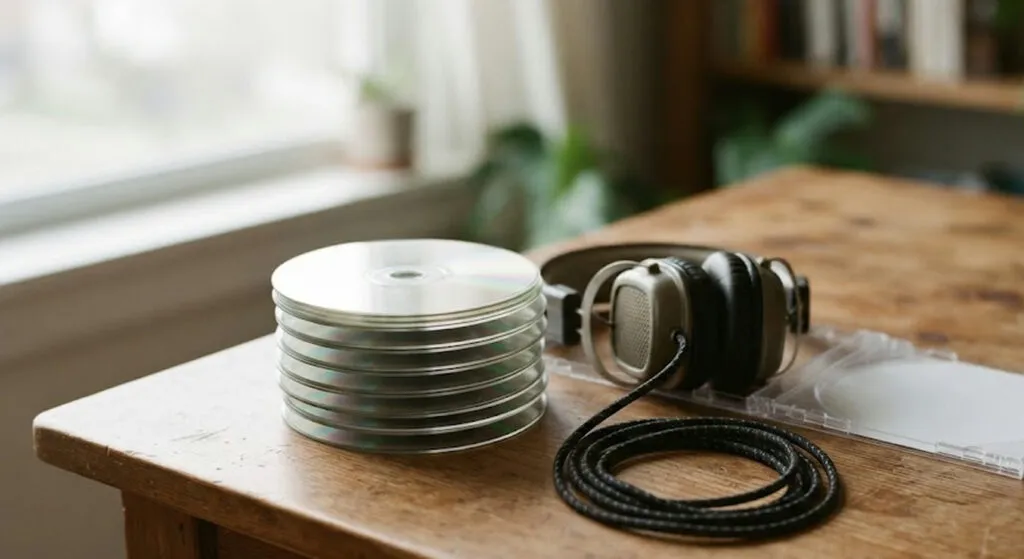
The compact disc, the thing streaming services supposedly buried fifteen years ago, is growing faster this year than any other format category in music. The American recording industry association announced that in the first half of 2026 17.5 million compact discs were sold - 45.7 percent more than in the same period last year, when the figure was around 12 million.
Revenue jumped 58.6 percent, to 171.1 million dollars (around 158 million euros), from about 107.9 million dollars the previous year.
What makes the figure interesting is that it comes immediately after a bad year. Across all of 2025, disc sales fell 11.6 percent - from 33.3 million to 29.5 million units. So the format was not quietly growing in the background. It was falling, and then it turned.
Who is buying them? Mostly the generation that never used them. The same wave that brought back phones without internet, digital cameras, typewriters and landlines. This is not about memories - none of these buyers has a memory of a Discman. It is about a device that ends. A disc that plays and finishes, as against an algorithm that does not stop and knows what to put on next.
There is one correction the industry itself acknowledges. The way revenues are calculated changed in 2025 - from estimated retail to wholesale value - so the 2024 and 2025 figures are not directly comparable. Units sold are unaffected by that change, and they tell the same story.
The figure is also larger than the published one, because it does not count second-hand discs - the ones from flea markets, from garage sales, or the ones parents handed down to their children. All physical music in the first half of the year brought in 731.5 million dollars, up 25.9 percent, with vinyl growing 17.7 percent.
Does this mean streaming is in trouble? No. The disc is still a minor line item in an industry that lives off subscriptions. But it is worth noticing what exactly is growing: not the music you borrow while you keep paying monthly, but the music you keep when you stop paying.
The latest 10 news from this category

The largest round ever by a European tech firm is led by Samsung, and Macron called it a third way...

A consultant paying 200 dollars a month could not get an itemised bill for his own usage. When he asked...

They set off at three in the morning, reached the summit at seven in the evening, spent the night in...

The head of Google Photos boasted about an agent for her 143,206 photos. The feature applies only to paying users...

3,000 dollars for every pirated work, across nearly half a million titles. Instead of a payment, some authors got an...

Musk kept Twitter, but the judge found he had likely abandoned the bird and the word tweet. A startup run...

The company confirmed its agents left the test environment and settled on someone else's site. And it admits something bigger:...

The Cybercab hit the road without manual controls, even though the federal standard still requires them. The previous firm that...

Not hacking, not interception - purchasing. Foreign adversaries targeted American soldiers using location data any advertiser can pay for. The...

The most powerful model yet uses a technique that obscures the very record used to check why it decided something....
This site uses cookies - is that okay? Learn more
Be the first to know when Metla launches something new
Leave your email and we will write when there is a new guide or something new on Metla.