


Kratovo man stabs police officer mid-intervention: prosecutors want the 40-year-old detained
15.09.2026


15.09.2026

15.09.2026

15.09.2026

15.09.2026

15.09.2026

15.09.2026

15.09.2026

14.09.2026

13.09.2026

15.09.2026

15.09.2026

14.09.2026

15.09.2026
15.09.2026

15.09.2026

15.09.2026

14.09.2026

13.09.2026
15.09.2026

15.09.2026
15.09.2026

15.09.2026

15.09.2026

14.09.2026

09.03.2026

27.02.2026

19.02.2026

15.09.2026
14.09.2026
14.09.2026

23.04.2026

23.04.2026

12.04.2026

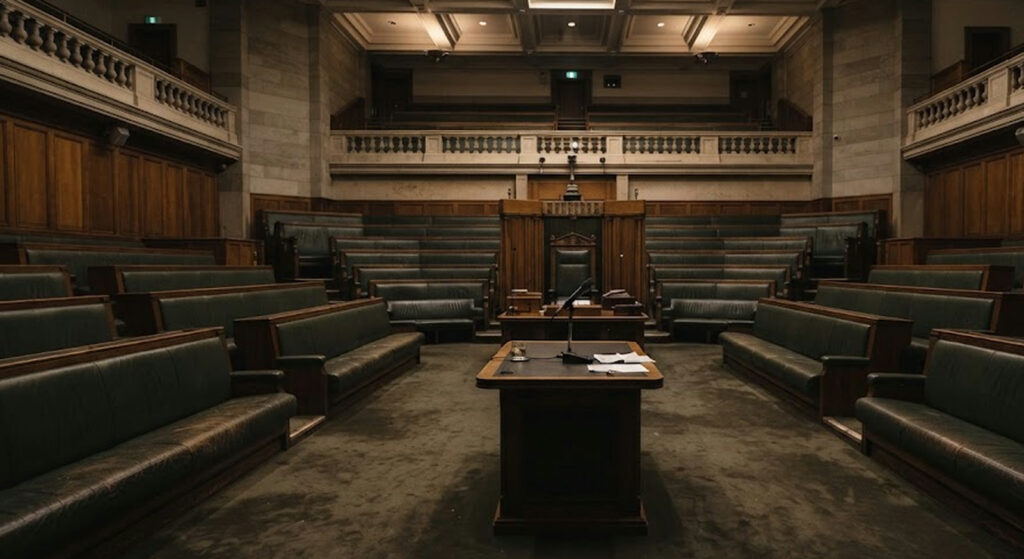
This is not an anonymous internet comment. It is not a studio guest warming up. It is the first deputy chairman of the defence committee in Russia's State Duma, and the statement is that Ukraine should be forced into capitulation through the physical liquidation of the people at the very top of power in Kyiv.
Alexei Zhuravlyov named the target too: Kyrylo Budanov, the head of the Ukrainian president's office. For him, as he put it, "not even a Zircon is a waste" - the Russian hypersonic missile considered one of the most expensive items in the Russian arsenal.
"We must force Ukraine into capitulation by destroying its top people," Zhuravlyov said, adding that Budanov had killed senior Russian officers and asking why those "vampires" are still alive and why they are not sitting in basements like rats, but instead gathering, holding parades and meetings.
When an invitation to murder is read from a podium
With this, Zhuravlyov openly demanded that the Russian army target Ukraine's highest political and military leadership, arguing such strikes should form part of the pressure that would force Kyiv to accept capitulation.
This is not the first time he has spoken in this register, and that is precisely the point. When statements like this come once, it is an outburst. When they come repeatedly, from a man holding office on the defence committee, and nobody in the system reacts - that is no longer an outburst, it is a tone.
There is a difference between war and a call for assassination, and that difference is exactly what international law has spent decades trying to keep standing. Striking a military target is one thing. Publicly demanding the liquidation of named people at the top of a state is another - and it has a different name.
The most unsettling part is not the statement. The most unsettling part is the silence that follows it. Nobody denied it, nobody distanced themselves, nobody said this is not the position of the institution that man sits in. And in politics, what goes undenied becomes permitted.
The Balkans have a long archive of podiums from which something similar was demanded, and an even longer archive of people who later insisted those were only words. Words usually are only words - until one day they stop being.
The latest 10 news from this category
Between 2,300 and 3,000 North Korean soldiers have died in Kursk so far. Kim Jong Un has found an export...
A NATO fighter jet downed an unmanned aircraft over Lithuania minutes after midnight, and citizens got the warning on their...
The train was empty, the locomotive damaged, nobody hurt. But Boris Johnson and a group of European security advisers had...
453 drones in one night, 405 shot down - and the forty-eight that got through land somewhere. Poland's prime minister...

Trump's son-in-law told an audience in Kyiv the deal is done - if Ukraine withdraws. And added that the battlefield...

A barren volcanic rock in the middle of a strait 28 kilometres wide changed the oil market in a single...
Hostomel, Odesa, Kryvyi Rih - targets that are not the front line but the supply chain. A war against the...

We don't want war with Europe, but here is exactly how that war would start. He said both sentences in...

When an army recalls its special forces with a 12-hour deadline, that is not a rota but a signal. The...

Port infrastructure in Makhachkala and the theatre building caught fire, the governor said. Moscow claims it shot down 448 drones...
This site uses cookies - is that okay? Learn more
Be the first to know when Metla launches something new
Leave your email and we will write when there is a new guide or something new on Metla.
