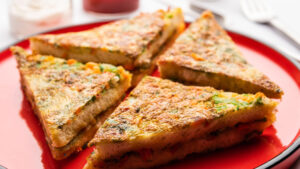
Се урива сендвичарата Седмица во Скопје по 30 години – а општината молчи за дозволата
10.07.2026



10.07.2026

09.07.2026

08.07.2026

09.03.2026

27.02.2026

19.02.2026
10.07.2026
09.07.2026
08.07.2026

23.04.2026

23.04.2026

12.04.2026

The new Election Code has stalled once more in Parliament, and the government and opposition reached for the old game: who gets left holding the blame. The bone of contention is the vote of Macedonians living abroad - the government wants electronic and postal voting, while SDSM says that model opens the door to fraud. Both concerns are legitimate, but neither side looks like it wants a solution more than it wants the other side not to get one. While the parties count their ratings instead of votes, the voter - at home and abroad - still doesn't know how they'll cast a ballot.
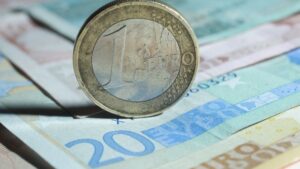
According to National Bank figures, flat prices in Skopje jumped 13.3 percent in a single year. The number isn't abstract: it's the difference between being able and not being able to afford a roof. When wages rise slowly and the square metre rises fast, a young family isn't just running from the flats - it's running from the idea that it's worth staying and building here. The most expensive rent the state pays comes due later, in the form of a one-way ticket.
The European Court of Human Rights awarded the state 3,465 euros against it over unjustified detention measures in the "27 April" case. The sum is small, the message is not: when an international court concludes detention was unjustified, that's a verdict on how the domestic judiciary worked. Every such ruling is money from the same budget that builds schools and hospitals. The question we rarely ask out loud is who, specifically, answers when an institution loses in Strasbourg. So far the answer is - nobody.
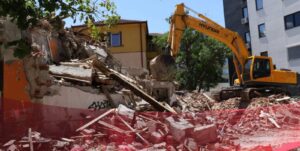
After thirty years, the Sedmica sandwich shop in Skopje is being torn down, and the municipality is silent on the details of the permit. Another piece of old Skopje is gone, and the silence over the most basic questions - who authorised it, why now - opens exactly the suspicions the silence was meant to avoid. In the same week, Aerodrom is putting cameras on children's playgrounds: a tool that protects children and films them at the same time, useful only if it comes with clear privacy rules.
Parliament marked 11 July, the Day of Remembrance of the Srebrenica genocide. Thirty years on, remembrance isn't a ritual - it's the only barrier against forgetting. Peoples who don't face their past are condemned to live it again. On the Balkans, that sentence is not a metaphor.
The Kremlin's official line is that everything is going to plan. The reality at the pumps is different: people are camping for days outside petrol stations after Ukrainian drones hit more than 20 Russian refineries and wiped out nearly a quarter of its refining capacity. War has long stopped being fought only at the front - the same logic hits the railways too, where cheap drones destroy expensive locomotives. A country that exports oil to the whole world yet can't fill its own tanks - the irony could hardly be greater.
The US smashed Iran's port of Chabahar, Iran's only gateway on the Indian Ocean - but the strike hits far beyond Iran, because it was India that poured huge money in there to bypass Pakistan. Meanwhile, Trump is offering to close the skies over Ukraine, and Moscow answers carefully. And while some wage wars, others rule from the shadows: a UAE sheikh worth 335 billion, a close friend of Vucic, is a reminder that money is still the quietest form of power in the 21st century.
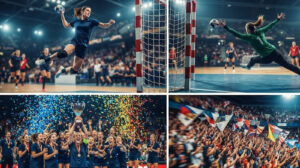
It wasn't all heavy. MZT Skopje returns to Europe after 25 years, and Vardar announced its Champions League squad - home sport that pulls us away from the bills and deadlines for a moment. In tech, OpenAI released GPT-5.6 with an ad plainly aimed at Anthropic, and Japan found a record concentration of gold in an underwater volcano - a reminder that the planet still hides surprises.
If there was one thread running through the heavier part of the day, it's waiting and the bill. The voter waits for a code, the young wait for a home that doesn't rise faster than the pay cheque, and when an institution errs, the bill - literally - is paid by all of us. The question isn't whether we see these patterns. The question is who will finally answer for them.
The latest 10 news from this category
Rules exist on paper - on the road to the EU, in the Ohrid Agreement, in the classroom. The day...
A child with seven stab wounds filed as ordinary violence, the first femicide that reaches court only after four dead...
Today the institutions produced plenty of announcements and few actual fixes. Between the press conference and the pharmacy, between the...
The day institutions signed, permitted and announced - but nobody checked. From the „Puls“ courtroom to a plan for buildings...
A day of laws that look good on paper: the „Puls" evidence, casinos pushed away from schools, the electoral code...
A day when institutions reach for the gesture instead of the fix: Kočani is told to use less water rather...
A day when parents march alone, politics busies itself with diplomatic notes, and the roads, the schoolyards and the border...
A day when the institutions whose job is to keep order - the pool, the zoo, the police, the court,...
A day on which the institutions were supposed to answer - for the salami, the leaked document, the zoo fence,...
The day measures the same thread: institutions that promise much and answer little, and citizens who pay the difference themselves...
This site uses cookies - is that okay? Learn more