
A Pole Drove 164 km/h Where the Limit Is 80: The Camera Caught Him, the Border Stopped Him
23.08.2026


23.08.2026

23.08.2026

23.08.2026

23.08.2026
22.08.2026

22.08.2026

23.08.2026

23.08.2026

22.08.2026

23.08.2026

23.08.2026
23.08.2026

23.08.2026

22.08.2026

21.08.2026

23.08.2026

23.08.2026

23.08.2026

23.08.2026

23.08.2026

22.08.2026

09.03.2026

27.02.2026

19.02.2026

23.08.2026
23.08.2026

22.08.2026

23.04.2026

23.04.2026

12.04.2026
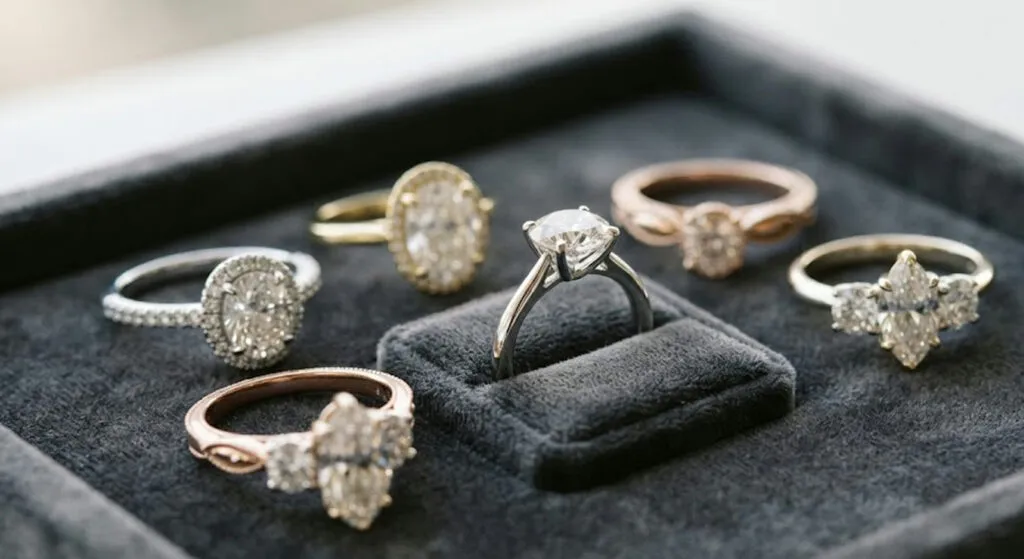
Solitaire, halo, trilogy, half-eternity. These are names rarely said out loud here, and yet almost every engagement ring in a shop window belongs to one of these categories - and the difference between them is not decorative but structural.
Two people who do this professionally explain the classification: Pilar Lobato, who runs a workshop for antique jewellery, and Javier Fernandez, a gemologist and valuer.
The solitaire is the most classic choice and has not changed in decades - one central stone, usually a natural diamond in a brilliant cut, and nothing to distract from it. The entire meaning is concentrated in one place.
The halo solitaire is the same ring with a ring of small diamonds around the central stone. That is not just ornament: the halo increases the sparkle and optically makes the central stone appear larger in diameter than it is. Anyone wanting a bigger effect without a bigger price is looking for exactly this.
The trilogy has three stones - the couple's past, present and future, or in another reading parents and child. Its symbolic weight is the heaviest of the lot. One such model costs around 5,630 euros.
The cinquillo carries five aligned stones and was historically tied to major celebrations. The half-eternity is a single row of diamonds, described by specialists as a basic but very elegant choice - a model from a well-known house costs 4,950 euros.
Toi et Moi has two opposing stones, usually a diamond and a pearl, representing the two people - one of the most romantic designs in historical jewellery, and in this selection among the more affordable at 990 euros. The partridge eye is a 1920s art deco style: a central stone surrounded by rubies, sapphires or emeralds, like a bird's eye.
The signet is a seal ring of classical inspiration, with a broad face and strong shoulders, while the tourbillon has a twisted structure in which the band curves around the setting and leads the eye to the stone - three-dimensional and architectural. Both run at around three thousand euros.
That leaves the modern, the most accessible on the entire list: a wide band that sets the central stone into it, usually a marquise cut in yellow gold, for 529 euros.
The range is what is worth holding on to. From 529 to over five thousand euros, for an object with the same function and the same purpose. You pay the difference in carats and in the name of the house - while the shape, the only thing anyone will actually see, you choose for free.
The latest 10 news from this category
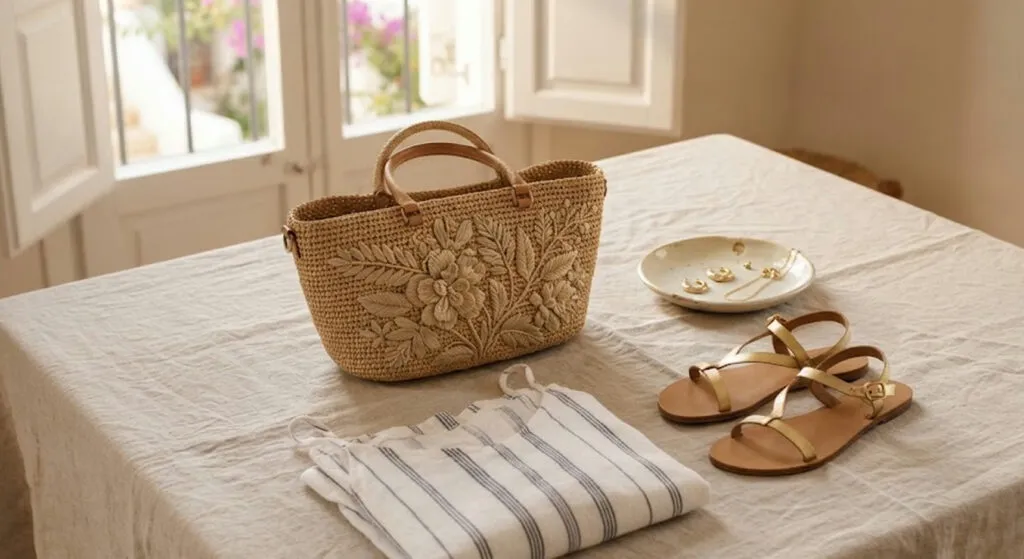
The institution with the budget never to repeat a garment, repeats. Earrings from 2018, sandals from past seasons - and...

Two specialists say most people start at the wrong step. Comb first, fill second - the other way round means...

They show you the cheap part and photograph you with the expensive one. One linen blazer, three looks and one...

The technically perfect wave is not the one that looks best. The whole secret is that the eye must not...
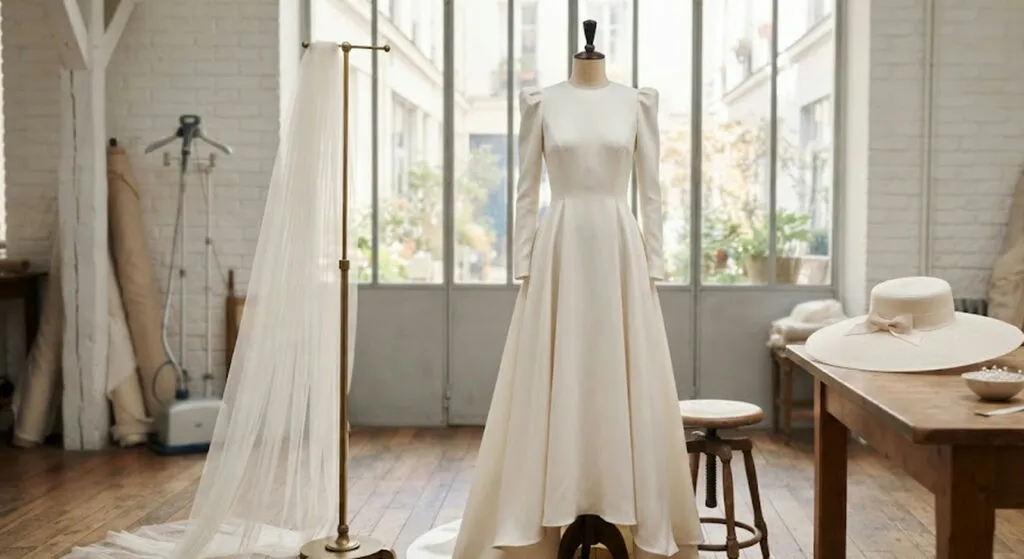
The eighties came back to the shoulders, not to the whole dress. The question is not what is trending this...

Grace Kelly travelled to Monaco with 80 suitcases, and Bardot broke the wedding convention with a pink gingham dress in...

Nicole Kidman refused for a year because it sounded like shaving. The skin really does end up smoother - but...

RSVPs arrive in the week before the event because everyone is on holiday. And half the budget depends on the...

The fashion industry lives off selling you something new. This is the opposite - what to do with the white...

Keratin, collagen, hydrolysed fragments - and one caveat no advert will ever put on a label. Plus the reason overdoing...
This site uses cookies - is that okay? Learn more
Be the first to know when Metla launches something new
Leave your email and we will write when there is a new guide or something new on Metla.