

Expert witness at the Puls trial: the change-of-use application had to come from the owner, not the tenant
26.08.2026


26.08.2026

26.08.2026

26.08.2026

26.08.2026

26.08.2026

26.08.2026

26.08.2026

25.08.2026

24.08.2026

26.08.2026

26.08.2026

25.08.2026

26.08.2026

26.08.2026

26.08.2026

26.08.2026

25.08.2026

24.08.2026

26.08.2026

26.08.2026

26.08.2026

26.08.2026

26.08.2026

25.08.2026

09.03.2026

27.02.2026

19.02.2026
26.08.2026

25.08.2026
24.08.2026

23.04.2026

23.04.2026

12.04.2026

"We are not disturbed by things themselves, but by our opinions about them" - the sentence is almost two thousand years old, spoken by the Stoic philosopher Epictetus, born a slave. And today neurology and psychotherapy prove it right in a way he couldn't even have imagined.
The idea is simple and uncomfortably accurate: between the event and our emotional reaction there's a space, and in that space our interpretation decides everything. Two people can get the same remark from a boss - one will experience it as an attack, the other as advice. The event is the same. The story we tell ourselves about it is different.
This isn't just philosophising. Donald Robertson, one of the leading contemporary experts on Stoicism, points out that it was precisely the ancient Stoics who inspired cognitive behavioural therapy (CBT) - one of the most scientifically supported psychotherapies today. Its founders, Albert Ellis and Aaron Beck, admitted that many of the tools they use were invented by philosophers long before them.
Why does the brain apply this so poorly? Because, as neurologist Rick Hanson puts it, it's "velcro for the negative and teflon for the positive" - it holds on to threats and worries far more easily than to good things. It's an evolutionary habit: our ancestors survived precisely because they stayed alert to dangers. The problem is that the same brain doesn't distinguish a real threat from an imagined one - just the thought of a difficult conversation raises cortisol as if the enemy were already at the door.
This is where freedom comes in. "Between the thought and the reaction there's a space. And in that space freedom is born", says therapist Toni Espigares. The goal isn't to erase negative thoughts - that doesn't work - but to observe them without identifying with them. Put simply: you don't have to believe everything that passes through your head. Neither did Epictetus.
The latest 10 news from this category

Rice and pasta last 48 hours, and they can be contaminated without a single visible sign. Smell is not a...
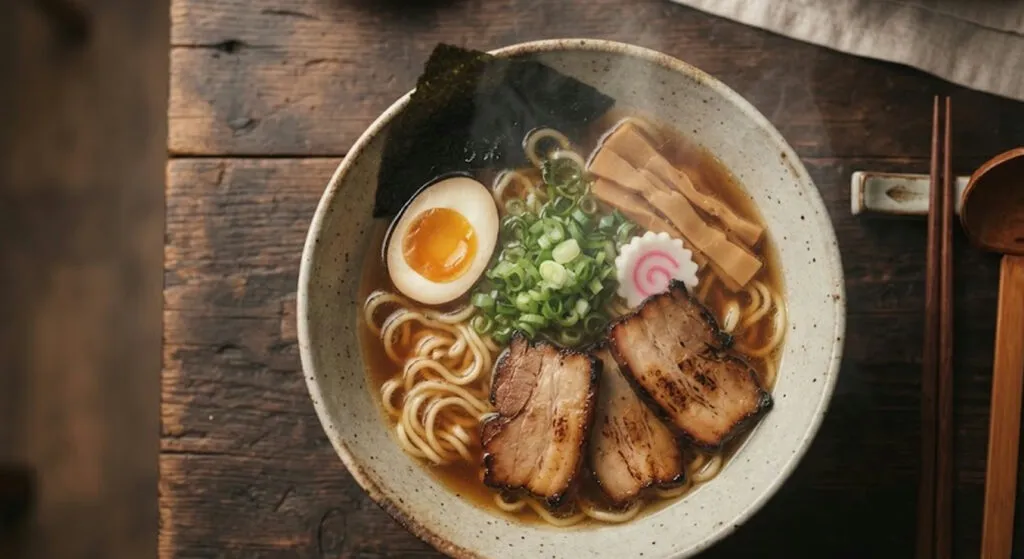
International Ramen Day is 25 August, and the dish itself came about because there was nothing else. The broth simmers...

It does not have to hurt badly for there to be a problem. A physiotherapist explains why people spend years...

It is still too hot for the oven and already too late for the same salad a fourth time. Not...

The protective effect against dementia starts at 3,800 steps, and above ten thousand there is no additional benefit. So the...

You do not need a three-hundred-euro machine for a dessert that costs about as much as a kilo of fruit....

A psychologist explains the line from Epictetus everyone quotes and few apply. Autonomy is not a single thing - you...

Fourteen dishes, none longer than thirty minutes, and vegetables as the base rather than a side. This is also the...

You lie by the sea and think about work. The brain is not asking for a holiday - it is...

The batter is mildly sweet, the filling salty, and that contrast is exactly what holds the dish together. Two recipes...
This site uses cookies - is that okay? Learn more
Be the first to know when Metla launches something new
Leave your email and we will write when there is a new guide or something new on Metla.
