
Stiv Naumov dorm renovated for around 10 million euros: a month later water runs through the walls and the ministry counts wet wipes
24.10.2026


24.10.2026

24.10.2026
24.10.2026

24.10.2026
24.10.2026

24.10.2026

24.10.2026

23.10.2026

22.10.2026

24.10.2026

24.10.2026

23.10.2026

24.10.2026

24.10.2026

24.10.2026

24.10.2026

23.10.2026

22.10.2026

24.10.2026

24.10.2026

24.10.2026

24.10.2026

23.10.2026
23.10.2026

24.10.2026

23.10.2026

23.10.2026
24.10.2026
22.10.2026

20.10.2026

23.04.2026

23.04.2026

12.04.2026

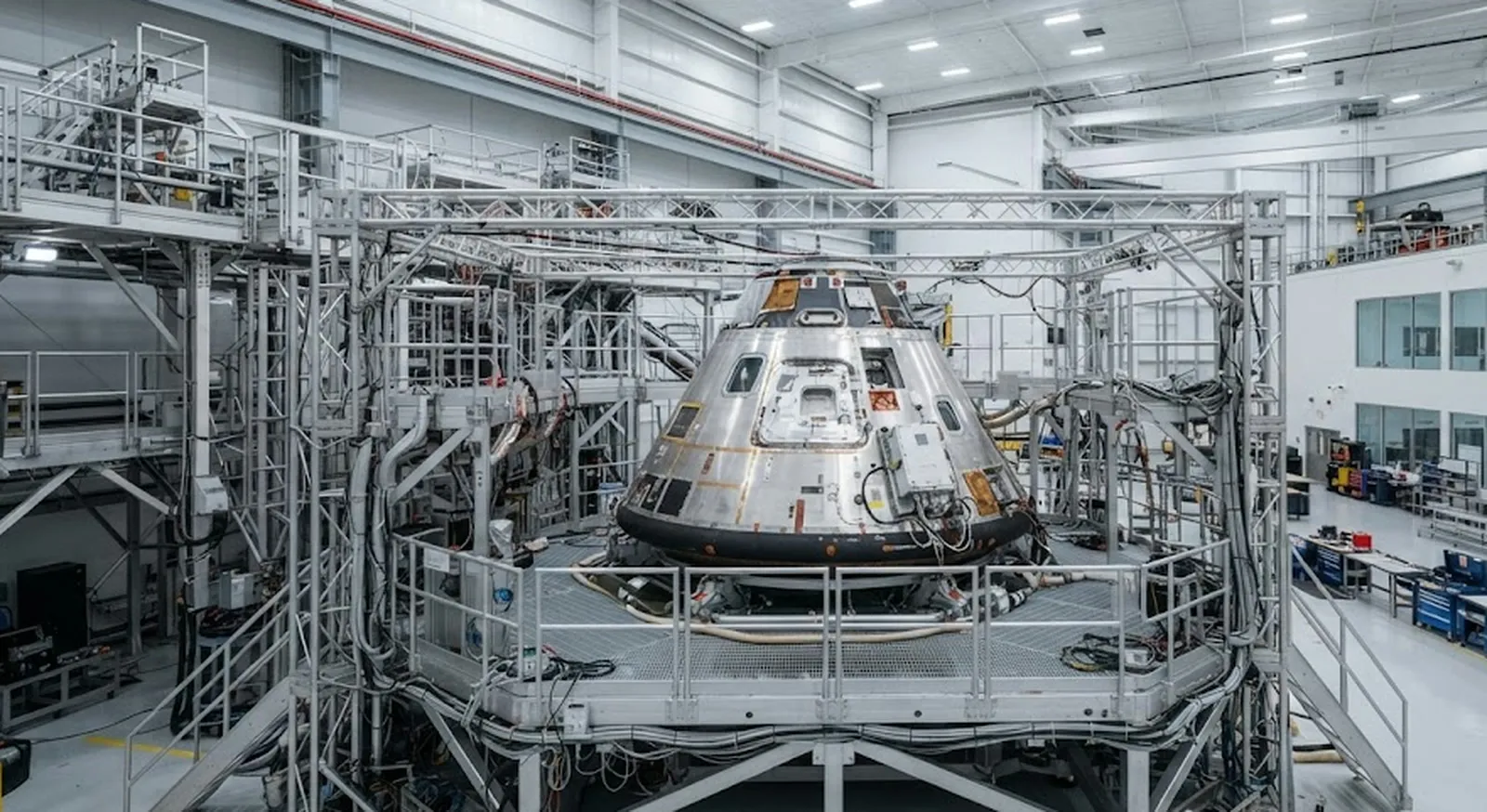
A European firm building space capsules has raised 450 million dollars - by its own account the largest Series C a European space company has ever done. The Exploration Company operates across Germany, France, Luxembourg, Spain and Italy, and is led by Hélène Huby, a French engineer with two decades behind her at Airbus and ArianeGroup.
The goal is stated without wrapping: to build the foundation for a European heavy-lift rocket, reusable, as a cheaper replacement for SpaceX. First in line is Nyx - a capsule similar to Dragon, intended first for cargo and later for people. The plan is to dock with the International Space Station and return safely to Earth by November 2028. According to the Atomico fund, 10 missions are already booked and there are over 2 billion dollars in contracts and commitments, some with the European Space Agency but also with NASA.
Why would anyone invest in a competitor to a firm that has already won?
Because SpaceX is starting to get in its own way. Reports say its Falcon rockets are increasingly booked for Starlink satellites, and the queue for putting cargo into orbit is growing faster than the capacity. When one supplier holds almost everything, everyone waiting in that queue suddenly discovers they need a second number in the address book. That is not technological enthusiasm - that is arithmetic.
The round is transatlantic: it is led by Atomico and the Scaleup Europe Fund managed by EQT, together with America's Bessemer Venture Partners, whose partner Alex Ferrara joins the board. American rival Stoke Space is currently raising a billion-dollar round of its own. So the same market is being built on both sides of the ocean at once, and nobody is waiting for permission.
Huby was candid about the limits. She would like Europe to put human flight into its plan, she says, but she cannot persuade funds to throw 4 billion dollars at a crewed capsule "and then wait 10 years". The money from this round also covers the Storm rocket-engine programme - but only to begin with. "Where we need more money is to build a launch pad and the rocket itself," she told reporters. That is a sentence you rarely hear from a firm that has just raised 450 million.
Germany's Isar Aerospace has already launched a rocket from Norway - the first European commercial flight of its kind. Huby welcomed it as "excellent news for the whole ecosystem", but stressed that her firm is building a far larger rocket. Her argument is simple: "In the next five to ten years half of our broadband communication could come from space, data centres could be in space - and if so, we need enormous rockets and launch frequency."
The key to that frequency is reusability, which the firm plans to achieve with the same technology SpaceX and Stoke use - a full-flow staged combustion cycle. "It is the hardest but also the most efficient engine cycle in the world. For the first time in Europe a firm is developing such a rocket engine," Huby says. The announcement came a day before the space summit in Paris, and the round was praised by both Macron and Ursula von der Leyen - which means the story stopped being purely an engineering one some time ago.
From where we are standing, one thing is worth noting. This is the second European firm in the same week raising billions on the argument that Europe must not depend on a single American supplier. The question that remains is whether, once that infrastructure is finished, the region will be a client - or just territory that somebody's signals pass over.
The latest 10 news from this category

The state isn't just handing over money, it's taking equity - for electronics that have to survive the plasma. Fusion...

Over 80 percent of the US military's working dogs come from Europe, and fewer than half are fit for service....
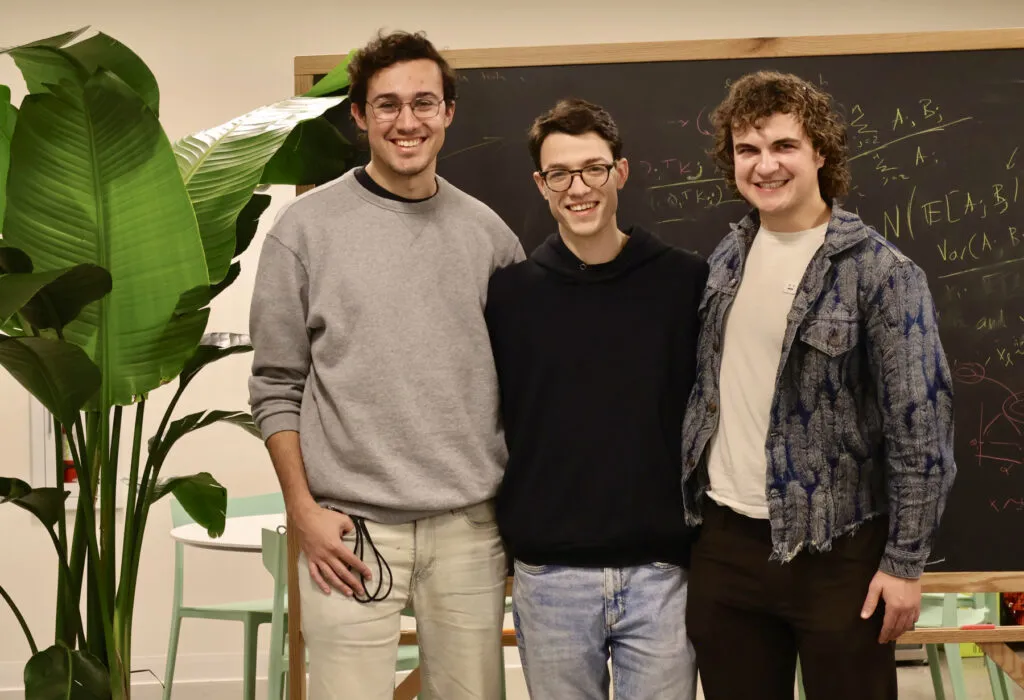
Three founders and a promise that AI can be trained on far less data. In Silicon Valley that's now worth...
A company from a small Baltic country raised 100 million dollars to tell humans from machines online. The trick is...

The app for emotions and to-dos claims revenue in the tens of millions of dollars. Seventy percent of its users...

Blood tests and ice baths will no longer be a privilege of the rich - or so the Hollywood actor...

From unicorn to bankruptcy in five years: Google took the founders back, Disney takes part of the assets, and the...
Fakes have become so good they've earned their own name. Veritas offers a chip built into the product, and it's...

In four months its valuation jumped by 16 billion dollars. Automating boring expense reports in America is a 60-billion business...

The company Meta and Google put more than 10 billion dollars into is now asking the stock market for money....
This site uses cookies - is that okay? Learn more
Be the first to know when Metla launches something new
Leave your email and we will write when there is a new guide or something new on Metla.