

Cancer Drug in a First Aid Kit at Bogorodica: Why Was the Driver Also Carrying 30 Labels?
22.10.2026


22.10.2026

22.10.2026

22.10.2026

22.10.2026

22.10.2026

22.10.2026

22.10.2026

21.10.2026

20.10.2026

22.10.2026

22.10.2026

21.10.2026

22.10.2026

22.10.2026

22.10.2026

22.10.2026

21.10.2026

20.10.2026

22.10.2026

22.10.2026

21.10.2026

22.10.2026

21.10.2026

20.10.2026
20.10.2026

19.10.2026

17.10.2026

23.04.2026

23.04.2026

12.04.2026

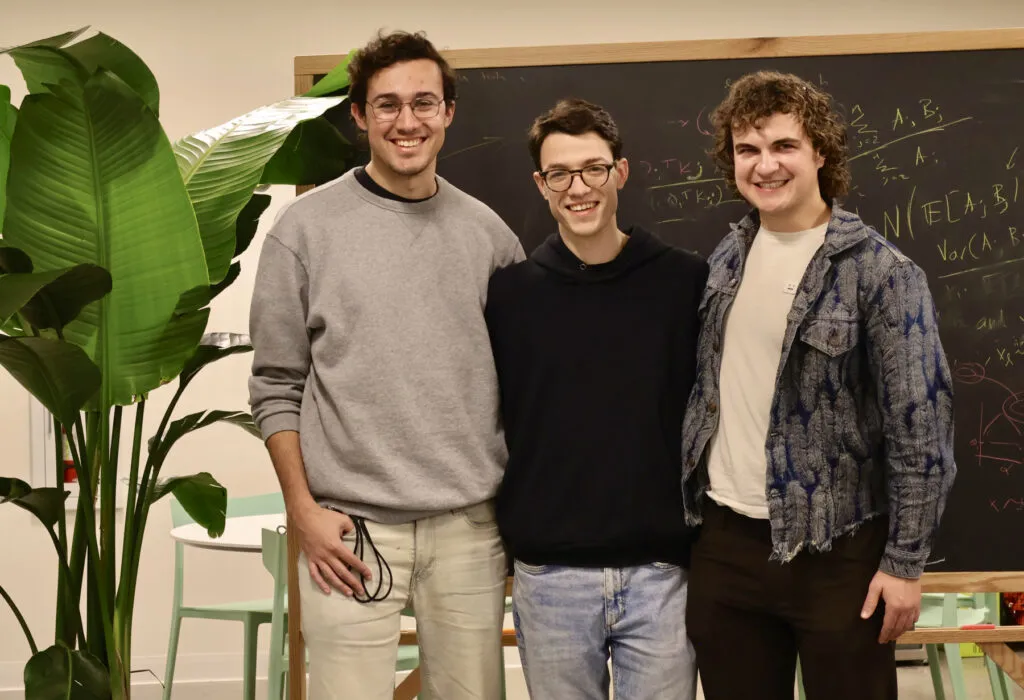
Nine months ago Flapping Airplanes appeared with a seed round of 180 million dollars and a valuation of 1.5 billion dollars. This Wednesday the artificial intelligence lab announced a Series A round of one billion dollars, led by the funds Index and Lux, and according to reports its valuation is now 6 billion dollars. Four times more in less than a year. What exactly is being bought at that price?
Returning to the table are early investors Sequoia, GV and Kleiner Perkins, and the backers also include Valor, Atreides, A* and Nvidia. That last name is worth noting: the company that sells the chips is investing in a lab whose whole idea is to squeeze much more out of graphics processors.
The founders are Aidan Smith and brothers Asher and Ben Spector. Smith is a former founder and fellow of Peter Thiel's programme who, as a student, worked at Neuralink, the brain implant company. Asher Spector was doing a PhD in statistics at Stanford, and Ben was a computer science PhD student, also at Stanford, and while still studying at MIT founded Prod - a five-year, almost secret student programme for startups. "It became one of the most powerful talent incubators in Silicon Valley," wrote investor David Cahn of Sequoia, who says the three are building "an AGI lab for young people."
The founders claim they have "the world's most complete megakernel framework" - a single program on the graphics processor that can run an entire model training, answer requests and even play video games, all at the same time. The idea is that the chip almost never sits idle: while one task waits for data from memory, another computes. The ultimate goal is intelligence built "without swallowing half the internet."
"A model that's a million times more data-efficient is probably a million times easier to bring into the economy," Asher Spector said when the startup launched. In a world where the biggest labs spend billions on data centres, cheaper training is a real question. But a billion dollars nine months after launch is a bet on a promise, not on a proven result.
The new money will go on hiring and research. If the idea works, it's bad news for those building ever-bigger data centres. And if models really do become many times cheaper to train, could smaller markets, like the Balkans, finally train their own models instead of renting someone else's?
The latest 10 news from this category
A company from a small Baltic country raised 100 million dollars to tell humans from machines online. The trick is...

The app for emotions and to-dos claims revenue in the tens of millions of dollars. Seventy percent of its users...

Blood tests and ice baths will no longer be a privilege of the rich - or so the Hollywood actor...

From unicorn to bankruptcy in five years: Google took the founders back, Disney takes part of the assets, and the...

Fakes have become so good they've earned their own name. Veritas offers a chip built into the product, and it's...

In four months its valuation jumped by 16 billion dollars. Automating boring expense reports in America is a 60-billion business...

The company Meta and Google put more than 10 billion dollars into is now asking the stock market for money....

Five years ago Bumble was valued at 14 billion dollars on the stock market; today it sells for 1.3 billion....

A former Plaud executive promises an assistant that gives you advice while the meeting is still going on. The price...
The new owner promises full shelves and competitive prices. How much a chain with over 30 years of history cost,...
This site uses cookies - is that okay? Learn more
Be the first to know when Metla launches something new
Leave your email and we will write when there is a new guide or something new on Metla.