


Over 20 shops burned down in Suto Orizari: 15 firefighters and three and a half hours fighting the blaze at 3am
12.09.2026


12.09.2026

12.09.2026

12.09.2026

12.09.2026

12.09.2026

12.09.2026

12.09.2026

11.09.2026

10.09.2026

12.09.2026

12.09.2026

11.09.2026

12.09.2026

12.09.2026

12.09.2026

12.09.2026

11.09.2026

10.09.2026

12.09.2026

12.09.2026

12.09.2026

12.09.2026

12.09.2026

11.09.2026

09.03.2026

27.02.2026

19.02.2026

12.09.2026

11.09.2026

10.09.2026

23.04.2026

23.04.2026

12.04.2026


The startup Mecka AI is heading into a new funding round led by Sequoia Capital, at an estimated valuation of around 500 million dollars (roughly 460 million euros), according to two people familiar with the deal. The terms are not final and could still change.
The figure on its own does not say much - in this industry half a billion is a small fish. What does say something is the clock. Just three months ago Mecka announced it had raised 60 million dollars in a round led by Framework Ventures, with participation from Menlo Ventures, SV Angel and Kindred Ventures. Three months later, a new round at almost ten times the valuation. That is not company growth, that is growth in expectation.
The firm was founded in 2024 by four entrepreneurs - Canadians Josh Gao and Mogen Cheng, who previously built a fintech startup for restaurants, Jason Chong, who joined Coinbase after it bought his crypto exchange, and Duy Nguyen, who handles operations. None of them comes from robotics. What they spotted is something else: that physical data is the bottleneck keeping general-purpose robots where they are.
The model is unexpectedly simple. Mecka - the name comes from "mecha", the fictional giant robots piloted by humans - pays ordinary people to film themselves doing everyday things. Making coffee. Fixing a car. With sensors on the body and with a phone. What is an afternoon for them is, for the model, data that exists nowhere on the internet.
By early June the company projected it would finish 2026 at an annual revenue run rate of 100 million dollars, Gao told Fortune when the previous funding was announced. The company did not respond to a request for comment, and Sequoia declined to comment.
Mecka is not alone in this. XDOF, another startup in the same business, was recently in a round at a 1.2 billion dollar valuation, while Scale AI and Micro1 are extending exactly what they were doing for language models. So the market has already decided: the next expensive raw material is not the model but the footage of one person turning a key. The question nobody is asking out loud is how long that filming keeps getting paid for - and what happens to it once the robot has learned.
The latest 10 news from this category

After Ohridska Banka, Sparkasse has gone after a second one. The approvals come from Podgorica, Belgrade and Frankfurt. The market...

They had offers and visas to stay in the US. They went back to Munich because the numbers worked better...

A signed term sheet in venture capital is treated as a word of honour. When the buyer offers sixty-seven years...
The queue for putting cargo into orbit is growing faster than the capacity, and one supplier holds almost all of...
Opendoor's founder raised 25 million dollars for an app that tells construction workers whether they installed something correctly. What the...

Twice they threw its game off the Indian market. Now the company is investing half a billion there, and outside...
Budgets are growing, contracts are shortening. When a client re-examines you twice a year, a valuation built on multi-year revenue...
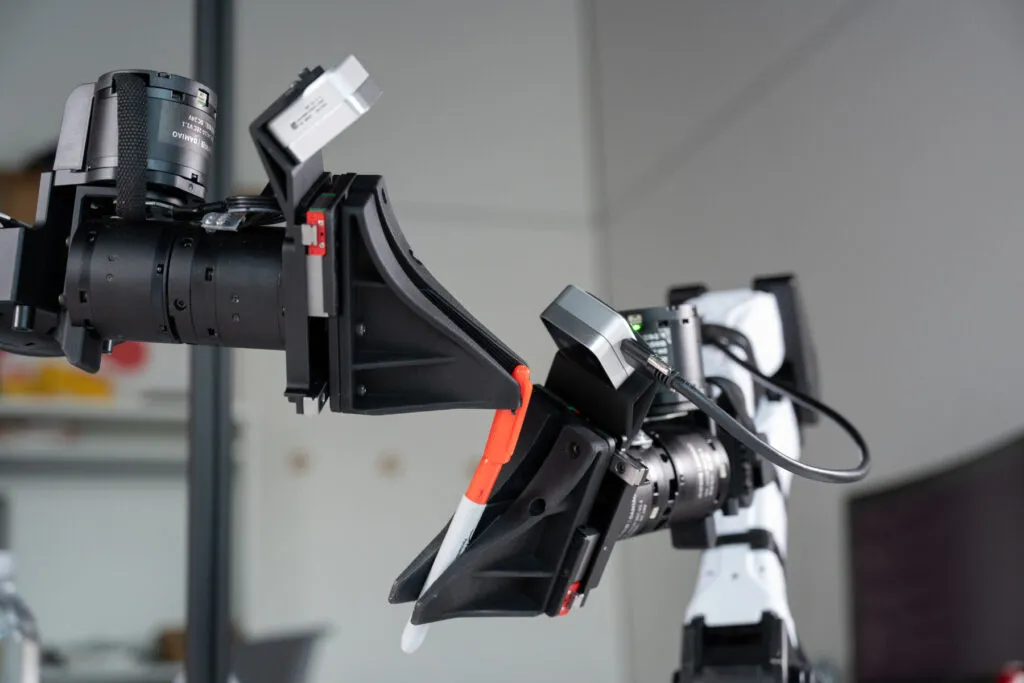
The large models had the entire internet to learn from. Robots have nothing of the sort, and that very gap...
Revenue jumped from 697 million to 1.2 billion in a year, and 85 percent of subscribers stay after twelve months....

When HiddenLayer started out in 2023, nobody could point to a single real attack on artificial intelligence. This year companies...
This site uses cookies - is that okay? Learn more
Be the first to know when Metla launches something new
Leave your email and we will write when there is a new guide or something new on Metla.
