Filipče Demands Slaveski's Resignation and a Probe Into Alta Banka: Two Days Before the License Was Pulled in Belgrade, Mickoski Was Saying "I Don't Know If Everything Is in Order"
01.11.2026


01.11.2026

01.11.2026

01.11.2026

01.11.2026

01.11.2026

01.11.2026

01.11.2026

01.11.2026

01.11.2026

01.11.2026

01.11.2026

31.10.2026

01.11.2026

01.11.2026

01.11.2026

01.11.2026

31.10.2026

30.10.2026

01.11.2026

01.11.2026

01.11.2026

01.11.2026

01.11.2026
31.10.2026

01.11.2026

01.11.2026

01.11.2026

23.04.2026

23.04.2026

12.04.2026

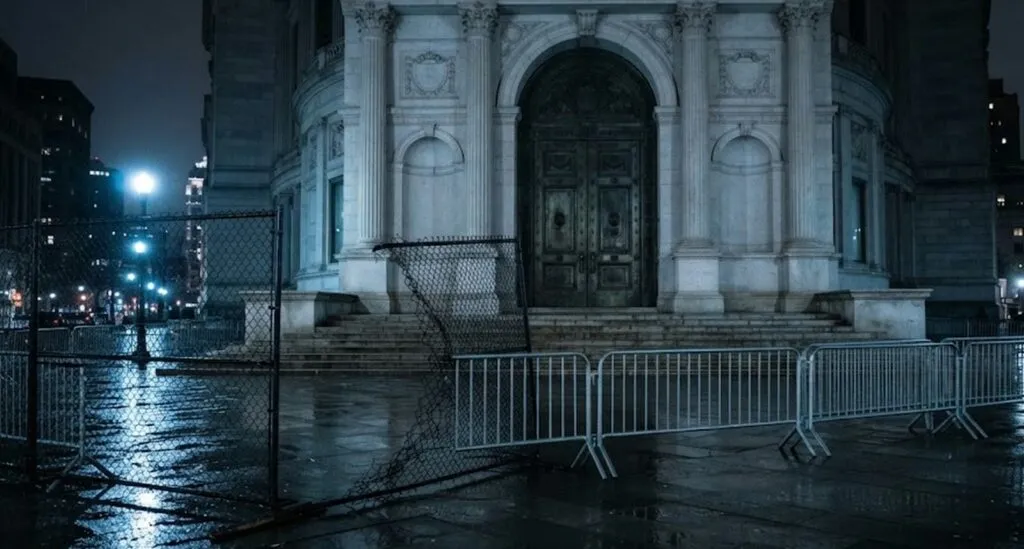
On October 30, Judge Anna Korwin-Piotrowska entered the Constitutional Tribunal in Warsaw, suspended court president Bogdan Święczkowski and his deputy Bartłomiej Sochański for one month and took over the leadership herself. Basis: the longest judicial tenure. Święczkowski didn't even make it to the entrance. Police stopped him at the fence, after his supporters cut through it with a power tool. The head of the highest constitutional body in an EU member state was left outside his own court.
President Karol Nawrocki was at that moment flying to Senegal. He ordered the plane to turn back. "At a moment like this the president must be in Poland," he said. Around one in the morning he entered the building together with the First President of the Supreme Court, Zbigniew Kapiński, and footage shows him telling Korwin-Piotrowska to move aside and pushing past her. His people claim the judges violated the inviolability of the head of state. Judge Maciej Berek says the opposite: the president "ran into" the judge "with great force." Inside, Nawrocki told them: "You are not judges of the Constitutional Tribunal." He came out at five in the morning, stating that the constitutional order had been violated and a constitutional body taken over by force.
Outside, the night ran to a familiar script. Protesters broke through the protective fence, some threw objects at police, three were detained. Law and Justice leader Jarosław Kaczyński and former prime minister Mateusz Morawiecki came to the court. Justice Minister Waldemar Żurek asked for the immunity of Święczkowski and Sochański to be lifted.
Medvedev discovers the constitution
Then Dmitry Medvedev chimed in. The deputy chairman of Russia's Security Council wrote that a constitutional coup is under way in Poland. "The liberals of Brussels' protégé Donald Tusk are harassing the conservatives from PiS. And the method is exactly the same as in neo-Nazi Ukraine: nullifying the powers of the Constitutional Court," he posted, and called Volodymyr Zelensky "that bastard with a beard in a green uniform."
This from a man from a country where the constitution was changed in 2020 so Vladimir Putin could stay in power until 2036. Tusk warned that pro-Russian groups and bots would try to exploit the conflict. Medvedev does it without bots.
Who started it
Except Medvedev doesn't have to lie to sound convincing, and that's exactly the problem. The court has been dissected for eleven years. In 2015 the Civic Platform coalition, on its way out of power, elected five judges, President Andrzej Duda didn't take their oaths, and the new PiS government annulled the elections and picked its own. In 2021 the European Court of Human Rights ruled that the court's composition doesn't meet the conditions for a tribunal established by law. Since coming to power, Tusk hasn't recognized the court.
This year the Sejm elected eight new judges, and Nawrocki refused to take the oath from five of them. They were sworn in without him, and Święczkowski didn't let them sit. Strasbourg and the Venice Commission are on the side of the new judges. But the way they got in is a whole other story: with officers of the State Protection Service, with a police cordon and with a suspension signed by a judge who builds her own status on total judicial tenure, not on tenure at this court.
Tusk isn't backing down. "In certain matters there can be no compromise," he said, adding that no politician, including the president, has the right to enter a court and give orders to judges. Szymon Hołownia of the Poland 2050 party sees it differently: the events bring shame on Poland, and fixing the court by force will only hasten its fall. Deputy Prime Minister Władysław Kosiniak-Kamysz also went to the consultations at the president's, while Tusk's party and the Left didn't come. From the Sejm's right wing, Confederation is already proposing a radical cut: dismissing all 15 judges and a new election with three-fifths of MPs.
What the Balkans will hear
Poland isn't some peripheral democracy. Warsaw fought with Brussels for years over precisely the judiciary, and Tusk came to power promising to restore the rule of law. Now two sides invoke the constitution, one going in with a cordon and the other with a shoulder. What explanation will the European institutions give to candidate countries, from which they've been demanding independent courts for years, when they come with the next report?
Korwin-Piotrowska has called the judges to a general assembly on November 3. Święczkowski has announced he will try to take back control. The court remains surrounded by police and protesters. What's left is the question nobody in Warsaw wants to hear: who will rule on whose decision counts, when the court that's supposed to rule on it is the very thing they're fighting over?
The latest 10 news from this category
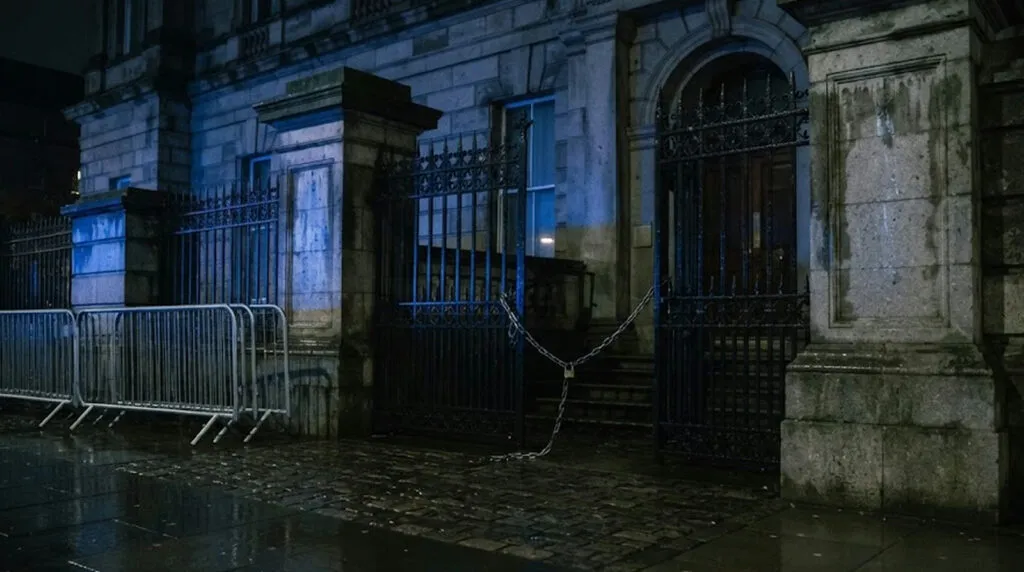
The suspended court president asks for a crowbar, a man from the crowd cuts the chain, and police guard the...
Sentenced to four years for around thirty offenses, his appeal isn't until February 9, and the prosecutor wants four more...

Европа се соочува со нов бран масовни протести. Денеска илјадници граѓани излегоа на улиците во Франција и Германија, додека незадоволството...

The admiral brought him the options at the White House, while Vance's letter reached Tehran via Qatar. One hand extended,...
A high-speed train slammed into a train standing broken down on the track after the control centre gave the trains...
Unions had warned for months about signal failures and overwork, and the minister is looking for the culprit in the...
Neither Netanyahu nor Gadi Eisenkot has 61 seats. Likud remains the biggest party, but with no path to power -...

Convicted of extortion, decorated by Putin, paid for part of Trump's son's wedding. Now a joint hunt far from the...

Two Belarusians and a Ukrainian under investigation, targets picked by Russia across Europe, and a company that had just signed...

Дали двајца луѓе на иста возраст можат да стареат со различна брзина? Научниците открија дека дел од одговорот можеби се...
This site uses cookies - is that okay? Learn more
Be the first to know when Metla launches something new
Leave your email and we will write when there is a new guide or something new on Metla.