


They Rode In on Scooters, Torched the Shops and Left: The Fire in Shuto Orizari Burned for Three Hours, Setting It Took Fifty Seconds
13.09.2026


13.09.2026

13.09.2026
13.09.2026
13.09.2026

13.09.2026
13.09.2026
13.09.2026

12.09.2026

11.09.2026
13.09.2026
13.09.2026

12.09.2026

13.09.2026

13.09.2026

13.09.2026

13.09.2026

12.09.2026

11.09.2026

13.09.2026

13.09.2026

13.09.2026

13.09.2026

13.09.2026

12.09.2026

09.03.2026

27.02.2026

19.02.2026

13.09.2026

12.09.2026

11.09.2026

23.04.2026

23.04.2026

12.04.2026

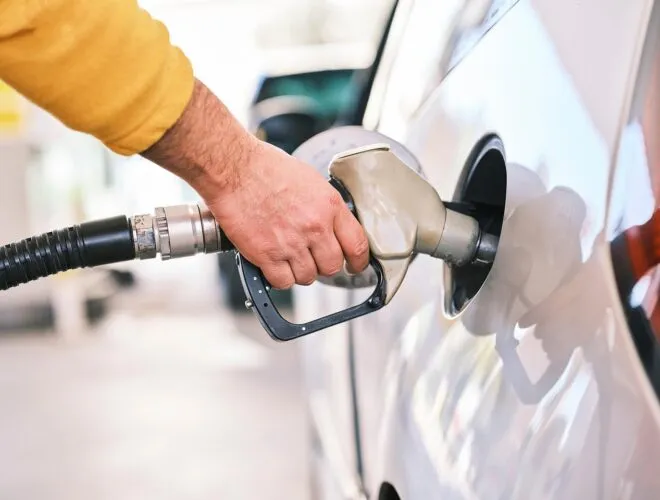
If the global oil story felt far away, here's the local version: the Energy Regulatory Commission recalculates fuel prices today - and by every sign, diesel and petrol are set to rise again. Last week diesel already jumped 5.5 denars per litre, and petrol 1.5 denars.
Right now the top retail prices are 87 denars a litre for EUROSUPER BS-95, 89 for BS-98, 88 for diesel and 86 for extra-light household heating oil. Whether the upward trend continues this week too will be shown by the ERC's decision - which, in its methodology, factors in exchange prices, the dollar rate, transport costs, margins, and excise duties.
Prime Minister Mickoski admitted upfront that there will be a hike, but that the exact calculation is the regulator's to make. He named the causes plainly: the dramatic climb of oil on world exchanges and a stronger dollar. As a counterweight, he announced the government will again intervene by cutting excise duties on both diesel and unleaded fuels - without saying when.
And here comes the number that explains the whole worry. According to estimates cited in the government's rationale, oil traffic through the Strait of Hormuz has been cut by a full 90 percent - so on Wednesday, under an expedited procedure, parliament will vote to extend the oil state of crisis all the way to 20 October. The state of crisis, declared in March, means we've now lived half a year under a „supply-risk" regime.
From SDSM comes the reaction that citizens expect measures, not appeals - that the new petrol hike will spill over onto already-pricier food. The debate over who protects the standard of living, and how much, will run on. The driver, meanwhile, knows only one thing: the bill at the pump today will most likely be a few denars heavier than last Monday. And the excise cut, whenever it comes, first has to catch up with that increase.
The latest 10 news from this category
The deficit target raised from 3.5 to 4.1 percent of GDP, spending growing faster than revenue, and the growth forecast...
On euro loans with a variable rate, the rise comes due at the next reset. On fixed ones, it does...
The agreed price for first class is 40 denars. At the collection points they pay 15 to 18. Across the...
A Skopje company owes 14.87 million euros and there is nothing to recover it from. In one month the total...
223,711 tourists and 795,083 overnight stays in July. Turkey still leads with 50,955 guests, but its number fell by 7.6...

When the two biggest firms in an industry ask for rules on how fast anyone may run, the rules rarely...
Not a single password fell. What fell was the assumption that a request from a government domain is automatically a...

The board voted, the founder kicked the administrators out of Slack and held out for three days. What does a...
An announcement is not an adopted tariff. A lower bill is good news only if its cost has not been...

The Balkans have a long tradition of producing something valuable and selling it under someone else's name. The difference between...
This site uses cookies - is that okay? Learn more
Be the first to know when Metla launches something new
Leave your email and we will write when there is a new guide or something new on Metla.
