

They Rode In on Scooters, Torched the Shops and Left: The Fire in Shuto Orizari Burned for Three Hours, Setting It Took Fifty Seconds
13.09.2026


13.09.2026
13.09.2026

13.09.2026

13.09.2026

13.09.2026

13.09.2026
13.09.2026

12.09.2026

11.09.2026

13.09.2026

13.09.2026

12.09.2026

13.09.2026

13.09.2026

13.09.2026
13.09.2026

12.09.2026

11.09.2026
13.09.2026

13.09.2026

13.09.2026
13.09.2026

13.09.2026

12.09.2026

09.03.2026

27.02.2026

19.02.2026
13.09.2026

12.09.2026

11.09.2026

23.04.2026

23.04.2026

12.04.2026

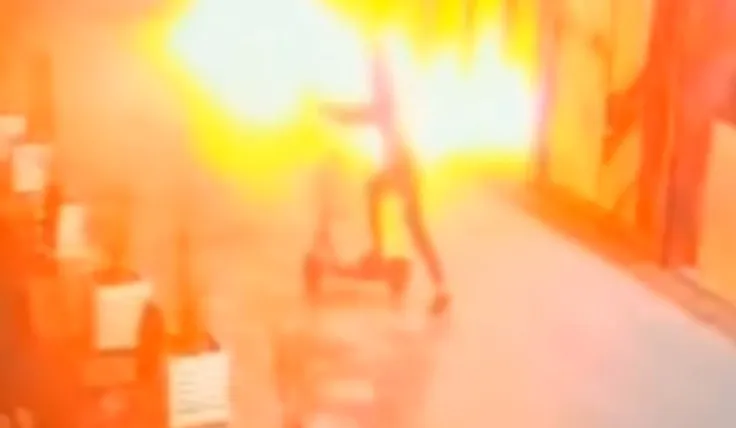
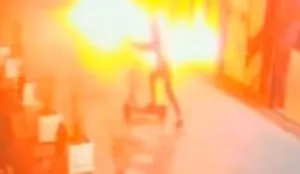
At two in the morning, when the neighbourhood is asleep, two people pull up on electric scooters outside the shopping complex in Shuto Orizari. They are in no hurry. They douse the shopfronts in flammable liquid, set them alight, and leave the same way they came. The whole operation takes less than a minute. The result: more than 20 shops burned out.
The footage, posted on social media, changes the entire case. What yesterday was a "fire at a shopping centre" - a phrase that lets anyone imagine faulty wiring, a cigarette, an accident - is today something else entirely. Someone came, someone lit it, someone fled. That is not an accident, that is an act.
According to the Crisis Management Centre, 15 firefighters with six engines fought the blaze from 3:31 to 6:45 in the morning. Three hours and fourteen minutes to put out what took fifty seconds to start. Every burned shop belonged to one owner and was leased out - so what burned was somebody else's labour, somebody else's stock, somebody else's rent money already paid.
Who pays, and who answers
The Interior Ministry has so far given no official word on the cause. There is an inspection, there are "measures taken to clear up the case" - a phrase everyone in this country knows by heart. The question that remains is more specific: there is security camera footage, there is a time, there is a date, there are two people on scooters. How long does it take to close a circle like that?
Because this is not abstract. Those shops held textiles and other goods. Behind each one stands a person who opened it in the morning, arranged the stock and assumed they would be there the next day. Some twenty families lost their income in a single night - and nobody has yet said the word "motive" out loud.
The footage was published by a local outlet on social media, not by an institution. And that is the story's own punchline: the evidence that changed how the case is understood came from Facebook, not from a press release. When the camera works better than the official statement, that is not a triumph of technology - it is a measure of how fast the institution moves.
The latest 10 news from this category
A head-on crash at two in the morning on the local road to Miladinovci: two dead at the scene, three...
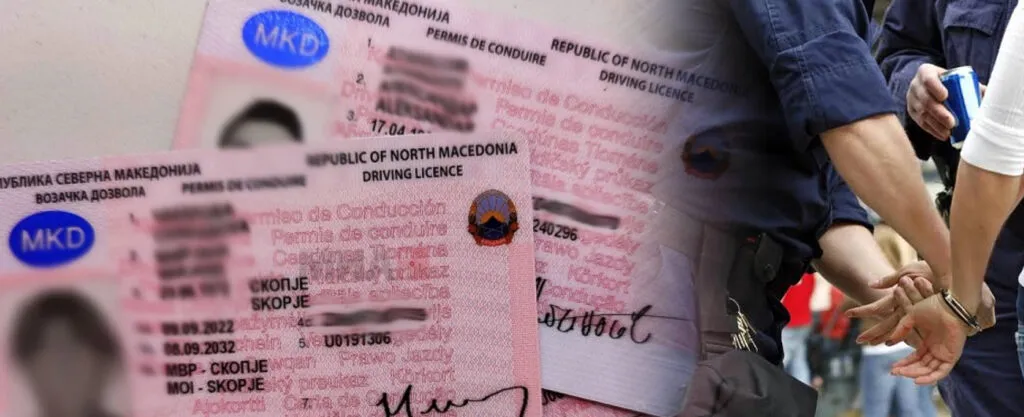
Twenty-seven criminal complaints, four middlemen, and two men who used a forged licence to obtain certification to drive an international...

Five negations in one sentence, pension growth "16 times higher" with not a single figure beside it, and a third...
One side waits for a letter, another waits for a different commission, a third waits for consent. In those same...

The commission's chairman says it only checked whether the documents were complete. The public call says something else entirely -...
Ivanovska recalls why Vodno was forested in the first place. Gerasimovski says the court annulled the old plan and a...

Three Bulgarian ministries, MPs from different parties and flags inside the medical centre. MAEI asks why a check-up in a...
Flowers were laid in Bitola for Stefan Naumov and Dimitar Bogoevski. Behind the anniversary stand two biographies that ended at...
Veles, Berovo, Centar, Prilep, Tetovo. In three cases wives attacked their husbands, in one a father beat his son, in...

A barren volcanic rock in the middle of a strait 28 kilometres wide changed the oil market in a single...
This site uses cookies - is that okay? Learn more
Be the first to know when Metla launches something new
Leave your email and we will write when there is a new guide or something new on Metla.
