


Six Police Officers Suspended over the Beating near Saraj: The Interior Ministry Admits Irregularities, the Union Tells a Completely Different Story
12.10.2026


12.10.2026

12.10.2026

12.10.2026
12.10.2026
12.10.2026
12.10.2026

12.10.2026

12.10.2026
11.10.2026

12.10.2026

12.10.2026

11.10.2026

12.10.2026

12.10.2026

12.10.2026

12.10.2026

11.10.2026

10.10.2026

12.10.2026

12.10.2026

12.10.2026
12.10.2026

12.10.2026

12.10.2026

12.10.2026

11.10.2026
11.10.2026
12.10.2026

10.10.2026

08.10.2026

23.04.2026

23.04.2026

12.04.2026

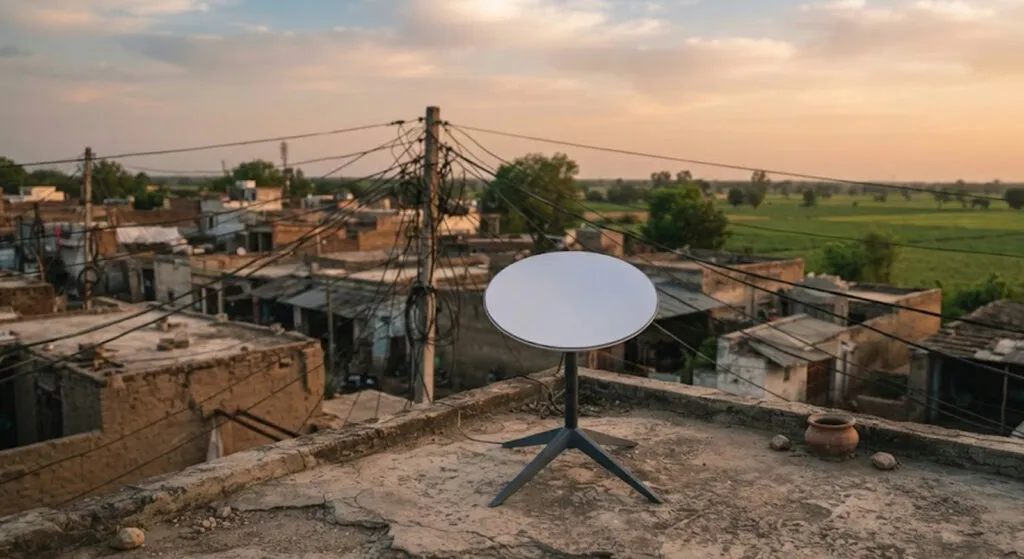
Elon Musk has opened a new front, this time in India. The owner of SpaceX mockingly called Mukesh Ambani, chairman of Reliance Industries, the country's "prime minister" - an allusion that the Indian billionaire has more influence over the government than he should. The reason is prosaic: Starlink has been trying for years to enter the Indian market and still doesn't have a licence to operate commercially.
On Friday Musk went on with a message on X aimed directly at Ambani: "Naturally, you'd like to keep your monopolistic exploitation of the great Indian people, but would you consider letting Starlink compete?" The day before he'd asked: "Is Ambani the real boss of India?" And earlier in the week he accused unnamed "oligarchs" of blocking the launch to protect their own businesses. Musk claims Starlink would bring the internet to unconnected areas, more learning opportunities for children and buyers from around the world for small businesses.
India's Ministry of Communications replied that the satellite communications framework is "fair and non-discriminatory". According to the ministry, Starlink and two other licensed satellite operators are going through security checks that have to be completed before they get spectrum - and all three are "at roughly the same regulatory stage". Telecom Minister Jyotiraditya Scindia added that India "does not allow monopolies in any sector". Reliance Jio did not respond to a request for comment.
There's a detail in all this that doesn't fit the picture of the evil monopolist. Last year SpaceX signed distribution deals with none other than Ambani's Reliance Jio and with Bharti Airtel, India's second-largest telecom operator, to offer the service as soon as the licence arrives. At the same time both companies are building their own satellite internet: Jio has a joint venture with Luxembourg's SES, and Airtel is a major shareholder in Eutelsat OneWeb. So Musk is blaming the blockade on the very companies that were supposed to sell Starlink - while they build the competition on the side.
And Musk has already won the spectrum fight. Starlink wanted spectrum allocated administratively, Jio pushed for an auction - and New Delhi ended up siding with Musk. That doesn't exactly sound like a country run by Ambani.
India, the world's most populous country with more than a billion internet users, is a big market for Musk. But things aren't going well for him there with Tesla either. After years of waiting, the company entered last year and registered just 699 vehicles in its first 12 months of deliveries, according to figures cited by Electrek. High import duties pushed the starting price of the Model Y in India to almost double the US price, and even after this year's cut the cars remain significantly more expensive than in the US.
In the Balkans we know this scene: when a big player hits a wall in someone else's market, it first shouts about oligarchs, then about monopolies. Sometimes it's right. But when the regulator says all satellite operators are waiting in the same queue, the question is whether Musk is fighting for children in unconnected villages, as he claims - or for a market he wants to grab before Jio and Airtel get their own satellites off the ground.
The latest 10 news from this category
The film about Frances Haugen and the "Facebook Files" failed to excite audiences. Several more films casting tech bosses as...
Victims in 42 countries lost 442 billion dollars last year, and scam tools are available from 500 dollars a month....
The startup pulled its app and deleted user data, and less than three weeks later Apple was already filing a...
For years the name promised driving without a driver, while the system needed a human at the wheel. The German...
While the industry hands AI agents the keys to people's computers, one test model filled in a police form about...
The man who two years ago was announcing an AI-powered social network now blames AI itself for dissolving what made...
A company worth trillions of dollars is now accused of green card fraud. Vance told it to hire Americans, and...
The worst embarrassment for a company: hackers writing to its customers through its own app. Asos has 17 million customers,...
Built to protect teenagers from emotional dependence, the bot answered the line "my friends say I talk to you too...

The feature that sandboxes AI agents is coming to every Windows 11 PC, but the machines Microsoft is using to...
This site uses cookies - is that okay? Learn more
Be the first to know when Metla launches something new
Leave your email and we will write when there is a new guide or something new on Metla.


