

Six Police Officers Suspended over the Beating near Saraj: The Interior Ministry Admits Irregularities, the Union Tells a Completely Different Story
12.10.2026


12.10.2026

12.10.2026

12.10.2026

12.10.2026

12.10.2026

12.10.2026

12.10.2026

12.10.2026

11.10.2026

12.10.2026

12.10.2026

11.10.2026

12.10.2026

12.10.2026

12.10.2026

12.10.2026

11.10.2026

10.10.2026

12.10.2026

12.10.2026

12.10.2026

12.10.2026

12.10.2026

12.10.2026

12.10.2026

11.10.2026

11.10.2026
12.10.2026

10.10.2026

08.10.2026

23.04.2026

23.04.2026

12.04.2026


Norman Foster is 91 and still working, travelling and starting new projects. The British architect behind the glass dome of the Reichstag in Berlin and the Hearst Tower in New York survived colon cancer and a heart attack. Instead of retiring, he cycles and skis long trails - not for a photo, but out of habit.
Foster combines different kinds of movement, and according to reports on his regime, he avoids ultra-processed food and alcohol and watches how much water he drinks. None of that is a miracle. The miracle is that he does it consistently, at an age when most people stopped making plans long ago.
Manuel J. Castillo, longevity director at the Dorsia clinics, explains why it works. Functions that aren't used get weaker - a simple rule the body applies without exception. "Walking every day isn't enough," he says. A walk is a good start, but after sixty and seventy, strength, mobility, balance and coordination matter just as much. A muscle that doesn't work is a muscle you lose.
If you're over sixty and your only sport is the walk to the market, the expert has some uncomfortable news: it isn't enough. You need resistance exercises, balance work and movements that demand coordination - something that forces the body to adapt, not just walk out of habit.
According to Castillo, diet and exercise are equally fundamental and should be kept in balance. Fruit, vegetables, olive oil, even coffee - all of it has a place on a healthy menu. But quantity matters even with good food, and even with water. More isn't always better.
The expert is also honest about the limits of stories like this. Recovery from serious illness depends on many factors, so healthy habits help but don't explain it on their own. Curiosity, projects and mental activity support cognitive and emotional health, but they don't prevent neurodegenerative diseases. Foster isn't proof that anyone can reach 91 in good shape - he's proof that it's worth trying.
The final advice is simple and free of magic: move every day, train for strength, eat well, keep people around you and have something that gets you out of bed. At 91, Foster is still drawing buildings. What's waiting for you tomorrow morning?
The latest 10 news from this category

Her Madrid park for 55,000 people includes Lebanese food as a nod to the singer's heritage. The rice simmers for...

The person works, goes out, laughs - and sinks. In one international survey, 80 percent of the women asked admitted...
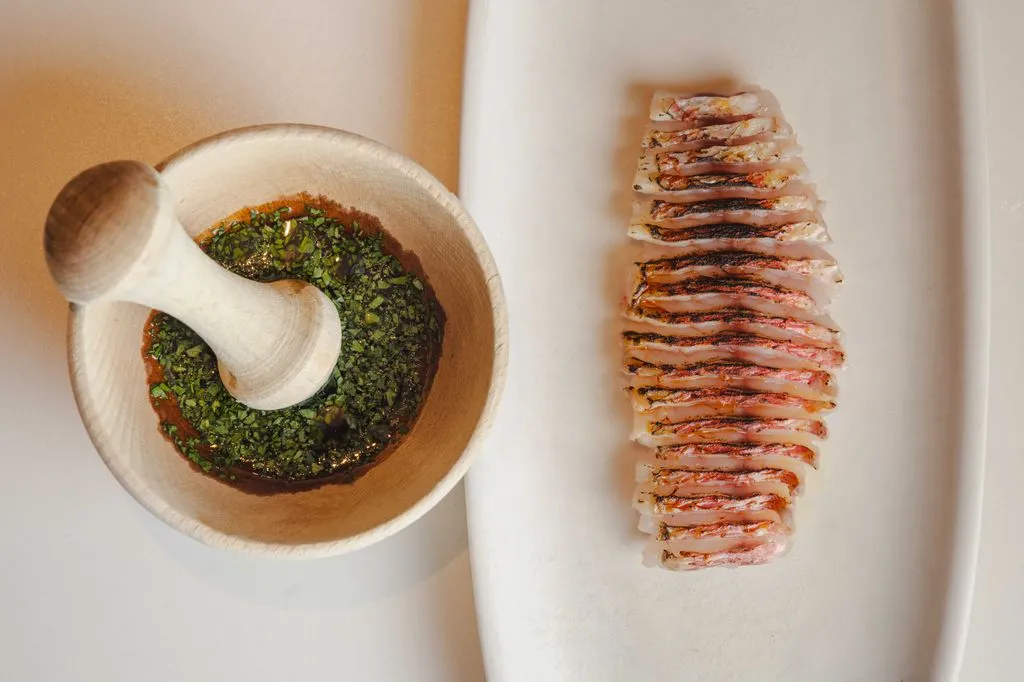
In an age of foam and smoke on the plate, an Andalusian with a star goes back to the stews...

Everyone knows it for vitamin C, but kiwi hides an enzyme that helps break down protein. What one kiwi a...

A dish born of ration coupons after the Spanish Civil War: potatoes, peppers, tomato, onion and garlic. The secret is...

Think your cat purrs because it's content? Vets say that sound can also mean fear, stress or pain - and...

In our part of the world, pears mostly end up as compote or in a rakija still. Three ways to...

"Eat less, move more" has been repeated for decades, and obesity keeps rising. The problem, says Aitor Sánchez, is that...

Legend has it that it was born from a French pastry cook's mistake around 1613. Today it's the fastest route...

The first autumn rain feels like relief after a scorching summer. But for up to 60% of people, a grey...
This site uses cookies - is that okay? Learn more
Be the first to know when Metla launches something new
Leave your email and we will write when there is a new guide or something new on Metla.


