34 fires in 24 hours: three still burning, and the warnings put out nothing
09.09.2026


09.09.2026

09.09.2026

09.09.2026

09.09.2026

09.09.2026

09.09.2026

09.09.2026

08.09.2026

07.09.2026

09.09.2026

08.09.2026

08.09.2026

08.09.2026

08.09.2026

08.09.2026

08.09.2026

07.09.2026

06.09.2026

09.09.2026

09.09.2026

09.09.2026

09.09.2026

09.09.2026
08.09.2026

09.03.2026

27.02.2026

19.02.2026

23.04.2026

23.04.2026

12.04.2026

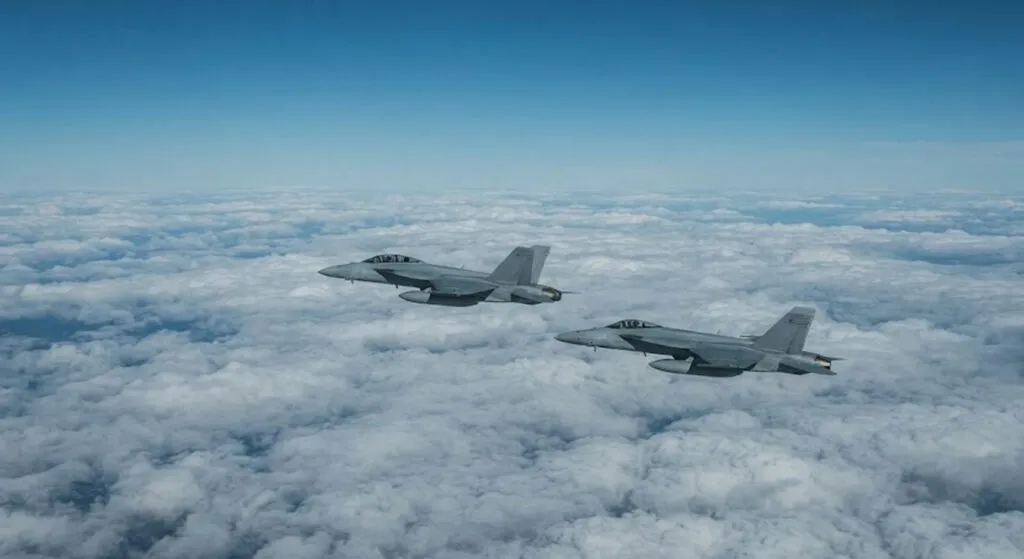
Two Russian Su-35S fighter jets collided in mid-air over the Kursk region, and one pilot was killed. The report came from the Moscow Times, citing a Russian Telegram channel. As of publication, the Russian defence ministry had issued no official statement.
This is where the story gets interesting. The same Telegram channel that announced the pilot's death indirectly blamed Ukraine, with a message that Ukrainians "will answer for this." Kyiv confirmed no involvement of any kind. So we have a channel simultaneously reporting that two of its own aircraft crashed into each other - and that the enemy is to blame for the crash.
The most powerful thing they have, after the Su-57
The Su-35S is not an old aircraft falling apart from fatigue. It is a fourth-generation multirole fighter, among the most capable in Russian aviation - only the newer Su-57 sits above it. It carries the Irbis radar system and can launch R-37M air-to-air missiles with a range of up to 300 kilometres.
Two such machines flew into each other. Not shot down, not hit from the ground - they collided. That is a data point that says more about the state of flight training and air traffic over the war zone than any official report.
The losses are stacking up on other counts as well. On 2 September Ukrainian forces destroyed a MiG-29 near the Millerovo air base and a Ka-27 helicopter near the Yeysk base. Before that, Ukrainian drones hit the Shagol base in the Chelyabinsk region and damaged four aircraft - two Su-57s, one Su-34 and one more of the Su type.
Chelyabinsk is deep inside Russia, thousands of kilometres from the front. When drones get that far and fighters collide with each other over their own territory, the picture that emerges is not one of airspace under control. The question is how long an army can lose aircraft on two fronts - to the enemy, and to itself.
The latest 10 news from this category

Witkoff and Kushner spent three hours in the Kremlin and came out with an agreement in principle. November was not...

At two in the morning phones in Tulcea received a message telling people to go down to the cellar. When...
Trump's envoys left Kyiv on Sunday. In the morning ballistic missiles fell on the city and Poland scrambled its aircraft....

Witkoff and Kushner came to Kyiv by train because a plane could not land. After hours of negotiations, one sentence...

Mk-41 launchers can carry Tomahawks, and Moscow reads that as a threat to itself. The same statement was read two...
Not next month - 2027. A president planning air defence for the period after peace says more about the peace...

In Moscow they sat at the same table as Putin. In Kyiv, Zelensky was placed apart, on the other side...
When the same point is hit twice in seven days, it is no longer an error in the coordinates. And...

The sky above a capital is safe exactly as long as there are American negotiators inside it. That is not...

Two American envoys entered the Kremlin with a document nobody outside that room has read. A three-day pause over Kyiv...
This site uses cookies - is that okay? Learn more
Be the first to know when Metla launches something new
Leave your email and we will write when there is a new guide or something new on Metla.