
Two Reports in One Day: an 80-Year-Old Beaten in Her Own Yard in Tearce, an 82-Year-Old from Veles Detained for Years of Beating His Wife
22.08.2026


22.08.2026
22.08.2026
22.08.2026
22.08.2026

22.08.2026

22.08.2026
22.08.2026
22.08.2026
21.08.2026
22.08.2026
22.08.2026
21.08.2026
22.08.2026
22.08.2026
22.08.2026
22.08.2026
21.08.2026
20.08.2026
22.08.2026

22.08.2026

22.08.2026
22.08.2026

22.08.2026
21.08.2026

09.03.2026

27.02.2026

19.02.2026
22.08.2026
21.08.2026
20.08.2026

23.04.2026

23.04.2026

12.04.2026
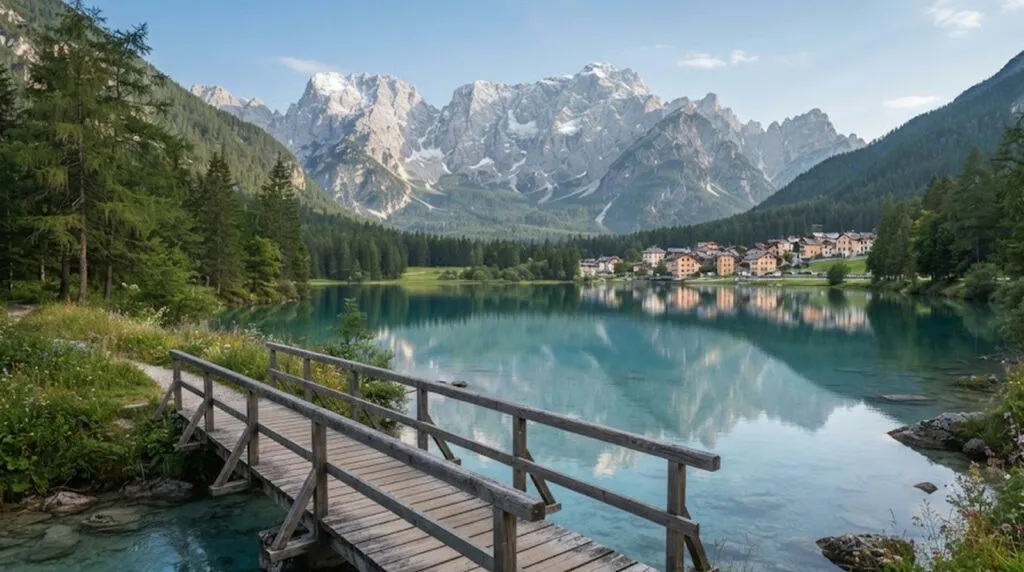
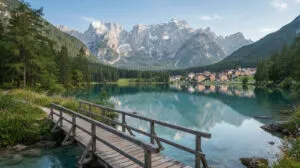
There is a Swiss town that keeps appearing on lists of the "most beautiful" and almost never on the itineraries of tourists flying to Switzerland. It is called Thun, it sits in the canton of Bern, and its name comes from the Celtic dunum - fortified town. It rests on the shore of a lake that in summer is the centre of all social life, and on clear days the Alps are reflected on its surface.
Thun was part of the Holy Roman Empire and gained town status in the Middle Ages, which turned it into a trading centre. But it only became interesting for tourism in the 19th century, when the first steamboat arrived on the lake and, in 1859, the railway line from Bern. That is also when one resident worth mentioning arrived: Charles Louis Napoleon, the future Napoleon III, who studied here at the artillery military academy.
He was not the only one to pass through these streets. Goethe stopped here in 1779, during his second journey through Switzerland. Johannes Brahms spent several summers in the Hofstetten district, where he composed works inspired by the lake and the mountains. And Ferdinand Hodler, one of the key names of Central European symbolism, took his first steps as a painter right here.
Sightseeing starts in the medieval core, specifically on Obere Hauptgasse - a street on two levels with raised walkways, the most photographed in town. Today there are cafes and shops below, but the lower level once held warehouses and workshops, while the upper served as a pedestrian zone and entrance to the apartments. At number 33 lived Napoleon III and his mother.
At the end of the street is Rathausplatz, a square built around 1500, where every Saturday a market is set up with vegetables, fruit and local specialities. Here too are the Town Hall - a building combining late Gothic with early Renaissance - and the baroque Burgerhaus from the 18th century. The other important square, Mühle, was until 1970 the place where grain was milled into flour; it was redeveloped in the eighties and is today the centre of nightlife.
The town is divided by the river Aare, crossed by wooden bridges, with weirs regulating the flow at the lake's outlet. In summer it is entirely normal to see surfers using the currents by the open gates - river surfing, in the middle of town, beneath the Alps. At one point the river forms a small island, home to the Bälliz shopping zone with its weekly markets.
You climb to the upper part via the Kirchtreppe - steep narrow stairs covered in wood, where even the gutters are adapted to the shape and come in double height. Halfway up there is a small pavilion with wall paintings, reason enough to stop and catch your breath.
At the top you first see the church with its octagonal tower and spacious baroque nave. After the Reformation it was adapted for preaching on the existing structure, but in 1737 it had to be demolished due to poor condition and rebuilt.
Next to it stands the castle, whose four white towers are visible from every point in town. It was built by the Dukes of Zähringen in the 12th century to display their power and their control over the trade routes. Today it houses a museum on five floors with over 17,000 objects - church tapestries from the 13th and 14th centuries, and a daguerreotype of the castle taken in 1844 by Franziska Möllinger, Switzerland's first female photographer.
In the garden around the castle is the Thun Panorama, one of the oldest surviving panoramic paintings in the world. A 360-degree circular canvas, made between 1809 and 1814 by Marquard Wocher, seven metres high and 38 metres long - the town as it was more than two centuries ago.
If you stay longer: the riverside walking path from the old core to Hünibach is around two kilometres. Along the way you pass the building of the former Thunerhof hotel, built in 1875 with Roman columns, wall paintings and stained glass - the most luxurious in the region until the First World War destroyed the business; the hotel closed for good in 1934 and today houses the Art Museum. On the southern shore stands Schadau Castle, built between 1846 and 1854 for a banker from Neuenburg, today a boutique hotel with a restaurant.
So: 17,000 museum objects, a 38-metre panorama, a 12th-century castle and a lake reflecting the Alps. All of it in a town most travellers have never heard of, because the train from Bern takes less than half an hour and most of them pass through it without getting off.
The latest 10 news from this category
White rock polished as if it were poured, sea in a colour that looks overdone, and a statue the whole...
Syros has no windmills to photograph. It has neoclassical facades, a Venetian labyrinth built against pirates, and a life that...
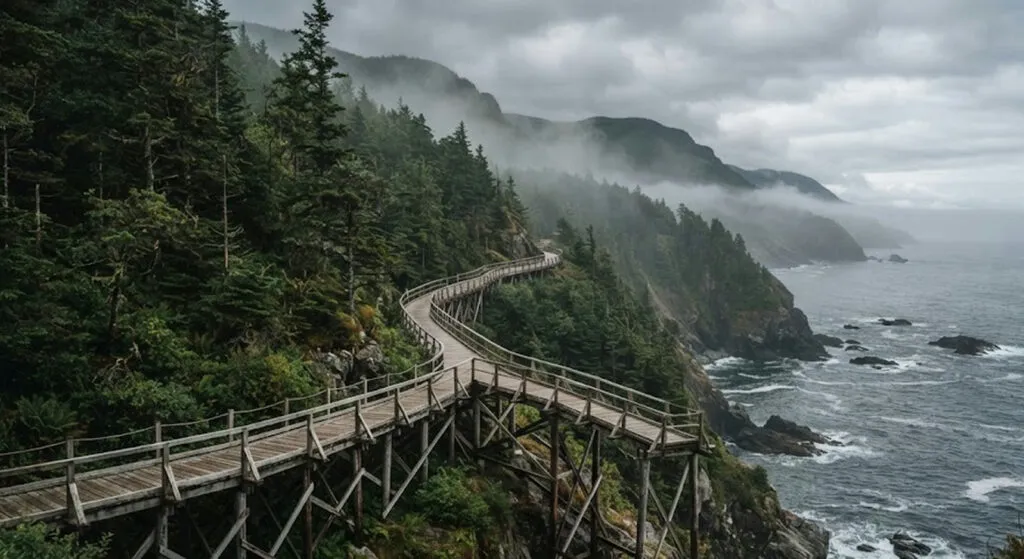
The only waterfall in Europe that falls straight into the sea, a dune more than a kilometre long, and a...
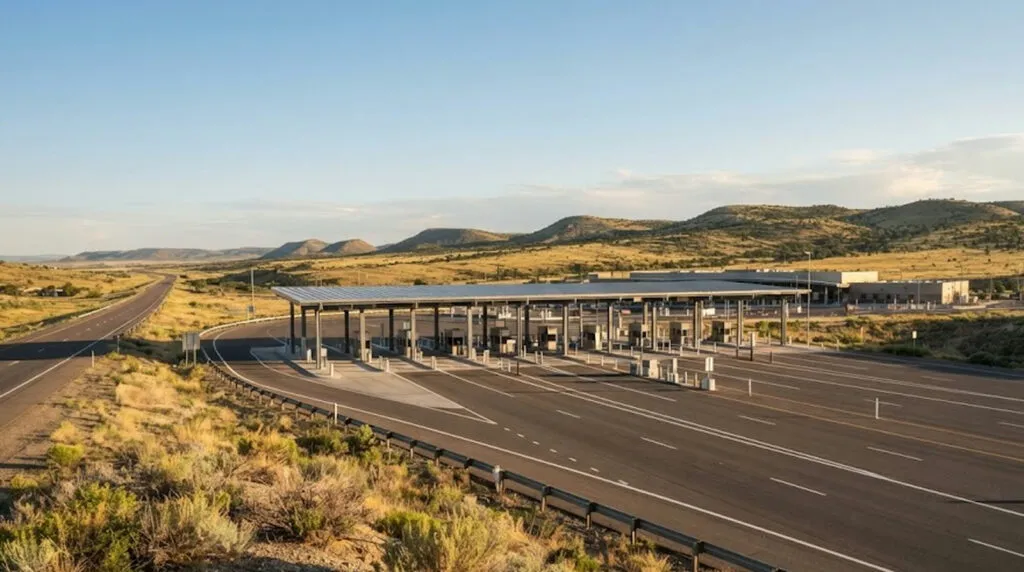
In the same hour on 18 August, the gap between the three exits to Greece was more than an hour...
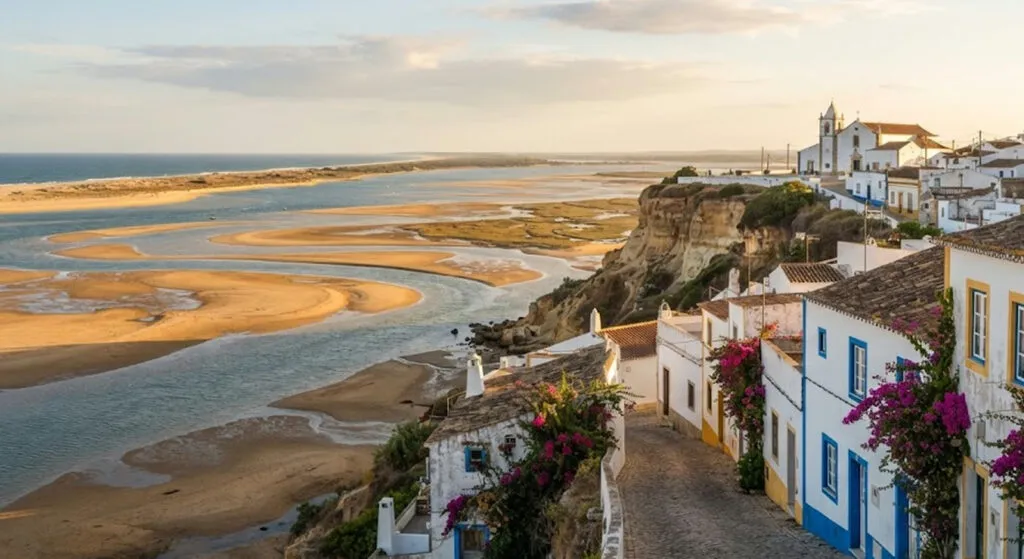
At low tide you walk to the sand. At high tide you either wade the channels with your things over...
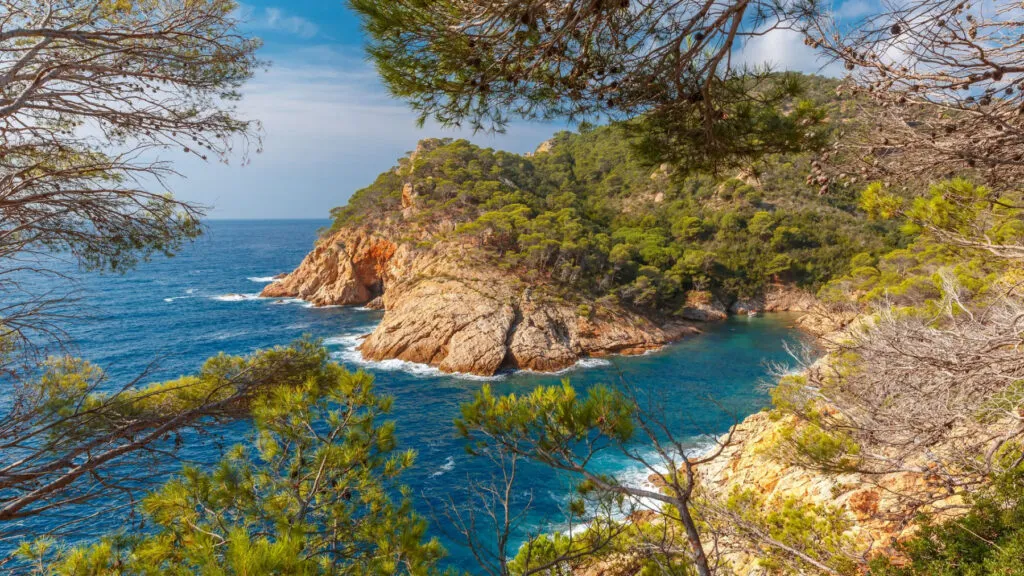
A coastline where the pine forest comes down to the water still looks like itself - but only for those...
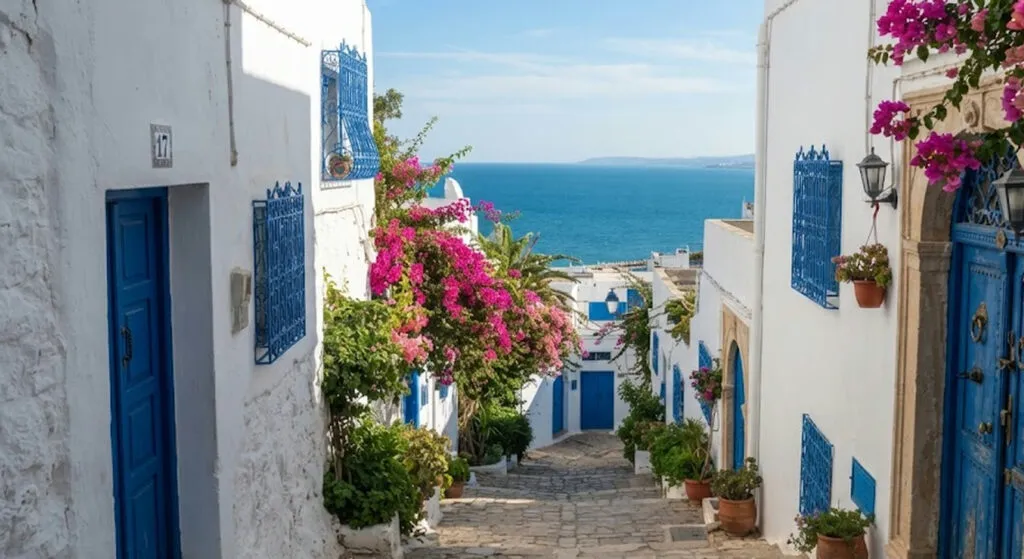
Twenty kilometres from the Tunisian capital, the most photographed village in the country. The aesthetic the world now protects was...
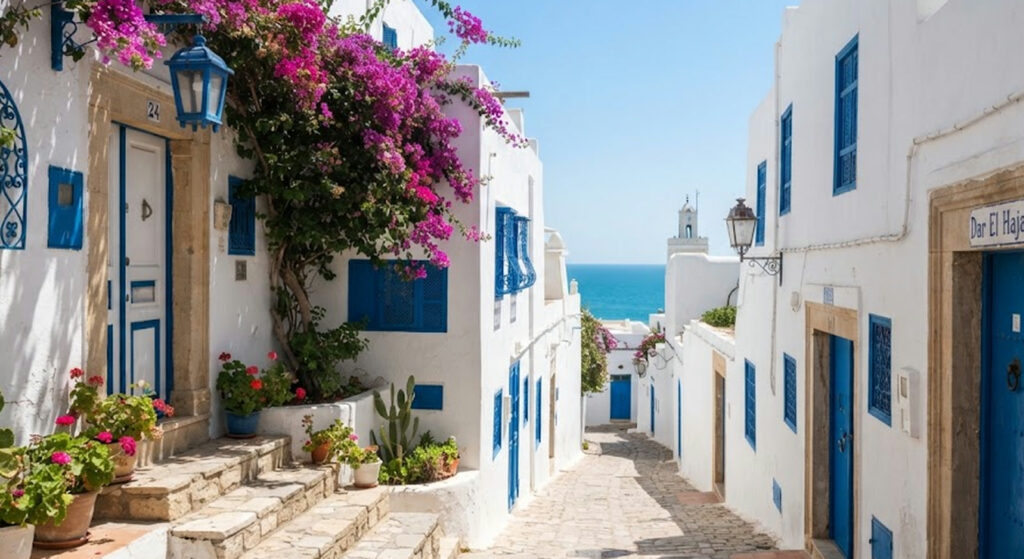
A British baron wrote the rule a century ago: facades white, doors and windows cobalt blue only. Not one owner...
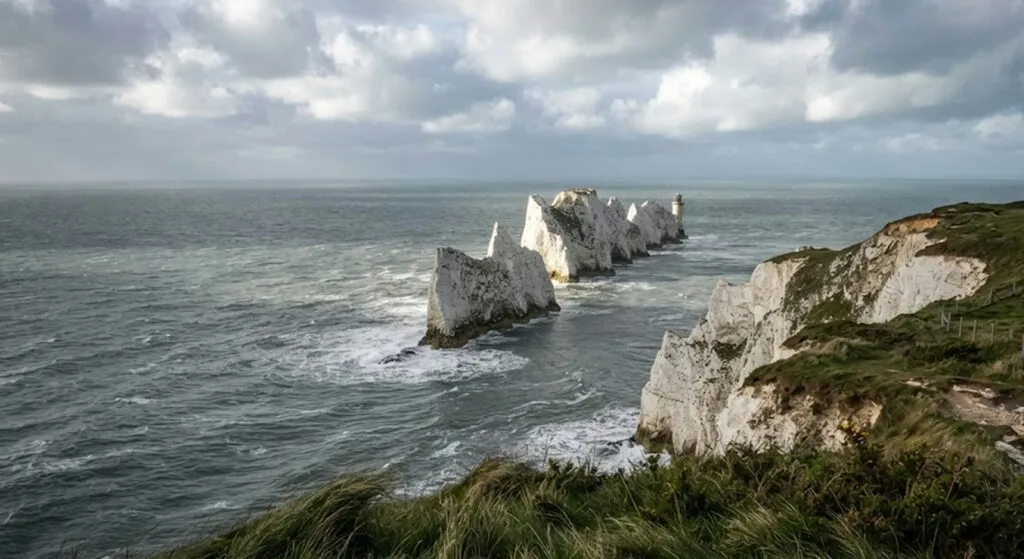
The world's only scheduled hovercraft service still runs there. Victoria called it her little paradise, so did Marx, and in...
Eight days of measurements at the crossing into Macedonia show the hour you leave changes more than anything else. Between...
This site uses cookies - is that okay? Learn more
Be the first to know when Metla launches something new
Leave your email and we will write when there is a new guide or something new on Metla.
