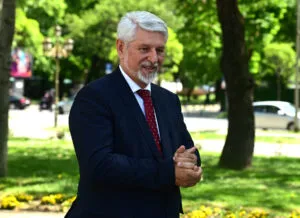
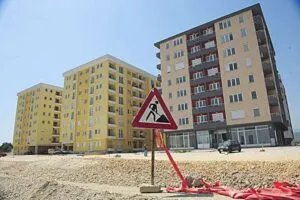
A New Criminal Complaint Against Jakimovski: A Building Permit Based on a Plan Struck Down Back in 2018
16.09.2026


16.09.2026
16.09.2026

16.09.2026
16.09.2026
16.09.2026

16.09.2026

16.09.2026

15.09.2026

14.09.2026
16.09.2026
16.09.2026

15.09.2026

16.09.2026

15.09.2026

14.09.2026

16.09.2026

16.09.2026

16.09.2026

16.09.2026

15.09.2026
15.09.2026

09.03.2026

27.02.2026

19.02.2026
16.09.2026

15.09.2026

14.09.2026

23.04.2026

23.04.2026

12.04.2026

"Which war will end first? I don't know, maybe the timeline will be the same." With that one line, Donald Trump handed reporters a homework assignment - figure out whether he and Putin had discussed an urgent end to the world's two biggest conflicts. Iran and Ukraine, in a single move.
The statement came after a 90-minute phone call with the Russian president. The same day, Trump declared: "I think Ukraine is, militarily, defeated." He is not embarrassed by the line, and he is not toning it down. At the same time he claims Putin offered to help resolve the Iranian uranium issue - a kind of exchange of diplomatic favours between two superpowers who have become partners this year, without admitting it.
Analysts cited in American media argue that both conflicts could end at the same time for a simple reason - economic unsustainability. The American economy can no longer fund Kyiv, and the Russian one cannot endure a long war under sanctions. But those views are also half-finished. When Trump says "Ukraine is defeated", it means one thing: handing over Donbas and Luhansk.
For the Balkans, this kind of border trading is a direct and ongoing warning signal. Because every time the powerful redraw maps over phone calls, the consequences reach us a few years later. That is the history of the twentieth century.
The question is simpler than it looks: if Putin and Trump really believe they are "close to a solution", why are soldiers on both sides still dying? Or is the solution something each of them can sell as a victory at home, while reality on the battlefield is something else entirely? History remembers that "fast deals" between great powers usually mean bad deals for the small people.
The latest 10 news from this category

Sanctions imposed over one war are being offered as currency in an entirely different dispute. Most member states are against...
El Nino in the Pacific shifts the currents that decide where snow falls. An area that usually gets a metre...
The easiest way to dismiss an uncomfortable argument is to point at who is making it. But that does not...

The appeals court ruled the entire trial must start over. The son of Norway's queen is waiting for it on...
Trump scaled back the military exercises to ease the tension, and Wonsan answered in the form of projectiles. What does...

The sanctions list got a seven-day extension instead of one measured in months, a move diplomats themselves call unprecedented. Two...
Switzerland offered a table for talks on Ukraine, Moscow replied that the table stopped being neutral once Bern adopted EU...
The will says one thing, a committee of twenty-one men decided another. The queen mother says the army pulled the...
A country that was Europe's byword for stability for decades now has a parliament split into two blocs by a...
Sixteen years in power, defeat at a regular election, five months of quiet - and now the election result is...
This site uses cookies - is that okay? Learn more
Be the first to know when Metla launches something new
Leave your email and we will write when there is a new guide or something new on Metla.