


Over 20 shops burned down in Suto Orizari: 15 firefighters and three and a half hours fighting the blaze at 3am
12.09.2026


12.09.2026

12.09.2026

12.09.2026

12.09.2026

12.09.2026

12.09.2026

12.09.2026

11.09.2026

10.09.2026

12.09.2026

12.09.2026

11.09.2026

12.09.2026

12.09.2026

12.09.2026

12.09.2026

11.09.2026

10.09.2026

12.09.2026

12.09.2026

12.09.2026

12.09.2026

12.09.2026

11.09.2026

09.03.2026

27.02.2026

19.02.2026

12.09.2026

11.09.2026

10.09.2026

23.04.2026

23.04.2026

12.04.2026

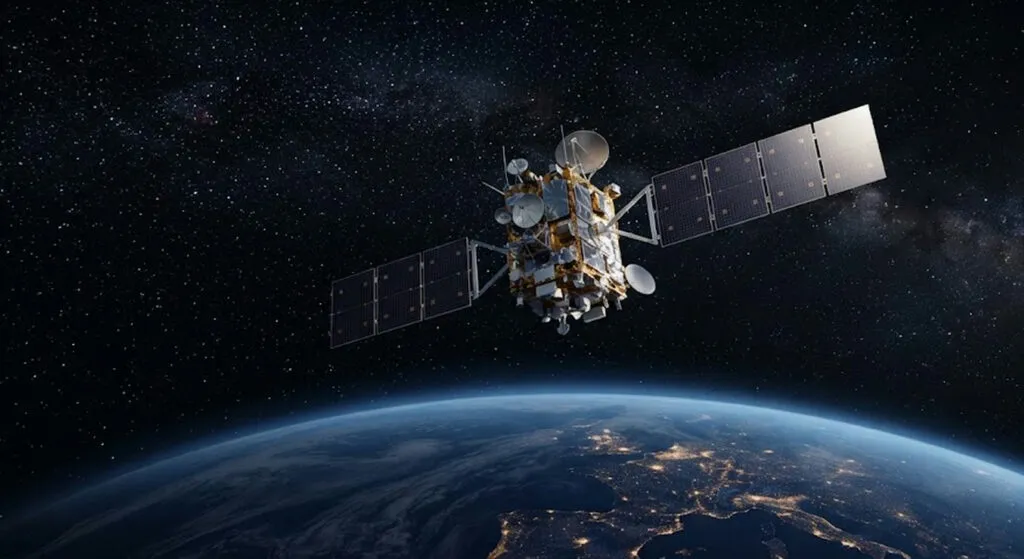
Polish Prime Minister Donald Tusk has announced that his country will build its own satellite internet system, something along the lines of Elon Musk's Starlink. He gave the reasoning without a single diplomatic layer: "I will say it directly: the security of Poland and of Europe cannot depend on the whims of one single man. And without our own satellite communications we cannot speak of full security."
He made the statement at the 34th International Defence Industry Exhibition in Kielce, in southern Poland. By the end of this year, he promised, Poland will have nine satellites of its own.
From twenty days to a few minutes
Tusk offered one figure that explains the whole story better than any political speech. Three years ago the Polish army waited twenty days for satellite images to arrive. Today it gets the same images in a few minutes.
"Anyone following the Russian-Ukrainian war closely knows how much communications matter. It is absolutely crucial - without communications there is nothing to look for on a modern battlefield," he said. Poland, in his view, can be Europe's leading country in achieving that autonomy.
The reason is called Musk
This story did not start in Kielce. Polish officials, above all Foreign Minister Radoslaw Sikorski, have clashed repeatedly with the American billionaire on social media. It began with Musk's statement last year that, if he wanted to, he could bring down the entire Ukrainian front by switching off Starlink.
Sikorski later accused him of doing his brand no favours by aiding war crimes when he allows the Russian army to use illegally obtained Starlink terminals to target Ukrainian cities. Poland pays 50 million dollars a year in aid to Ukraine so those terminals can be used - it pays, and has no control over the switch. That is the definition of dependency.
A Finnish company, a Polish programme
The plan is not just an intention. Since May 2025 the Polish army has had a contract with the Finnish company ICEYE and within a year has already received four radar satellites for the MikroSAR military programme. In parallel, at the exhibition, Poland's state Armament Agency signed a contract with the domestic manufacturer MESKO S.A. for the delivery of several thousand missiles and launchers for the man-portable Piorun air defence system.
The delivery is worth over 700 million euros and forms part of a 1.9 billion euro contract covering 2026 to 2030. Piorun is used by the Polish army and by the Ukrainian one against Russia, and has also been ordered by the US, Estonia, Latvia, Norway and Belgium.
What of this is visible from Skopje
Poland is solving a problem every small state has, except that few have the size to try solving it. Every piece of critical infrastructure here - payments, maps, cloud, communications - lives on somebody else's server, under somebody else's switch, on terms somebody else writes. The difference is that Warsaw has 220,000 soldiers, a budget and a factory, while others just have the bill.
The question is not whether it is good that Poland is building its own satellites. The question is how many countries in Europe can even say that sentence without it sounding like a wish.
The latest 10 news from this category
Five institutions declined to comment on damaged infrastructure the global oil market depends on. When that many addresses have nothing...
One unidentified object on the tracks, 180 passengers on board, 140 firefighters on site. The difference between railways is not...
We are preparing for war so that it does not come, Lukashenko says. Put the neighbours' numbers side by side...

At 22 she had to become Norway's first lady because her mother had died. At 29 she married a divorced...

The tool lets you draw an area on a map and returns a list of everyone who posted to Instagram...

The Athens declaration of friendship lasted less than three years. Now the Aegean is being divided through ecological zones, while...

The aircraft registered RA-82040 is the same one that carried missiles to Belarus in 2022. The flight lasted two days,...

The cargo ship "Ocean Melody" caught fire while moored for repairs at one of China's largest maritime hubs. Twelve were...

The Court of Appeal accepted the appeal in full, twenty-four hours after Harald V's funeral. The convicted man awaits the...
Three people killed by a strike on a boat, with no trial and no names. Since September 2025 the total...
This site uses cookies - is that okay? Learn more
Be the first to know when Metla launches something new
Leave your email and we will write when there is a new guide or something new on Metla.
