
Cancer Drug in a First Aid Kit at Bogorodica: Why Was the Driver Also Carrying 30 Labels?
22.10.2026


22.10.2026

22.10.2026

22.10.2026

22.10.2026

22.10.2026
22.10.2026

22.10.2026

21.10.2026

20.10.2026

22.10.2026

22.10.2026

21.10.2026

22.10.2026

22.10.2026

22.10.2026

22.10.2026

21.10.2026

20.10.2026

22.10.2026

22.10.2026

21.10.2026

22.10.2026

21.10.2026

20.10.2026
20.10.2026

19.10.2026

17.10.2026

23.04.2026

23.04.2026

12.04.2026

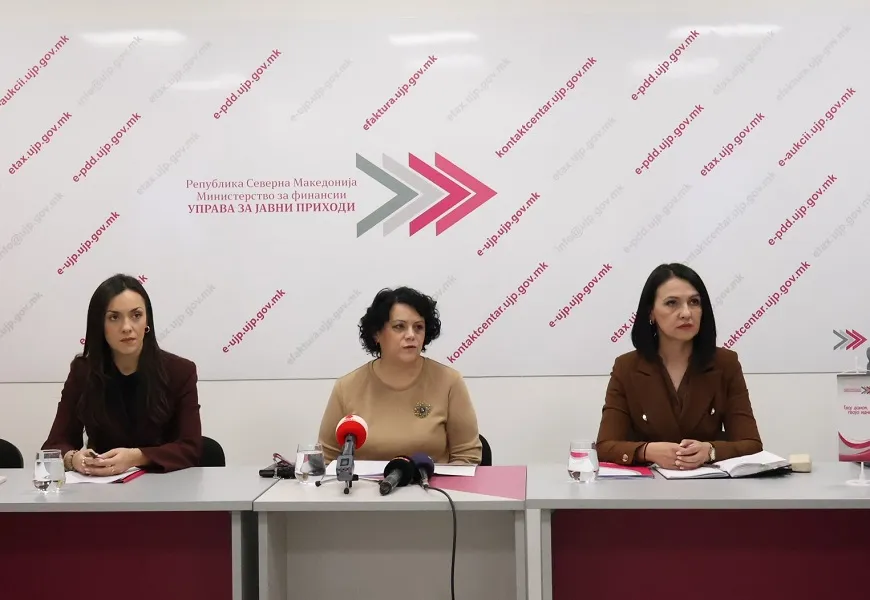
The youngest citizen with an income of over a million denars in 2025 is four years old. The income wasn't earned through work - it arrived as a dividend from a domestic bank. The oldest "millionaire" is 97 and earned his income from a pension and other sources. These are some of the figures the Public Revenue Office (UJP) published from last year's annual tax returns.
The highest annual gross salary in the country last year was 139.1 million denars, around 2.2 million euros. It was paid by a Skopje company in hard coal mining. All five of the highest salaries were paid in Skopje, in sectors such as wholesale of food, beverages and tobacco, hospitals and wholesale of pharmaceutical products. The top ten also include one company from Bitola and two from Tetovo.
The highest total gross income, from salaries, rents and dividends, was declared by a citizen from Gevgelija - 257.5 million denars, almost 4.2 million euros. Next comes a resident of Ohrid with 254.3 million denars. The three largest individual dividends, according to the UJP, exceed even the record salary, and they were paid out by companies in Gevgelija, Ohrid and Arachinovo.
The data also show growing tax compliance: over 860,000 returns were filed for 2025, 10.6 percent more than the year before, and 82,702 more citizens had taxable income. "These data say much more" than the records, says UJP director Elena Petrova - they show the tax picture of the economy.
And that picture is exactly what's interesting. A four-year-old gets a million from shares, and a single annual salary in mining is bigger than what an ordinary employee will earn over an entire working life. Is that the sign of a healthy economy where capital works - or of an economy where money multiplies fastest where it already is? The UJP's data tell us "how much." The question of "why" is left to politics.
The latest 10 news from this category

Revenue of 3.39 instead of 1.88 billion denars, for 5.68 instead of 6.24 billion kilowatt-hours. The bill could rise 4...
Housing loans jumped 16.1 percent in a year, and current account overdrafts rose 5.8 percent in a single month. The...

Revenue grew 26 percent, costs 68. The answer is a new class of shares: investors bring in money, and the...

Three founders and a promise that AI can be trained on far less data. In Silicon Valley that's now worth...

You pay a cleaning fee, then get a list of chores on your way out. For bookings from November 20...

The union's consumer basket reached 70,358 denars, and almost the entire monthly increase is on the dinner table. The government...
The amendments passed their first parliamentary filter. Your flat is yours, the land under it still belongs to the state,...
Three hours today, five tomorrow, and pay by the hour. It sounds like flexibility, but the question remains who decides...

The company that sells artificial intelligence is now also offering the law that would control it. The checkers would be...

A company from a small Baltic country raised 100 million dollars to tell humans from machines online. The trick is...
This site uses cookies - is that okay? Learn more
Be the first to know when Metla launches something new
Leave your email and we will write when there is a new guide or something new on Metla.